Where to Stay in Arima Onsen for Autumn Leaves: Korokan, Negiya Ryofukaku and Arima Grand Hotel
Compare Korokan, Negiya Ryofukaku and Arima Grand Hotel for autumn leaves, room views and natural hot-spring baths before booking in Arima Onsen.
Autumn rates in Arima can climb, but the room with the best foliage view is not automatically the one with the bath you want. Compare where each property puts the fall colour, whether the bath uses natural spring water, and how much privacy and access matter to your group.
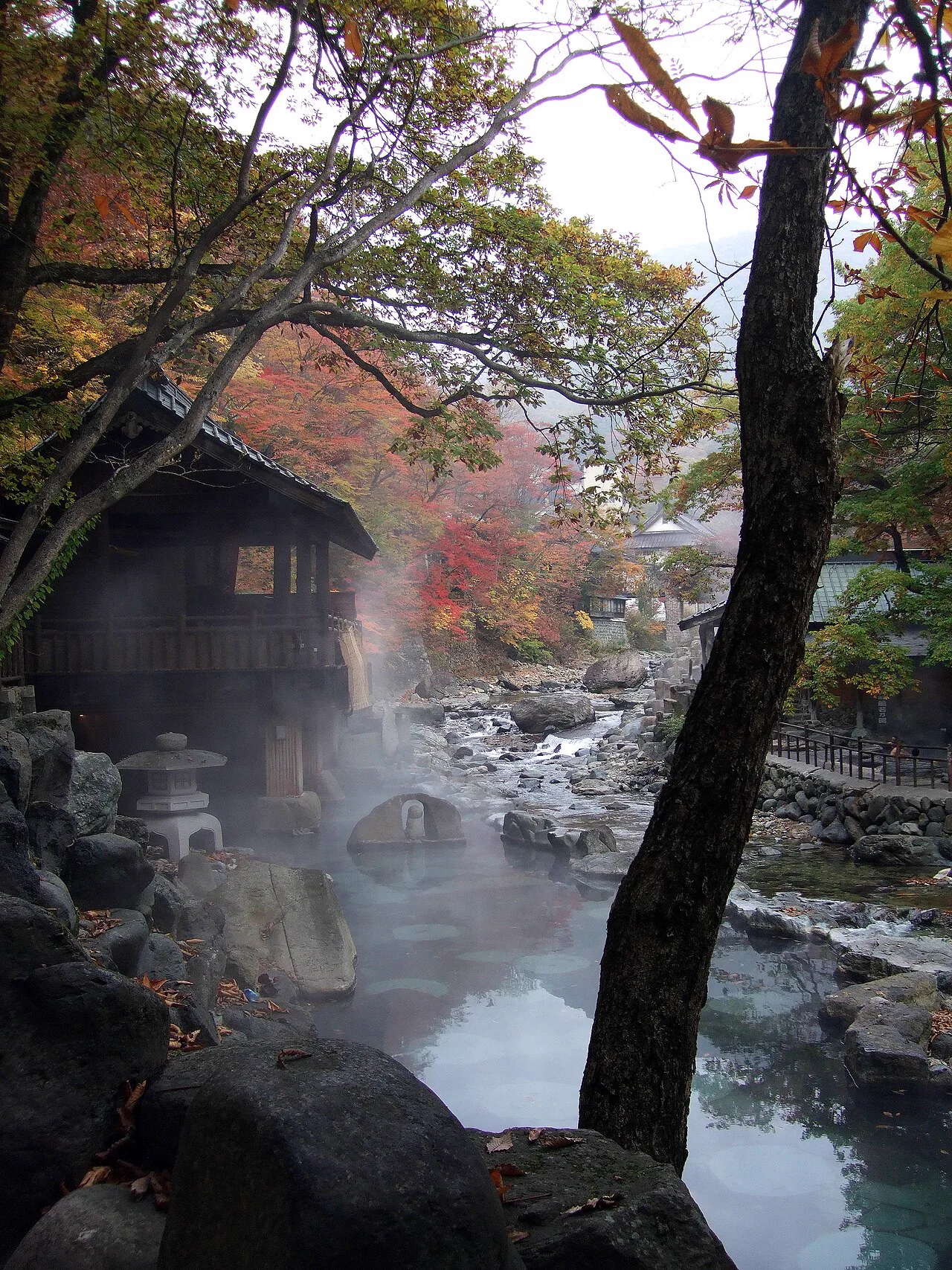
All three properties bring the surrounding hills into the stay, but in different ways. Gekkoen Korokan pairs Mount Ochiba views with natural radon water in selected rooms. Negiya Ryofukaku is known for maple-facing Japanese rooms and a public gold-spring bath beside the trees; its guest-room open-air baths are not hot springs. Arima Grand Hotel has the broadest hilltop outlook and a large bathing setup with both gold and silver springs.
If leaf colour is secondary and you mainly want to compare private baths, see our Arima Onsen guide for couples. We also have a separate room-upgrade guide for travellers who have already chosen an inn; check the room details here before paying extra.
At a glance: what each stay gives you
| What you want from the stay | Best place to start | Why it fits | Booking detail to watch |
|---|---|---|---|
| Natural hot-spring water in your room, with Mount Ochiba’s autumn scenery | Gekkoen Korokan | Selected 12-tatami rooms with open-air baths are explicitly supplied with natural radon spring water and face the mountain | None of the three paid private baths is a hot spring; standard guest-room baths are not natural spring water |
| Maple views from a Japanese room, then a soak in a public gold-spring bath | Negiya Ryofukaku | Its maple-facing rooms and public open-air gold spring make the foliage part of the stay | The guest-room open-air and semi-open-air baths are not hot springs |
| Hilltop views, garden colour, gold and silver springs, and family-friendly facilities | Arima Grand Hotel | A 9th-floor bath, two public bathing areas and a large hotel setup offer more flexibility | Natural spring water in a guest-room bath is limited to selected room types |
| A clearly stated tattoo policy | Negiya Ryofukaku or Arima Grand Hotel | Both publish conditions for covering small tattoos; Grand Hotel also points guests to private baths | Check the current rules directly if a tattoo cannot be fully covered |
| Older relatives, children or bulky luggage | Arima Grand Hotel | Shuttle service and a larger property can make the stay easier to manage | It sits above town; use the shuttle rather than judging the climb by map distance alone |
Plan around the view, not a guessed peak-colour date
Temperature, rain, wind and warm spells all affect the timing of autumn colour. Before paying a seasonal premium, ask whether you would still enjoy the stay if the leaves are only partly turned. Korokan has its gold-spring bath and access to its sister property’s riverside baths; Negiya has a wooded setting and public and private gold-spring options; Grand Hotel has both spring types and a hilltop outlook. If the answer is no, the room price may depend too heavily on a view you cannot guarantee.
Next, decide where you want the view: in the room, at the bath, or in a shared space. That choice often settles the room type. Korokan’s selected open-air-bath rooms are the clearest match for an in-room natural spring and Mount Ochiba scenery.
At Negiya, a maple-facing Japanese room may be the more relevant upgrade; you don’t need a guest-room bath to enjoy the public gold spring. At Grand Hotel, a garden- or mountain-facing room may be enough if the main goal is the wider hilltop view.
Only then compare dates and rates. Look at the same room, meal plan, guest count and cancellation terms. During foliage season, a refundable rate can be more useful than the lowest price if your dates have some flexibility.
Gekkoen Korokan: the clearest room-and-spring match
Three details that booking pages often blur together are an open-air bath, a mountain view and natural hot-spring water. They are separate features; check that the room listing promises each one you care about.
In a standard Korokan room, the in-room bath is not natural spring water. The outdoor sections of Kinpa no Yu and Ginpa no Yu use the property’s gold spring, which emerges at 31.2°C and is heated for bathing.
Overnight guests can also cross to sister property Yugetsu Sanso. Its riverside baths, Afuku no Yu and Tamahoko no Yu, are described as flowing directly from the source. That gives guests two distinct bathing settings without a room upgrade.
Korokan’s three bookable private baths—Hinoki, Cave and Wine—are listed as non-spring baths. Their published session details are:
| Private bath | Session | Price |
|---|---|---|
| Hinoki, Cave or Wine | 40 minutes | ¥4,400 |
If you want a private soak in natural spring water, choose a room that explicitly lists natural radon water, or consider Negiya’s private gold-spring baths or Taketoritei Maruyama.
Korokan offers pick-up from Arima Onsen Station and the bus stop from 08:00 to 19:00; call after you arrive. The walk takes about 10–15 minutes, but the town is hilly, so that estimate can feel different with luggage or a late arrival.
Tattoo access for Korokan’s public baths, non-spring private baths and natural-radon guest-room baths is unconfirmed. Ask Gekkoen which rule applies to the bath you plan to use.
Negiya Ryofukaku: let the room do the looking and the public bath do the soaking
Negiya’s product is almost the reverse of Korokan’s. Its 8–10-tatami Japanese room facing the maple trees is about the view from the room and its engawa veranda; that room type has no private bath. For a natural soak, head to the public bath: the open-air gold spring at Hinoki no Yu looks out toward the maples.
That split can be a good fit in autumn. If you’re comfortable using the shared bath, there may be little reason to pay more for a guest room with an open-air tub.
The room names can be misleading, though. Negiya’s room information says that the bamboo-grove open-air bath and mountain-view semi-open-air bath are not natural hot springs. They offer a private tub and a particular setting, not in-room gold-spring water.
Negiya’s two private-use baths both include gold-spring water: Yuzuriha pairs an indoor gold-spring bath with a regular hot-water bath, while Natsume pairs a regular indoor bath with a semi-open-air gold spring.
| Private bath | Session | Price | Booking |
|---|---|---|---|
| Yuzuriha or Natsume | 45 minutes | ¥3,300 (about HK$166 / NT$671) | Reserve at check-in; subject to availability |
Currency conversions use the rate checked on 8 September 2026. If you want one private soak, compare a maple-facing room plus a session against an open-air room on the same dates and meal plan; the room upgrade is not automatically the cheaper option.
Negiya’s tattoo policy is more specific than Korokan’s: cover stickers start at ¥330 each (about HK$17 or NT$67). Ask the inn ahead of time about larger tattoos, multiple tattoos or anything that cannot be fully covered. The existence of a private bath does not automatically mean every tattoo is accepted there.
The inn is about a seven-minute walk from Arima Onsen Station, but the approach is steep. Its free shuttle currently runs 09:00–11:00 and 14:00–20:00. There are also around 30 steps to Higurashi no Yu, and some rooms involve stairs. If anyone in your party has limited mobility or you’re bringing heavy bags, ask about the route to your specific room before booking.
Arima Grand Hotel: a hilltop stay with more room for plans to change
Grand Hotel isn’t the closest of the three to a maple-framed guest-room window, and it isn’t the clearest pick for an in-room natural spring with a foliage view. Its appeal is that the stay still has plenty going for it if the leaves turn out to be less dramatic than expected.
The hotel sits above town. Its 9th-floor Unkai bathing area looks across Arima and toward the Rokko and Tamba ranges. Guests can use both gold and silver springs in the main building; the B2 Yurari area adds another gold-spring bath, outdoor section and sauna. For a first visit, or a group with children, older relatives or bulky luggage, the larger hotel setup may be easier to navigate than a small traditional inn.
Room views depend on the room you book and do not guarantee a window directly facing the best-coloured trees. If the hilltop scenery is enough, you may not need an in-room spring. For natural water in your room, check the specific villas or North Wing room types that list a gold- or silver-spring bath; it is not standard throughout the hotel.
The five private baths also use different water. Akane and Hatsune are silver-spring private spas; Akebono and Asahi are private gold-spring baths; Yubae is not a hot spring. That distinction matters for families and anyone who prefers not to use a public nude bath: confirm the bath name and water type rather than relying on a general “private bath” label.
Grand Hotel’s published tattoo rules are clearer. Tattoos are generally not allowed in the public baths, but a small, single tattoo can be covered with a 10 × 10 cm cover sticker. If it cannot be fully covered, the hotel recommends booking a private bath. Check the instructions and availability for your stay date.
The walk from the station takes around 10 minutes, with a steep final stretch. A free shuttle currently operates from 08:00 to 21:00, and the hotel has a large car park. During foliage season, that can be more useful than a few extra square metres in a view room—especially in rain or when travelling with several generations.
Hot-spring details worth checking before you book
The notes below reflect information checked on 2026-09-08. Hotels may update room names, water handling and facilities, so confirm details for the bath or room you plan to use.
Gekkoen Korokan
| Detail | Current published information |
|---|---|
| Source checked | 2026-09-08 |
| Spring | Korokan’s own gold-spring source |
| Type | Natural sodium-chloride spring; described as 100% pure source water |
| Source temperature | 31.2°C; heating is required |
| Bath temperature | The source temperature does not establish a fixed bath temperature |
| Heating | The property’s spring water is heated |
| Circulation and filtration | Not fully specified for each bath |
| Disinfection | Not fully specified for each bath |
| Where natural water is used | Outdoor sections of the Korokan public baths; natural radon spring water in selected guest rooms with open-air baths; source-fed riverside outdoor baths at sister property Yugetsu Sanso |
| Where it is not used | The three paid private baths and standard guest-room baths |
| Full analysis | No unlisted ion or total-component figures added here |
| General bathing indications | General information for chloride springs includes sensitivity to cold, poor peripheral circulation, fatigue recovery and some chronic muscle or joint discomfort |
| Caution | Do not assume every bath has the same source or water treatment. Check the exact room name for an in-room natural spring. |
Negiya Ryofukaku
| Detail | Current published information |
|---|---|
| Source checked | 2026-09-08 |
| Current spring source | Arima gold spring. A 2026 accommodation plan says the bath water may come from other local sources or an FFP source, so the historic Gokuraku spring should not be presented as the sole current source. |
| Type | Iron- and sodium-chloride-rich, strongly saline hot spring |
| Source temperature | The historic Gokuraku source temperature of 98.6°C is historical context only, not a verified current figure |
| pH | The historic Gokuraku value of 6.4 is not presented as current |
| Flow rate | The historic Gokuraku figure of 51 L/min is not presented as current |
| Dilution and heating | Not fully specified for each bath |
| Circulation and filtration | Not fully specified for each bath |
| Disinfection | Not fully specified for each bath |
| Where natural water is used | Gold-spring outdoor baths in the two public bathing areas; the Yuzuriha and Natsume private baths |
| Where it is not used | Guest-room open-air and semi-open-air baths are listed as non-spring baths |
| Full analysis | The older bath-use permit is historical and is not treated as a current analysis |
| General bathing indications | General information for iron-, sodium- and chloride-rich saline springs includes sensitivity to cold, fatigue recovery and some chronic muscle or joint discomfort |
| Caution | Rinse sensitive young children with shower water after bathing in the gold spring if needed. Consider stairs and level changes when choosing a room. |
Arima Grand Hotel
| Detail | Current published information |
|---|---|
| Source checked | 2026-09-08 |
| Springs | Arima gold and silver springs; the hotel’s main pages do not identify an individual well or source for every bath |
| Gold spring type | Iron- and sodium-chloride-rich, strongly saline spring (high osmotic pressure, neutral, hot spring) |
| Silver spring type | Simple radioactive mineral spring / simple radioactive spring |
| Source temperatures | The Japan Spa Association facility listing gives 97°C and 37.1°C, but does not map each figure to an individual source ID |
| Dilution and heating | Not fully specified for each bath |
| Circulation and filtration | Not fully specified for each bath; the hotel is not described here as entirely source-flowing |
| Disinfection | Not fully specified for each bath |
| Where natural water is used | Gold and silver springs in the 9th-floor Unkai baths; gold spring in the B2 bathing area; silver spring in Akane and Hatsune; gold spring in Akebono and Asahi; selected guest rooms with gold- or silver-spring baths |
| Where it is not used | The Yubae private bath |
| Full analysis | No unsupported pH, flow-rate or ion data added here |
| General bathing indications | General indications vary by spring type; gold-spring information includes sensitivity to cold, fatigue recovery and some chronic nerve, muscle and joint discomfort. Silver spring has its own spring-specific indications. |
| Caution | Check the water type for the exact private bath and room. |
How the three inns compare
These scores are editorial assessments, not measured hotel ratings.
| Category | Gekkoen Korokan | Negiya Ryofukaku | Arima Grand Hotel |
|---|---|---|---|
| Bathing comfort | 90 | 85 | 95 |
| Variety of baths | 95 | 85 | 100 |
| Cleanliness and upkeep | 85 | 80 | 95 |
| Scenery and atmosphere | 95 | 95 | 100 |
| Quiet | 85 | 75 | 75 |
| Ease of access | 90 | 90 | 95 |
| Overall value | 85 | 80 | 85 |
The category scores for each property are shown below for readers who want the detail behind the comparison.
Gekkoen Korokan
| Category | Score |
|---|---|
| Bathing comfort | 90 |
| Variety of baths | 95 |
| Cleanliness and upkeep | 85 |
| Scenery and atmosphere | 95 |
| Quiet | 85 |
| Ease of access | 90 |
| Overall value | 85 |
Negiya Ryofukaku
| Category | Score |
|---|---|
| Bathing comfort | 85 |
| Variety of baths | 85 |
| Cleanliness and upkeep | 80 |
| Scenery and atmosphere | 95 |
| Quiet | 75 |
| Ease of access | 90 |
| Overall value | 80 |
Arima Grand Hotel
| Category | Score |
|---|---|
| Bathing comfort | 95 |
| Variety of baths | 100 |
| Cleanliness and upkeep | 95 |
| Scenery and atmosphere | 100 |
| Quiet | 75 |
| Ease of access | 95 |
| Overall value | 85 |
Is the autumn room upgrade worth it?
Rates can swing widely during foliage season, so one search result is not a reliable “cheapest room” ranking. Compare the total price for the same date, party size, meal plan, taxes and cancellation terms:
Upgrade premium = total price of the view or open-air room − total price of the standard room under the same conditions.
The Korokan upgrade is easy to define: a standard room versus a room with a natural radon bath facing Mount Ochiba. It may be worth paying for if you expect to bathe in your room several times or prefer not to use a shared bath. Spend most of your time in the public baths at both properties, though, and the in-room tub matters less.
For Negiya, compare an open-air room against a maple-facing room plus one private gold-spring session. The room bath itself isn’t natural spring water, so that upgrade won’t get you a private natural soak.
Grand Hotel’s standard garden- or mountain-facing room already comes with access to the public baths. Look at a selected villa or North Wing room if you need a natural spring in the room, expect frequent private use or have a specific layout in mind; “view” alone may not justify the extra cost.
Arriving without a car, especially late in the day
Autumn days are shorter. If you’re coming from Osaka or Kobe in the afternoon, arrival time can affect your chance to enjoy the view, dinner and a first soak. Don’t judge any of these three stays by station distance alone:
- Korokan: Around 10–15 minutes on foot; shuttle service is available 08:00–19:00. After that, factor in the uphill walk and luggage.
- Negiya: Around seven minutes on foot, but the entrance is steep. Shuttle service currently runs 09:00–11:00 and 14:00–20:00; there are stairs inside as well.
- Arima Grand Hotel: About 10 minutes on foot, with a steep final stretch. The 08:00–21:00 shuttle gives it the widest current window of the three.
If you’re travelling from Osaka and booking dinner at the inn, use our two-day Arima and Mount Rokko itinerary to work backwards from your arrival time. Check the last dinner seating and shuttle window before paying.
Check these details before paying
- Room name and view: Confirm that the listing specifically says Mount Ochiba, maple-facing or garden-side. “Japanese room” and “mountain view” are not interchangeable descriptions.
- Water in the room bath: Korokan’s selected rooms have natural radon water; Negiya’s guest-room open-air and semi-open-air baths do not; Grand Hotel’s in-room natural water is limited to specific rooms.
- Private-bath water: Korokan’s three paid private baths are non-spring baths. Negiya’s two private baths include gold spring. Grand Hotel’s private baths vary by room.
- Dinner and arrival: If you may arrive late, check the final dinner time and shuttle schedule before booking.
- Cancellation terms: Foliage can’t be guaranteed. A flexible rate may be useful if you can shift your dates.
- Tattoos, children and stairs: Ask about any hard requirements before choosing a non-refundable rate. If a detail is not published, don’t infer the answer from photos or third-party comments.
<p class="booking-disclosure">Some links are affiliate links, which may earn Yubiyori a commission. Rates, availability, room names, meals, payment rules and cancellation terms depend on the date and property. Commission does not determine the order of these recommendations.</p>
Which one should you book?
Gekkoen Korokan makes sense when an in-room natural spring and Mount Ochiba view are worth the extra cost, especially if you expect to bathe more than once. Check the room name carefully; its three bookable private baths are not hot springs.
For a traditional wooded inn, a maple-facing room and a public gold-spring bath, Negiya Ryofukaku is the natural fit. Add one private gold-spring session if you want some privacy without an in-room bath. Ask about stairs, the steep approach and any current renovation notices.
Arima Grand Hotel suits a family trip, a multi-generation group or a first stay in Arima—particularly when autumn colour is a bonus, not the whole gamble. There may not be a maple right outside your window, but the two spring types, two public bathing areas, hilltop view and longer shuttle window leave more room to adapt.
The room that earns its premium is the one that puts the view, spring water, privacy and access where you’ll actually use them. Check those features together; an autumn photo alone can’t tell you what the bath contains or how you’ll get back up the hill.