Gekkoen Korokan in Arima Onsen: What to Know Before You Book
See how Korokan’s nine-bath circuit works, including Yugetsusanso access, private-bath limits, shuttle hours and 2026 closure dates.
Gekkoen Korokan makes the most sense if the baths are a big part of your stay. Guests can use the inn’s own gold-spring outdoor bath, then cross the connecting bridge to sister property Yugetsusanso for another set of baths, including two riverside pools the inn identifies as free-flowing source water. Together, the two buildings offer nine baths.
There is one detail worth catching before you book: Korokan’s three private-use baths are not hot springs. They give families or couples a room of their own for 40 minutes, but none contains Arima’s famous gold-spring water. The outdoor baths attached to selected guest rooms are a different case: those use natural radon water, not the inn’s gold spring.
The bath circuit is the reason to stay
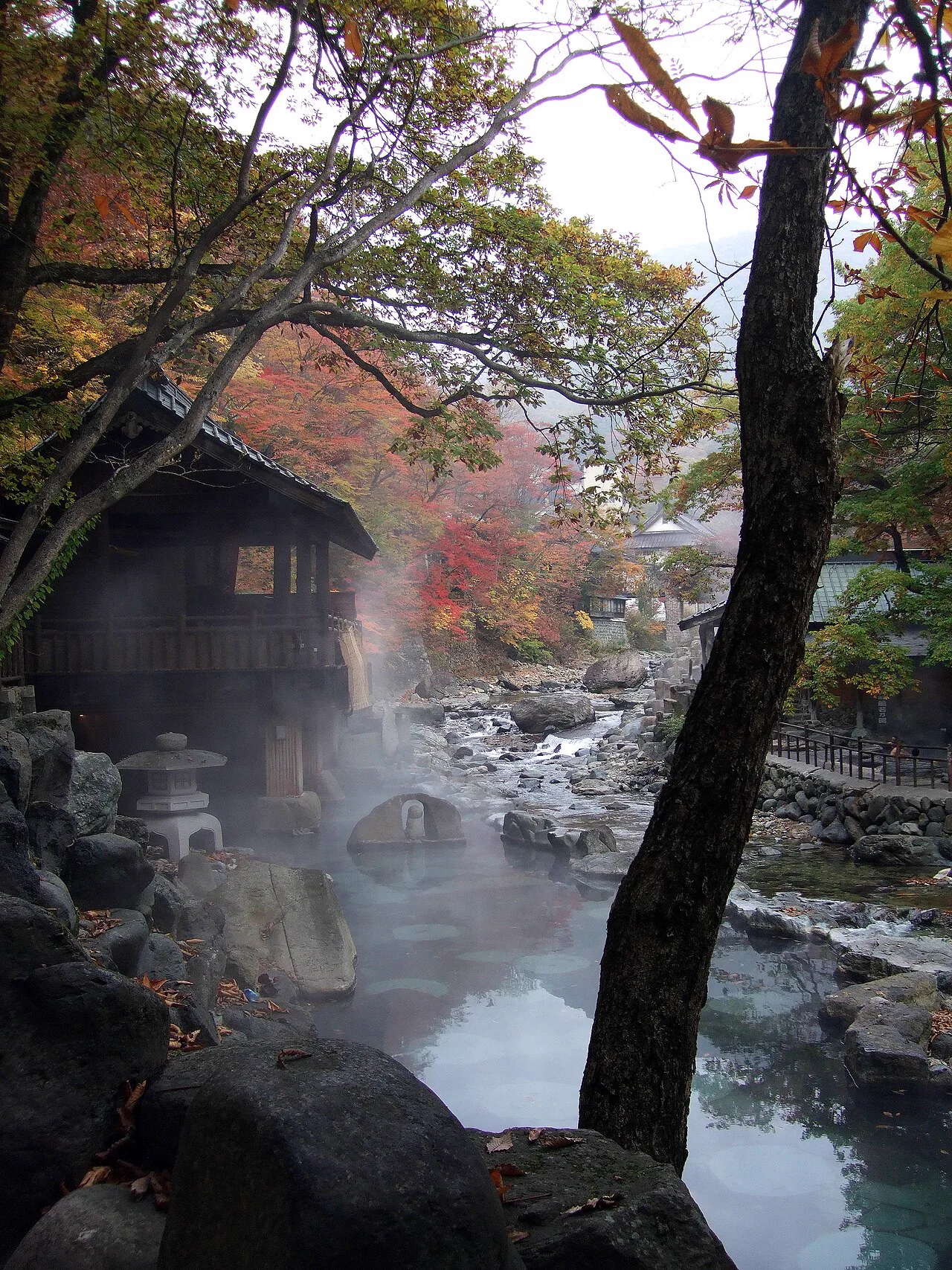
Korokan’s public baths, Kinpa-no-Yu and Ginpa-no-Yu, each have indoor and outdoor baths plus a sauna. The outdoor baths use the inn’s gold spring and face Mount Ochiba and the Arima valley.
The spring is sodium chloride, with a listed source temperature of 31.2°C; the inn says it heats the water. The onsen page does not give pH, flow rate or a tub-by-tub account of water addition, recirculation and disinfection.
The baths are open from 6:00 to 8:00 a.m. and 9:00 a.m. to midnight. The one-hour morning cleaning break catches some guests by surprise. Check-out is at noon, so you can still fit in a bath after 9:00 on departure day.
Staying at Korokan also gives you access to Yugetsusanso’s baths via the indoor Moonlight Bridge. The sister inn has two public baths, plus the riverside open-air baths Afuku-no-Yu and Tamahoko-no-Yu. Gekkoen describes those riverside baths as free-flowing spring water. Their posted hours are 6:00–9:00 a.m. and 3:00 p.m.–midnight; on weekends and public holidays, the riverside baths open from noon rather than 3:00 p.m.
It is a more varied circuit than the number “nine” alone suggests. Korokan looks down over the valley from a modern hillside building; Yugetsusanso is closer to the Takigawa River, in a traditional wooden-inn setting. With one night, there is no need to rush through every bath. Try Korokan after check-in, cross to Yugetsusanso later if you still feel like another soak, and save one for the morning.
The three private baths are for privacy, not private gold-spring water
Korokan’s three reservable baths are Hinoki, Cave and Wine. Each session lasts 40 minutes and costs ¥4,400. Slots begin every hour at 30 minutes past, from 3:30 p.m. through 10:30 p.m. The baths are on Korokan’s second floor; guests staying at Yugetsusanso may use them too. Reservations are first come, first served, by phone or email.
Hinoki is the largest, for up to eight people. Its step-free approach lets a wheelchair reach the area just beside the tub, though that does not make the whole inn or every bath wheelchair-accessible. The Cave bath holds up to five and is the only one described by the inn as semi-open-air. Wine holds up to eight; it uses a non-alcoholic bath additive, so children can use it.
You are paying for a private space and time to bathe together, not for a private onsen: the inn explicitly says none of these three baths uses hot-spring water. That may still suit parents bathing with a young child or anyone uneasy about a shared bath. If you want to soak together in natural gold-spring water, compare other Arima inns instead; Gekkoen’s private baths will not meet that brief.
The current official onsen page lists ¥4,400 per 40-minute session. An older accessibility note on the inn’s FAQ still mentions ¥2,200 for Hinoki, so do not rely on that stale figure when budgeting.
A guest-room open-air bath may be natural water, but it is not gold spring
Korokan has standard Japanese-style rooms, Western-style rooms and several higher-category rooms with open-air baths. A standard room’s bath is not a hot spring. The inn’s current FAQ says natural radon water is available only in the open-air baths in the Royal Suite and selected scenic rooms. Its room pages also describe natural radon water in Room 701, a Japanese-Western room introduced in August 2024.
Room names and photos can make “private bath” sound more specific than it is. Check the exact room description before paying a premium, and don’t assume that “open-air bath” means an in-room gold spring. Korokan’s public outdoor baths are where you find its own gold-spring water.
Day-use bathing is no longer a reliable way to try the inn
Korokan is not currently offering a walk-in, bath-only visit. Its lunch-and-bath day-use plan at the Japanese restaurant Yumiharizuki ended after service on June 28, 2026, according to the inn’s day-use notice. The page still contains older descriptions of day-use baths and private dining for groups; check directly with the inn before assuming any day-use option is available.
The Japan Spa Association’s listing still shows older day-use hours and prices. Those details do not override the inn’s dated closure notice. If you want to try Arima’s water before booking a stay, look at baths that currently accept day visitors in our Arima Onsen day-use bath guide.
Families and older guests
Korokan accepts children. Its FAQ lists a facility fee of ¥3,850 for ages three to five who need neither meals nor bedding. Children aged two or younger stay free on the same basis.
Children under seven may use a public bath assigned to the opposite sex when accompanied by a guardian. The women’s Ginpa-no-Yu has a baby bed. Meal and bedding arrangements affect the child’s rate.
The private baths let a family bathe together, but their water is not hot spring water. Hinoki has a wheelchair approach to the area beside the tub; it does not provide access beyond that space.
Some Western-style rooms have a roughly 20 cm step into the bathroom and toilet. If anyone in your party has difficulty with steps or uneven ground, check the room, dining route and path between buildings. Korokan does not state a tattoo policy; ask the inn if it affects your bath choice.
Getting there without a car
Korokan is roughly a 10- to 15-minute walk from Arima Onsen Station or the bus stop, depending on which route you follow. Arima is hilly, so the walk feels different with a suitcase, stroller or an older travel companion than it does on a short stroll around town.
The free shuttle runs from 8:00 a.m. to 7:00 p.m. Call from Arima Onsen Station or the bus stop. The access page estimates a 10–15-minute wait; the FAQ says 5–10 minutes, so allow extra time.
After 7:00 p.m., pickup depends on the day. The inn has about 30 free parking spaces, with no reservation required. Its FAQ says guests can usually park from around 2:00 p.m. before check-in, subject to availability.
If you are combining a town walk with a ryokan stay, settle the luggage and shuttle question first. Our one-night Arima and Mount Rokko itinerary may help with the broader route.
Check the maintenance calendar before choosing dates
Korokan’s 2026 closure notice lists September 29–30 as maintenance days, when the inn says it will not accept overnight or day visitors. More closure dates appear in its 2026 maintenance calendar; the inn warns that extra dates may be added. A booking-site search result is not a substitute for the property’s own current notice.
Compare like-for-like room plans
Korokan’s room categories differ in what the in-room bath actually contains. A standard bath is not a hot spring; the outdoor baths in selected rooms use natural radon water; the public outdoor baths use the inn’s gold spring; and the three paid private baths are not hot springs at all. Before comparing prices, line up the same dates, guest count, room category, meal plan and cancellation terms. If you want a private bath, include the ¥4,400 fee in the cost and be clear about what it does—and does not—provide.
<p class="booking-disclosure">These are affiliate links. Yubiyori may earn a commission if you book through them. Prices, room names, meals, payment terms and cancellation policies vary by date and platform.</p>
How Korokan compares with other Arima stays
Korokan suits guests who want several baths across a hillside inn and its riverside sister property. Its paid private baths provide privacy, not gold-spring water.
Taketoritei Maruyama has private-use gold- and silver-spring baths for overnight guests. Hanamusubi combines public baths with both springs, paid private gold-spring bathing and selected rooms with gold-spring water. Nakanobo Zuien does not accept guests under 13. Negiya Ryofukaku has a wooded setting and a private-use gold-spring bath; its in-room open-air baths are not natural hot springs. Check the specific room and bath before comparing these setups.
Sources and image credits
- Gekkoen Korokan official website
- Official onsen information
- Official guest-room information
- Official FAQ
- Official access and shuttle information
- Official day-use notice
- 2026 maintenance closure notice
- Japan Spa Association listing for Gekkoen
- Bath and station photos: Wikimedia Commons, linked image files above. Food image: Gekkoen Korokan official website.
Related reading
Arima Onsen day-use baths · One night in Arima and Mount Rokko · Arima stays for couples