Ibusuki Kakenagashi Onsen: What Each Bath Actually Confirms
Ibusuki baths use different water systems: direct flow, added water, circulation or reheating. Check each facility’s published details before choosing.
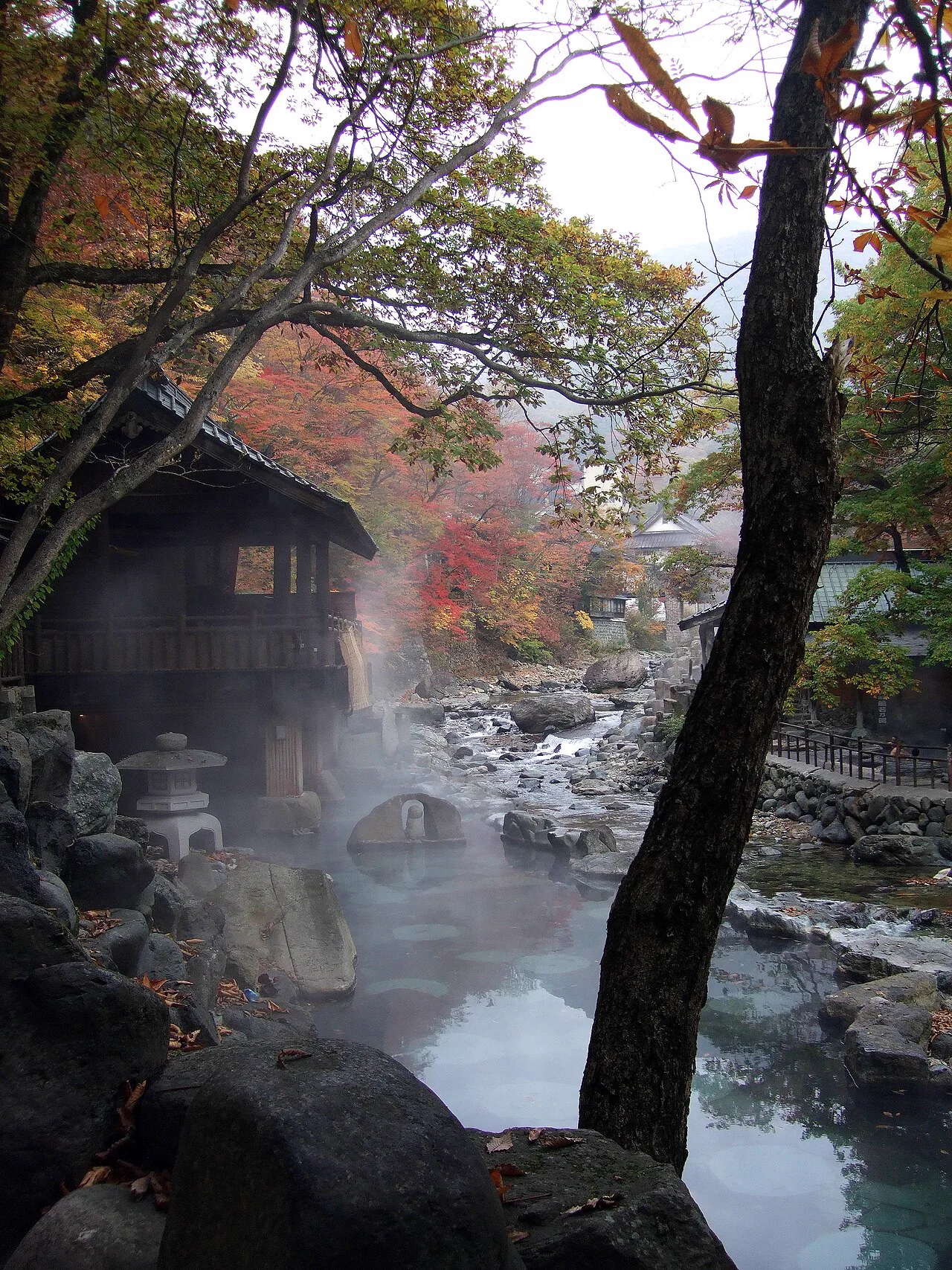
“Kakenagashi” means hot-spring water flows into a bath and overflows rather than being treated as a simple closed loop. It does not, by itself, prove that the water is undiluted, unheated or untouched by any other treatment. Ibusuki’s published descriptions make those distinctions unusually clear: Yajigayu names a no-dilution bath alongside a diluted one; Unagi Onsen says its sulfur spring is diluted and free-flowing; Saraku lists both source flow and circulation. Nonoka goes further on two points—it says its water is neither reheated nor recirculated—but leaves other treatment details unstated.
For a private bath with explicit no-recirculation wording, start with Nonoka. For a public bath whose two sources have different dilution rules, look at Yajigayu. Unagi is the low-cost sulfur-spring option if you are already heading to Lake Unagi. Saraku still suits a first Ibusuki visit built around sand bathing, provided you are comfortable with its mixed flow-and-circulation profile.
Read the wording, not just the label
Facility pages often publish several details side by side: spring type, source temperature, dilution, reheating, circulation and whether water flows out of the bath. One line does not answer every question. A source temperature is not the temperature of the bathing pool, and “source-flowing” does not necessarily mean that every pool in a large facility uses the same system.
| Bath | What the current published description confirms | What it does not establish |
|---|---|---|
| Nonoka | The operator says its water is not circulated or reheated, and water overflows after entering the bath. | Its current page does not state whether water is diluted or disinfected. |
| Yajigayu Onsen | The tourism association describes two source-flowing baths: Yajigayu, which cannot be diluted, and Daikoku-yu, which can be. | The listing does not map each source to a particular side or tub. Ask staff if that distinction matters to your visit. |
| Unagi Onsen | The association lists a sulfur spring at 88.8°C, added water and continuous flow. | It does not give a fixed temperature for the bath pool or publish a wider treatment breakdown. |
| Saraku | Its bathing profile lists an 84.7°C source, added water, and source flow combined with circulation. | The listing does not specify how that arrangement is divided among individual bathing areas. |
| Kokoro no Yu | The operator describes its public open-air bath as source-flowing; the tourism listing says source-flowing applies to part of the facility. | Neither description supports calling every indoor pool, sauna bath or family bath source-flowing. |
| Sayuri | The association lists added water and source flow, with an 86°C measured source temperature. | It does not specify whether the individual bath also uses circulation or reheating. |
| Tamatebako Onsen | The association lists added water and source flow, with a 100.4°C source temperature. | The source temperature is not the pool temperature; circulation and reheating are not specified in that entry. |
Yajigayu gives the clearest choice between diluted and undiluted flow
The Ibusuki Tourism Association distinguishes two spring sources at Yajigayu: the original Yajigayu bath cannot be diluted, while Daikoku-yu can be. Both are described as source-flowing. That is more useful than a blanket “pure water” claim because it tells you where dilution is—and is not—part of the published setup.
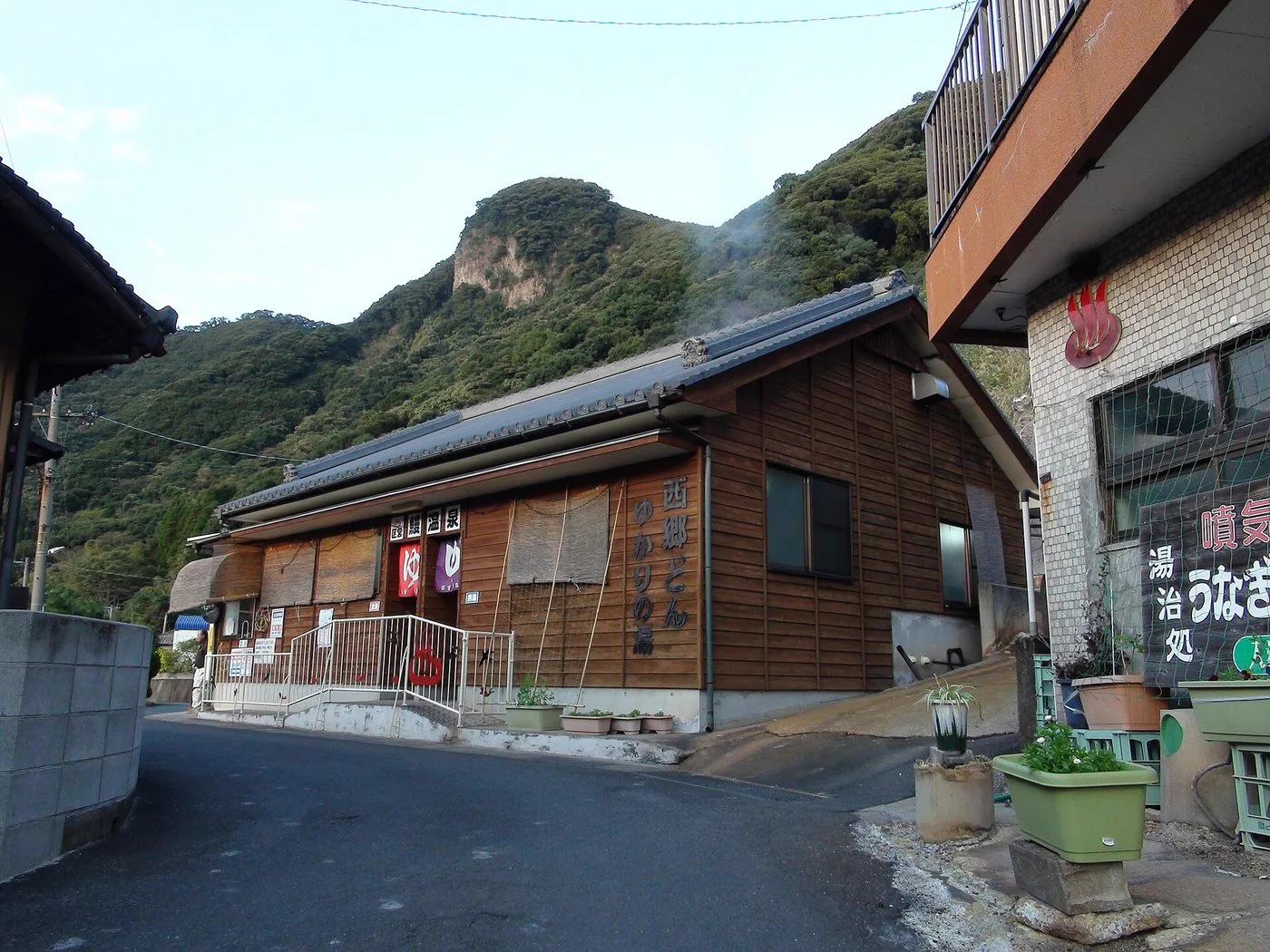
The facility is a simple public bath rather than a private-room onsen. The association lists indoor baths, ¥400 adult admission and daily hours of 8 a.m. to 9 p.m.; Thursday is the regular closing day. If undiluted source water is your main requirement, confirm which bath is open when you arrive. The page names the two sources but does not say which tub or side corresponds to each.
Nonoka: strong on circulation and reheating, quiet on the rest
Nonoka’s operator says it draws water from about 200 metres underground, does not circulate or reheat it, and lets water overflow after it enters the bath. Those are direct statements about flow and temperature management. The same page does not say whether the water is diluted or disinfected, so “untreated” or “100% pure” would go beyond the evidence.
Nonoka rents private bathing rooms by the hour; it has no standard communal bath. The tourism association lists eight rooms with indoor and outdoor baths, each for up to four adults.
The tourism association lists these base rates for an hourly room rental:
| Period | Base rate per room |
|---|---|
| Weekday | ¥2,000 |
| Weekend or public holiday | ¥2,200 |
| Major holiday period | ¥2,500 |
Extra guests cost more, so confirm the party-size charge and reservation terms with the inn before booking. These are room rates, not prices per person.
Unagi is free-flowing, but the source is diluted
Unagi Onsen is a useful counterexample to the idea that dilution and kakenagashi are opposites. Its published profile identifies a simple sulfur spring with an 88.8°C source, added water and continuous flow. Adding water to manage an extremely hot source does not erase the separate fact that water flows through and out of the bathing pool. The pool temperature itself is not published in the association’s current entry.
Unagi has one indoor pool for each gender and charges ¥300 for adults. The small public bath is beside Lake Unagi. From October 1, 2026, both seasonal schedules show a 7 p.m. closing time; no last-admission time is listed, so call 0993-35-0814 if arriving late. See the Unagi Onsen guide for access details.
Saraku and Kokoro no Yu: read “partial” and “combined” literally
Saraku’s public profile lists added water and a system combining source flow with circulation. It is the most important qualifier for anyone searching specifically for a bath without circulation: the page does not describe Saraku as purely source-flowing. The same water profile does not say exactly how each bathing area is managed, so avoid carrying the facility-wide wording over to the sand-bath beds as if it described the sand temperature or process.
That distinction need not rule out Saraku. If the main reason for going is Ibusuki’s signature sand bath and a complete public bathing setup, it may fit better than making a special trip for a particular water-treatment label. For the facility’s sand-bath visit and current access, see the Saraku guide; the Ibusuki day-use comparison covers the broader choice among facilities.
Kokoro no Yu has multiple pools, saunas and four private family baths. The operator describes its public outdoor bath as source-flowing; the tourism association qualifies the facility as only partly source-flowing. That description applies to the outdoor bath, not every pool. Water supply for the family baths is not specified. See the Kokoro no Yu guide for its layout and access.
A practical way to choose
| If you want… | Consider… |
|---|---|
| A private room | Nonoka explicitly says its water is not recirculated or reheated. Dilution and disinfection are unspecified. |
| To compare diluted and undiluted water | Yajigayu describes both, but does not identify each tub; ask on site. |
| A low-cost sulfur bath | Unagi adds water while using continuous flow. Its posted 7 p.m. closing time took effect on October 1, 2026. |
| Sand bathing | Saraku combines source flow and circulation; it does not promise a no-circulation bath. |
| A large bathhouse | Kokoro no Yu confirms source flow for its outdoor bath only. |
Water-handling details apply to the named bath only. Dilution, disinfection or tub-by-tub routing may be unspecified.