Unagi Onsen and Sume: Two Uses for the Heat by Lake Unagi
Unagi Onsen pairs bathing and Sume cooking with natural steam beside Lake Unagi.
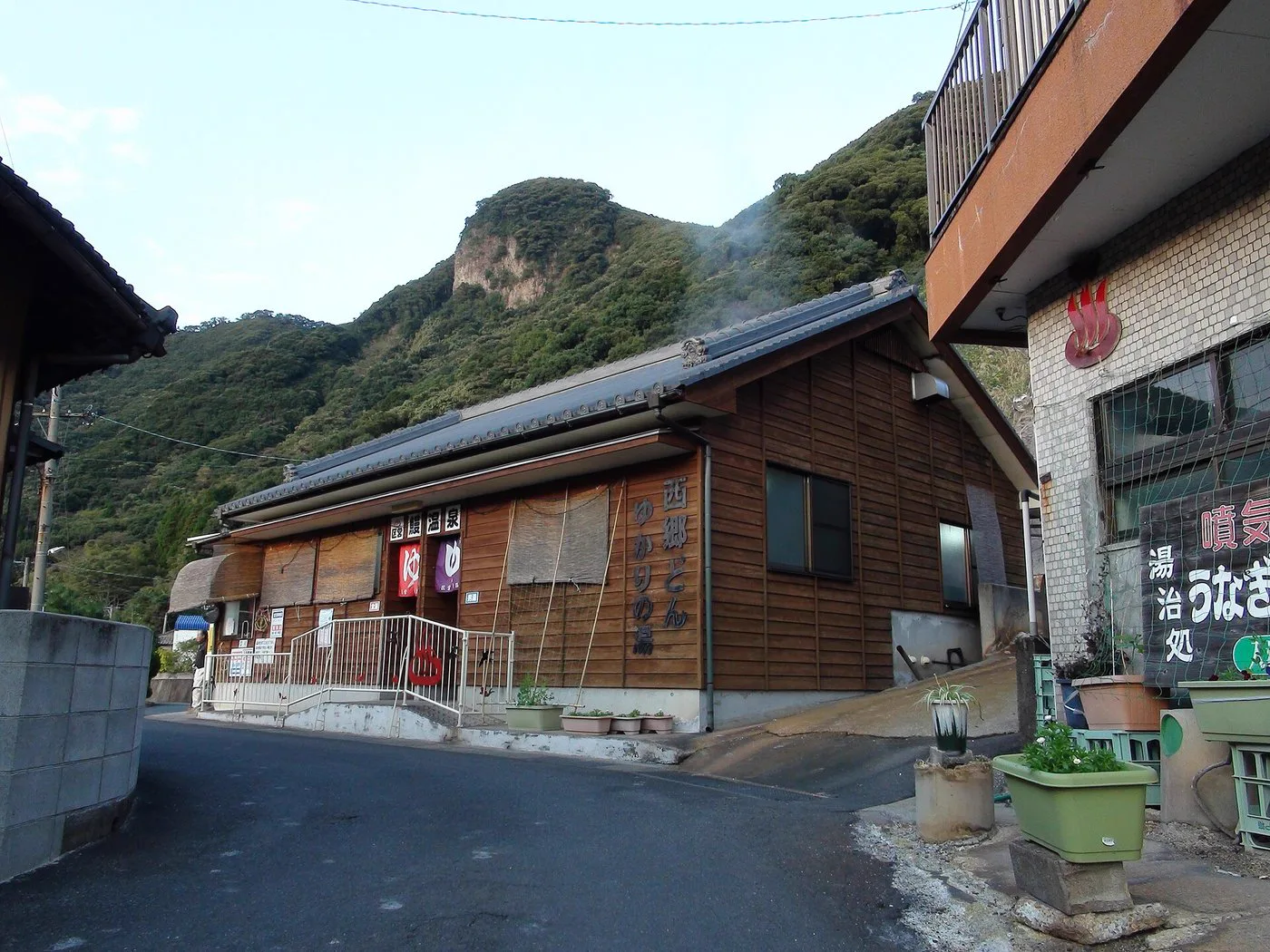
At Unagi, geothermal heat is part of the settlement’s everyday landscape. Steam rises around the small lakeside community, and the Sume cooking area uses that heat to steam ingredients. The municipal bath is a separate stop nearby: a simple indoor pool for men and one for women, with a sulfur spring and low entry fee. You can visit either facility on its own; together they make a relaxed southern Ibusuki outing.
| Bath detail | Current listing |
|---|---|
| June–September | 8 a.m.–1 p.m. and 3–7 p.m. |
| October–May | 8 a.m.–7 p.m. |
| Admission | Adults and junior-high students ¥300; elementary ¥100; infants ¥50 |
| Closed | First and third Monday of each month; open on public holidays |
| Spring | Simple sulfur spring; source is 88.8°C, cooled with added water |
Bring ingredients for Sume
Sume is the shared natural steam stove, not a restaurant kitchen. The current association listing gives hours of 8 a.m.–8 p.m. and a fee of ¥300 per use. You supply the food; vegetables and eggs are suitable, while meat and fish are not permitted. There is no need to pay for the bath if you only want to cook, since the stove and bath are separate facilities.
Buy ingredients before reaching the lakeside area. Steam cooking does not follow one universal timer: eggs, leafy vegetables and root vegetables need different lengths, so use the posted instructions and handle the lids carefully. The steam is extremely hot. The association lists parking for 16 standard cars and one large vehicle at Sume.
Make it a southbound stop
The association places Unagi about a 20-minute drive from central Ibusuki via Route 226 and the Narikawa Bypass. Lake Unagi is a crater lake; the bath and Sume are on its shore, so it is easy to add a short lakeside pause without committing to a full circuit. A car works best if you want to combine this with other Yamakawa-area stops. Train access alone leaves a taxi leg from JR Yamakawa Station, and the current local route timetable should be checked before you count on a bus connection.
If this is part of a longer loop, the Ibusuki stay-area guide and day-trip versus overnight guide help with pacing. Other bathing options appear in the day-use onsen guide, while the Motoyu guide and Tonosamayu guide cover town-side public baths.
Families looking for a private room can compare the family-bath options; travelers interested in a booked private soak can read the Nonoka guide. For the coastal sand-bath sites farther south, see the Sayuri guide and the Tamatebako Onsen guide. The car-free Yamakawa half-day plan is a useful comparison if driving is not part of your trip.