Iizaka Onsen Public Baths: Which One to Visit, and Is the 2026 Bath Pass Worth It?
Compare Iizaka’s eight operating baths by price, hours, location and water temperature. The ¥1,000 2026 pass pays off only if you visit one bath in each group.
Iizaka Onsen has eight public baths spread around its old hot-spring town, not one central bathhouse with eight pools. Hakoyu is the easiest first stop: it sits a minute from Iizaka Onsen Station and has both a hotter pool and a cooler one. Sabakoyu is the best-known historic bath, about five minutes on foot from the station. If you are planning three baths, the 2026 wooden Yumeguri Tegata costs ¥1,000 and covers one bath from each of three groups; for one or two visits, individual tickets usually cost less.
The water can be very hot. Fukushima City says source water reaches the bath taps at roughly 45–70°C, while Hakoyu is the only bath with a commonly cited pool estimate: about 45°C in its hot pool and 42°C in the cooler pool. Those figures are not a promise of the temperature on your visit. Start cautiously and ask the attendant if you are unsure.
Eight baths, with very different schedules
All prices below are for adults. Seven baths charge ¥400; Hakoyu is ¥500. The station walks are approximate and describe the central cluster, not a single loop. Several baths split their hours between morning and afternoon, so check the weekday column before setting out.
| Bath | Adult admission | Regular closure | Opening hours | From nearest station |
|---|---|---|---|---|
| Hakoyu | ¥500 | Tuesday; open on public holidays | Daily 6 am–9 pm | 1 min from Iizaka Onsen Station |
| Sabakoyu | ¥400 | Monday; open on public holidays, with no substitute closure | Daily 6 am–9 pm | About 5 min from Iizaka Onsen Station |
| Dosen no Yu | ¥400 | Friday | Daily 6 am–9 pm | About 4 min from Iizaka Onsen Station |
| Daimon no Yu | ¥400 | Thursday | Mon/Wed/Fri 6 am–1 pm; Tue/Sat/Sun 1–9 pm | About 10 min from Iizaka Onsen Station |
| Hachiman no Yu | ¥400 | Tuesday | Thu/Sat/Sun 6 am–1 pm; Mon/Wed/Fri 1–9 pm | About 10 min from Iizaka Onsen Station |
| Totsuna no Yu | ¥400 | Friday | Tue/Thu/Sun 6 am–1 pm; Mon/Wed/Sat 2–9 pm | 5 min from Hanamizuzaka Station |
| Senki no Yu | ¥400 | Thursday | Mon/Wed/Fri 6 am–1 pm; Tue/Sat/Sun 1–9 pm | About 5 min from Iizaka Onsen Station |
| Tennoji Anabara no Yu | ¥400 | Wednesday | Mon/Fri 6 am–1 pm; Tue/Thu/Sat/Sun 1–9 pm | In the Anabara area; confirm transport and status |
Last admission is 20 minutes before closing. Tennoji Anabara no Yu is temporarily closed after its water turned cloudy, according to the Iizaka Onsen Tourism Association. The city’s regular-hours listing remains online, but no reopening notice is posted; call before travelling to Anabara.
Totsuna no Yu changed its Saturday schedule on August 1, 2025. Saturday is now an afternoon session, 2–9 pm, rather than the morning slot shown in older guides. Fukushima City’s September 2026 onsen page repeats that change.
Picking one bath
Hakoyu is an easy first stop: it is beside the terminal station, and both bathing areas have a hot source-fed pool and a cooler pool. It closes on Tuesdays.
Official child prices conflict for Hakoyu. Check the ticket machine before paying; the other baths list ¥200 for ages 1–11.
| Child admission | Published price |
|---|---|
| Hakoyu, Fukushima City facility page | ¥300 (ages 1–11) |
| Hakoyu, tourism association and 2026 iris-bath notice | ¥250 |
| Other seven baths | ¥200 (ages 1–11) |
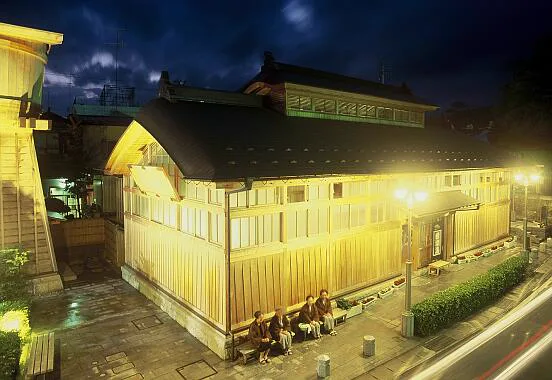
Sabakoyu is the classic choice if you want a bath paired with a walk through the old town. Its current building was rebuilt in 1993 in the style of a Meiji-era bathhouse, with a stone tub and timber exterior. The bath is associated with Matsuo Basho’s 1689 visit to Iizaka, though that part is traditionally told rather than a documented modern travel account. It closes on Mondays, but operates on public holidays without a make-up closure.
Dosen no Yu is close to the station despite sitting among the residential streets of Yuno. It is a straightforward local bath with no dedicated parking, so it suits rail visitors better than drivers looking for a space right at the door. Daimon no Yu sits higher up and Fukushima City highlights its view across the Fukushima Basin; the trade-off is its split schedule and a roughly ten-minute walk from the station. Hachiman no Yu makes most sense alongside Hachiman Shrine or the neighbourhood’s autumn festival, but its morning and afternoon pattern is different from Daimon’s.
Totsuna no Yu is handy if you are staying near Hanamizuzaka Station or walking beside the Surikami River. Senki no Yu is closer to Iizaka Onsen Station, although its weekday hours alternate between mornings and afternoons. Neither is an all-day fallback when one of the central baths is closed.
What the spring numbers do—and do not—tell you
The operator lists source temperatures between 48.8°C and 62°C, but those are spring or distribution-tank figures, not measured temperatures in each bathing pool. The published analyses are mostly from 1996–2010. They help identify where the water comes from; they do not establish that two baths have the same pool temperature or treatment system.
| Bath | Listed source | Source temperature | pH |
|---|---|---|---|
| Hakoyu | Hakoyu distribution tank | 48.8°C | 8.6 |
| Sabakoyu | Yuzawa distribution tank | 51.0°C | 8.6 |
| Dosen no Yu | Wakatake distribution tank | 60.0°C | 8.6 |
| Daimon no Yu | Daimon distribution tank | 62.0°C | 8.4 |
| Hachiman no Yu | Hachiman source | 54.6°C | 8.6 |
| Totsuna no Yu | Daimon distribution tank | 62.0°C | 8.4 |
| Senki no Yu | Wakatake distribution tank | 60.0°C | 8.4 |
| Tennoji Anabara no Yu | Fujiya source | 60.0°C | 8.4 |
Dosen and Senki share a distribution source, as do Daimon and Totsuna. Their pipes, pool size and on-site water handling may still differ; there is no current, pool-by-pool treatment data to support a more precise comparison. Hakoyu is the practical choice if having a cooler pool matters more than saving ¥100.
The 2026 Yumeguri Tegata: when three visits save money
The ¥1,000 wooden pass covers three baths: one each from Groups A, B and C. It does not cover any three baths of your choice.
| Group | Baths |
|---|---|
| A | Sabakoyu or Hakoyu |
| B | Hachiman no Yu, Daimon no Yu or Dosen no Yu |
| C | Senki no Yu, Totsuna no Yu or Tennoji Anabara no Yu |
| Visits | Individual tickets | Pass | Saving with pass |
|---|---|---|---|
| Hakoyu plus one bath from each other group | ¥1,300 | ¥1,000 | ¥300 |
| Sabakoyu plus one bath from each other group | ¥1,200 | ¥1,000 | ¥200 |
| Two ¥400 baths | ¥800 | — | No saving |
| Hakoyu and one ¥400 bath | ¥900 | — | No saving |
The pass saves money only for a three-bath route that uses one bath from each group.
The pass also depends on which baths are open that day. These examples use the schedules in the table above:
- Tuesday: Hakoyu and Hachiman are closed. Dosen is open all day; Daimon opens in the afternoon. Totsuna is the morning Group C option and Senki the afternoon option.
- Thursday: Daimon and Senki are closed. Dosen or Hachiman can fill Group B; Totsuna is the confirmed Group C option. Use Anabara only after confirming it has reopened.
- Friday: Dosen and Totsuna are closed, narrowing the Group B and C choices.
The 2026 batch went on sale August 10 in limited quantities and is valid through March 31, 2027. The association lists the tourist information office, Old Horikiri House and Iizaka Onsen Station among its sales points. Check availability and the day’s bath schedules before buying. The pass is made of Fukushima-grown hinoki and works as a small keepsake, but there is little reason to buy it if you only want one quick soak.
Getting there, bringing the basics
The Fukushima Kotsu Iizaka Line takes about 23 minutes from Fukushima Station to Iizaka Onsen Station. Hakoyu is beside the terminus; Sabakoyu and Senki no Yu are about five minutes away on foot.
| Adult trip | Cost |
|---|---|
| One-way train fare | ¥430 |
| Return train fare | ¥860 |
| Return train plus Sabakoyu admission | About ¥1,260 |
| Return train plus Hakoyu admission | About ¥1,360 |
Totals exclude food and toiletries.
Most of the central baths are easier to link on foot than by moving a car between small parking areas. Dosen no Yu has no dedicated lot; Senki has two spaces, Daimon and Hachiman have four each, and Totsuna has three. Hakoyu has four spaces immediately outside, including one considerate-parking space, plus a 24-space shared lot about three minutes away. Use the town’s shared lots for the centre and leave the car there while you walk.
Bring a small towel, shampoo and soap. The baths do not provide complimentary toiletries, and the association does not promise that each one sells the same supplies. A compact waterproof bag is useful if you plan to carry damp items between baths. For a second area or a longer day around Fukushima, compare Iizaka with Tsuchiyu and Takayu Onsen before deciding how much time to leave for the trip.
Heat, pace and local etiquette
These are neighbourhood bathhouses, not hotel spas with long-stay facilities. Wash before entering the pool, keep your towel out of the water and follow any instructions posted at the bath. If you are unsure how the bathing area works, ask the attendant rather than copying a fast-moving local bather.
For a three-bath day, leave time between soaks to cool down, drink water and eat. Stop if you feel light-headed, nauseated or unwell; buying a pass is no reason to push through another hot bath. If the cooler pool at Hakoyu is not available or feels too hot on the day, shorten the soak or call it after one bath.
Frequently asked questions
How many public baths are open in Iizaka?
Fukushima City and the local association currently list eight. Kiriyu, which used to appear in older guides, closed on November 14, 2024.
Can I use the pass for Sabakoyu and Hakoyu together?
No. They are both in Group A, and the pass allows one bath from each group. You would need to buy a separate ticket for the second Group A bath.
Is every bath around 60°C?
No. The figures around 49–62°C refer to listed source or distribution-tank temperatures, not the bathing pool. Fukushima City says source water at the taps can range from about 45–70°C. Hakoyu has the clearest pool estimates, but the actual temperature can vary.
Are tattoos allowed?
I could not find a clear current tattoo policy published for all eight baths. Ask the specific bath or the association before travelling if this affects your choice.
Is Tennoji Anabara no Yu open?
Its permanent Fukushima City listing still shows its usual schedule, but the association has posted a temporary closure because of cloudy spring water. Confirm directly before going; do not build a three-bath route around it until it is confirmed open.
For a wider regional comparison, see Akiu and Sakunami Onsen near Sendai or the Naruko day-trip guide.