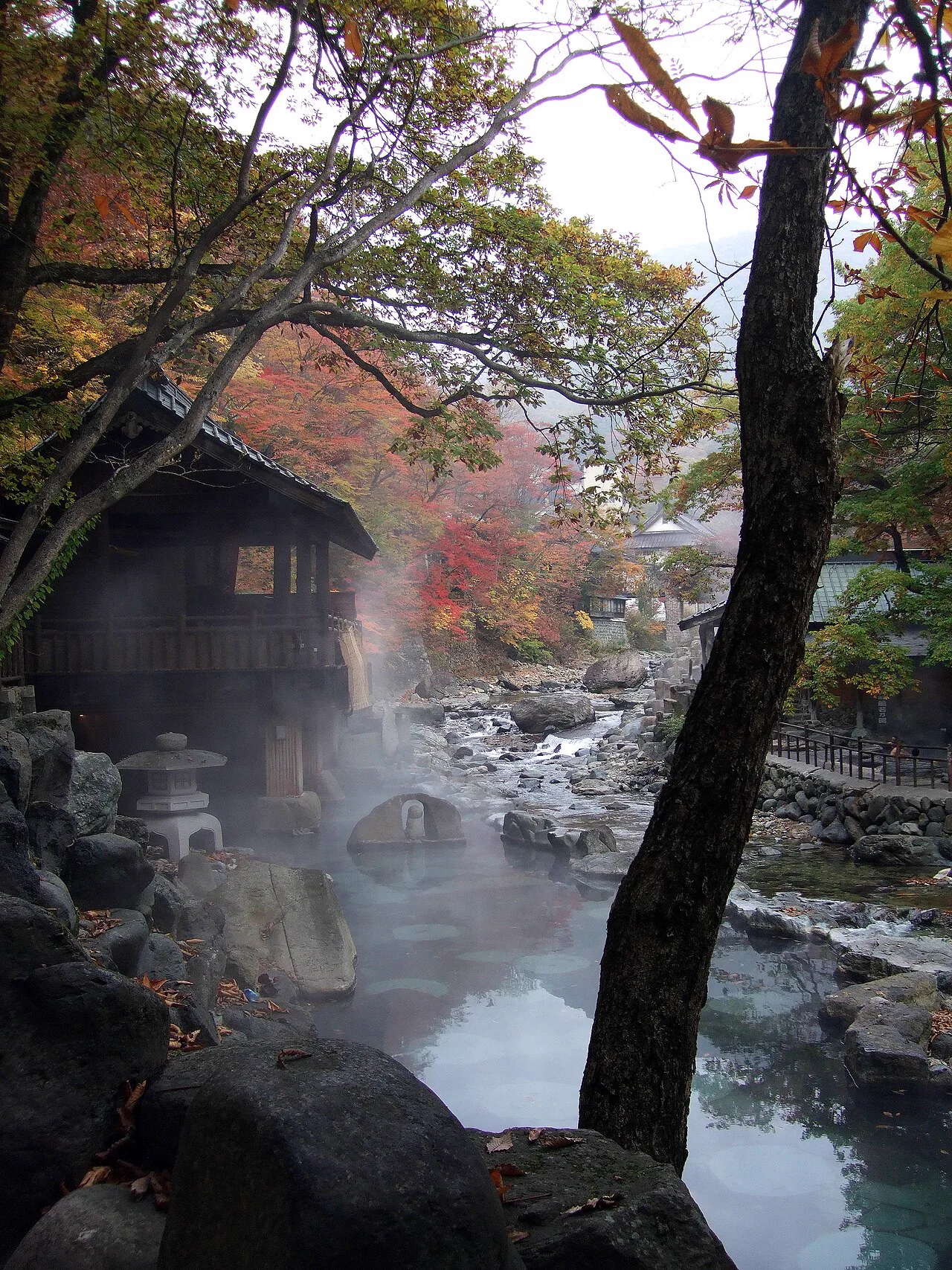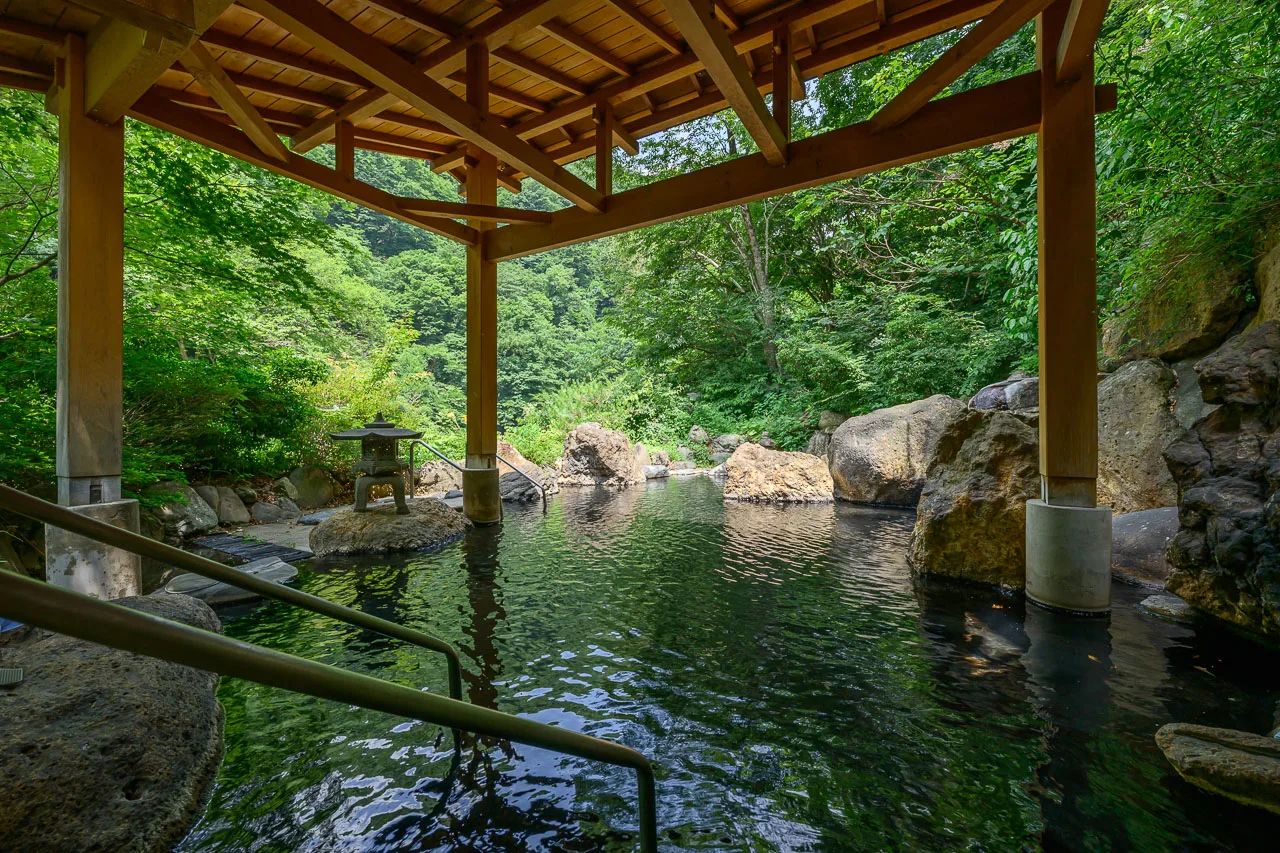
Driving to Kawafuru Onsen Hamaya Ryokan in Winter
Winter access to Kawafuru Hamaya requires studless tyres or chains; check road cameras, restrictions and day-use availability before the mountain drive.
Winter access to Kawafuru Onsen Hamaya Ryokan is not a “the highway looks clear, so the last stretch will be fine” kind of drive. The inn specifically warns that snow and ice are possible from December to March and asks drivers to arrive on studless tires or with chains fitted. Minakami’s tourism association says ordinary tires are dangerous in winter and recommends checking its road cameras before setting out.
If you are not equipped for winter roads, do not make this day bath the reason to test the route. Hamaya’s day-use hours are short, and the inn may not accept day visitors on your date; an overnight stay can remove the pressure to rush into the valley, but it does not remove the road conditions.
The final approach is the part to plan for
Hamaya estimates about 30 minutes from Tsukiyono Interchange. Its route follows National Route 17 toward Sarugakyo, turns at Aimata and continues roughly five kilometres before crossing a red arch bridge and descending a steep slope to the inn. There is parking by the property, but that does not make the access road immune to snow or ice.
The inn’s winter requirement applies to the season, not only to days when snow is falling at your starting point. Minakami’s weather can differ by area, and the valley approach is not the same as a city forecast. Check conditions close to departure and again before the final turn; if the road or car equipment does not look safe, change the plan.
A day bath leaves little room for delay
Day-use reception is listed from 10:30 a.m. to 2 p.m., with departure by 3 p.m. The inn may suspend day bathing when it has many overnight guests, on busy holiday dates or for cleaning, so confirm acceptance directly before driving in.
That short window matters more in winter. You need to arrive early enough to bathe without rushing, then leave time for the return over the same mountain-road approach. A booking or posted price is not a reason to continue if road conditions have deteriorated.
Overnight stays fit the shuttle better
The inn has no public transport to its door, but it offers a pre-booked pickup from Yasumiishi bus stop for up to four people. The listed pickup arrivals are 2:56 p.m. in the regular season, 2:48 p.m. from December 16 through March 31, and 4:21 p.m. The return pickup leaves the inn at about 9:20 a.m.; in winter, the connecting bus from Sarugakyo is listed at 9:58 a.m.
Those afternoon arrivals are after the day-bath reception has closed, so do not treat the inn’s overnight pickup as a day-trip shuttle. If you are travelling without a car, reserve the pickup with the inn, confirm the bus operator’s timetable and choose a stay that fits those connections. Walking from Yasumiishi to the property takes about 90 minutes, which is not a sensible winter transfer with luggage.
Check three sources before you leave
- Ask Hamaya whether day use is operating that day. It can be suspended even when the regular fee page remains online.
- Look at Minakami’s road cameras. The tourism association gathers views from several parts of town; they are useful context, not a live view of every metre of Hamaya’s access road.
- Check current restrictions and your route. Gunma Prefecture publishes national and prefectural road restrictions; the tourism association also warns that winter closures vary by year and weather.
The inn’s 37–38°C warm bath is suited to an unhurried soak, not a quick warm-up between ski runs. If the drive is marginal, save it for a safer day. For the day-use conditions themselves, see Hamaya’s day-trip guide; for the case for staying overnight, see day trip or stay at Hamaya?.