Gunma Onsen Guide: Kusatsu, Ikaho, Shima, Minakami and Manza
Compare five Gunma onsen areas by town layout, terrain, transport and stay style, then follow the focused guide for the destination that fits your trip.
Gunma’s hot-spring destinations have very different layouts. Kusatsu centers on Yubatake and a walkable evening; Ikaho climbs a stone stairway; Shima follows a long river valley; Minakami spreads across multiple districts; and Manza is a high-altitude mountain stay. Choose a base by the amount of local movement you want to manage, then check the route for that specific town.
| Area | The day revolves around | Transport fit | Best for |
|---|---|---|---|
| Kusatsu | Yubatake, public baths and evening streets | Bus-linked; walkable central district | A first onsen-town stay |
| Ikaho | Stone steps, small shops and two spring types | Bus access from Shibukawa; steep on foot | A compact town visit with a climb |
| Shima | River, inns and separate valley districts | Bus from Nakanojo; local distances matter | A quieter overnight and riverside walks |
| Minakami | Outdoor activities and baths in separate areas | Rail plus local bus, taxi or car | Pairing a bath with mountain activities |
| Manza | High-elevation baths and mountain scenery | Date- and season-sensitive | An overnight built around the inn |
Kusatsu is the easiest place to spend an evening on foot
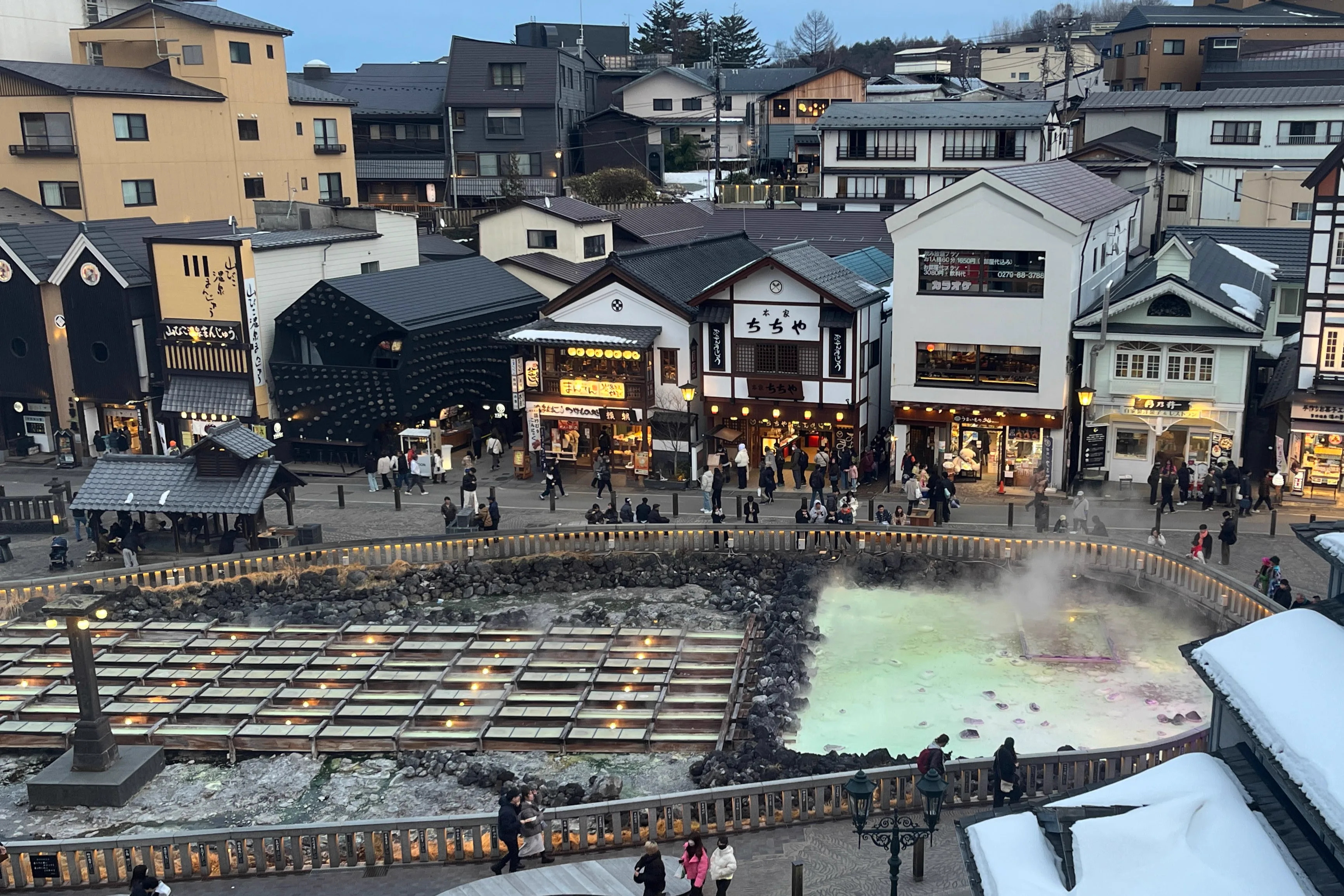
Yubatake gives Kusatsu a clear center. Public baths, shops and inns gather nearby, so visitors can take a break at their lodging and return to town after dinner. The lanes are hilly, and a room outside the center may add a tiring walk, especially with luggage or in snow.
Kusatsu suits travelers who want the hot-spring town itself to be the main event. For a first visit, start with the Kusatsu Onsen guide, then compare one night versus two if you are deciding how long to stay. The no-car access guide covers the bus arrival and onward movement.
Ikaho means stairs and a defined central walk
Ikaho’s stone steps climb through the resort, with inns, food counters and small shops along the route. The steps are part of the visit, but they are a real climb; travelers with heavy bags, limited mobility or small children may prefer a lodging choice that reduces repeated stair walks. The town has two well-known spring types, Kogane-no-Yu and Shirogane-no-Yu, though the bath available depends on the facility.
A bus reaches the onsen district from Shibukawa, so the center can work without a car. The Ikaho access from Tokyo guide and stay-area comparison help with the transfer and lodging position. For a focused half-day, use the stone-steps itinerary.
Shima is longer than its central stop suggests
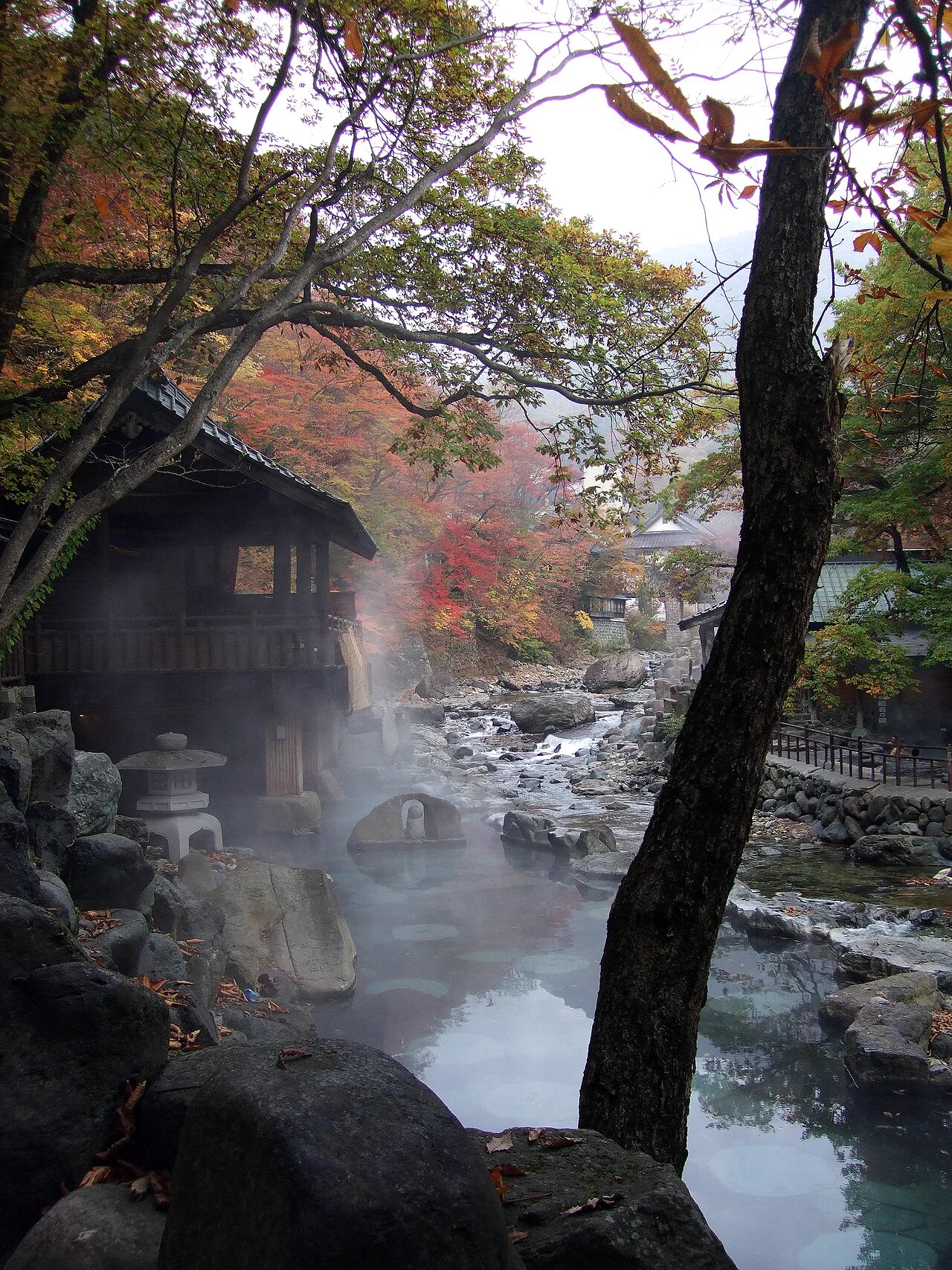
Shima runs along the river and road beyond its central bus area. Shin-yu, Yamaguchi and Hinatami sit in different parts of the valley, so a map can make separate bath stops look closer than they feel on foot. Choose the bath that fits the day’s walk instead of trying to visit all of them.
The Nakanojo bus makes Shima possible without a car, but its schedule sets the day’s boundaries. Shima is rewarding as an overnight when there is time for the river, a short walk and one bath without rushing to the return bus. The free community-bath guide explains the local facilities and their limited visitor hours. For staffed facilities, see the paid Shima day-bath guide.
Minakami is a region, not a single hot-spring street
Minakami’s districts are separated by rail lines, river valleys and mountain roads. That spread works well when a bath follows rafting, hiking, skiing or another outdoor activity, but makes improvised bath-hopping inefficient. Some places sit beside a station; others require a bus and a separate taxi or car for the final leg.
Set the activity and transport first, then add one bath along that route. The Minakami day-use comparison covers three facilities with different bathing windows and access needs. For a stop attached to a station, the Yufuki-no-Yu guide near Doai is a separate option.
Manza is better planned as a mountain overnight
Manza’s altitude shapes both the appeal and the logistics. The journey is longer than a town-center bus transfer, and seasonal road or bus conditions can affect access. Make the inn and its current transport notice the center of the plan; treat a quick detour from another Gunma base as impractical unless the route and weather work on your dates.
The Manza access guide covers the transfer, while the one-night itinerary helps decide how to use the stay. Compare Manza and Kusatsu if the high-altitude setting is optional.
A short circuit across all five towns is usually too ambitious
Kusatsu, Ikaho, Shima, Minakami and Manza are not adjacent stops in a compact loop. Moving between them can take much of a day and may involve separate bus or rail connections. A better plan is one base for a short trip, or two areas when they sit naturally on a longer route and the timetable supports the transfer.
Without a car, Kusatsu and Ikaho are easier to organize around public transport. Shima can work when the valley bus schedule matches the visit. Minakami depends on the exact facility and activity; Manza needs date-specific mountain access planning. The Mizunuma Station onsen guide covers an eastern Gunma bath directly beside the Watarase Railway.
Official destination sources
- [Gunma Official Tourist Guide: Kusatsu](https://www.visit-gunma.jp/en/discover/destinations/kusatsu/) - [Gunma Official Tourist Guide: Ikaho](https://www.visit-gunma.jp/en/discover/destinations/ikaho/) - [Gunma Official Tourist Guide: Shima](https://www.visit-gunma.jp/en/discover/destinations/shima/) - [Gunma Official Tourist Guide: Minakami](https://www.visit-gunma.jp/en/discover/destinations/minakami/) - [Gunma Official Tourist Guide: Manza Onsen](https://www.visit-gunma.jp/en/spots/manza-onsen/) - [Kan-etsu Kotsu: local bus and seasonal timetable information](https://www.kan-etsu.net/) - [Gunma onsen day-use guides: Minakami](/guides/gunma-minakami-day-onsen-guide/), [Oigami](/guides/gunma-oigami-onsen-daytrip-guide/) and [Shima](/guides/gunma-shima-onsen-daytrip-guide/)Checked: 2026-10-30. Area descriptions use current destination and operator pages. Bus schedules, road conditions and mountain access are date-dependent; confirm before choosing a transfer.