Kurama Onsen Day Trip from Kyoto: Baths, Train Pass and Hike
Plan Kurama Onsen from Kyoto with current bath prices, Eizan ticket options, the uphill station transfer and an optional Kurama-to-Kibune hike.
Kurama Onsen is a mountain-side detour from central Kyoto, with two ways to build the day: ride the Eizan Railway for a bath, or add the longer Kurama-dera to Kifune walk. The spring itself opens for day visitors from 10 a.m. to 9 p.m. The temple route adds steep, uneven walking and a separate return from the Kibune side, so decide which experience is the main event before leaving the city.
What the bath ticket includes
Kurama’s current fee chart separates the outdoor bath from the full spa. Weekday and weekend prices differ for adults; children’s rates are lower. The full-spa plan includes the indoor bath, sauna, outdoor bath, roomwear and towels.
| Day-use plan | Weekday adult | Weekend/holiday adult | Includes |
|---|---|---|---|
| Outdoor bath | ¥1,500 | ¥1,600 | Outdoor pool |
| Full spa | ¥2,600 | ¥2,700 | Indoor and outdoor baths, sauna, roomwear and towels |
| Child, ages 3 through elementary school | ¥700 outdoor / ¥1,300 full spa | Same listed rate | Plan-dependent entry |
| Child, age 2 and under | Free | Free | — |
Two versions of the rail-and-bath ticket are listed for the current season. Both cover Eizan Railway travel and one outdoor-bath entry; neither includes the full spa.
| Ticket | Price and sales | Validity and extra |
|---|---|---|
| Eizan & Onsen Ticket | ¥2,200; Demachiyanagi Station and my route app | One day between April 1, 2026 and March 31, 2027; includes a ¥200 restaurant coupon |
| my route campaign ticket | ¥1,700; 700-ticket allocation, available through December 31, 2026 or until sold out | Same rail and outdoor-bath bundle; confirm stock in the app |
Either ticket may cost more than separate fares if you plan to use the full-spa admission.
Getting to the hot spring from central Kyoto
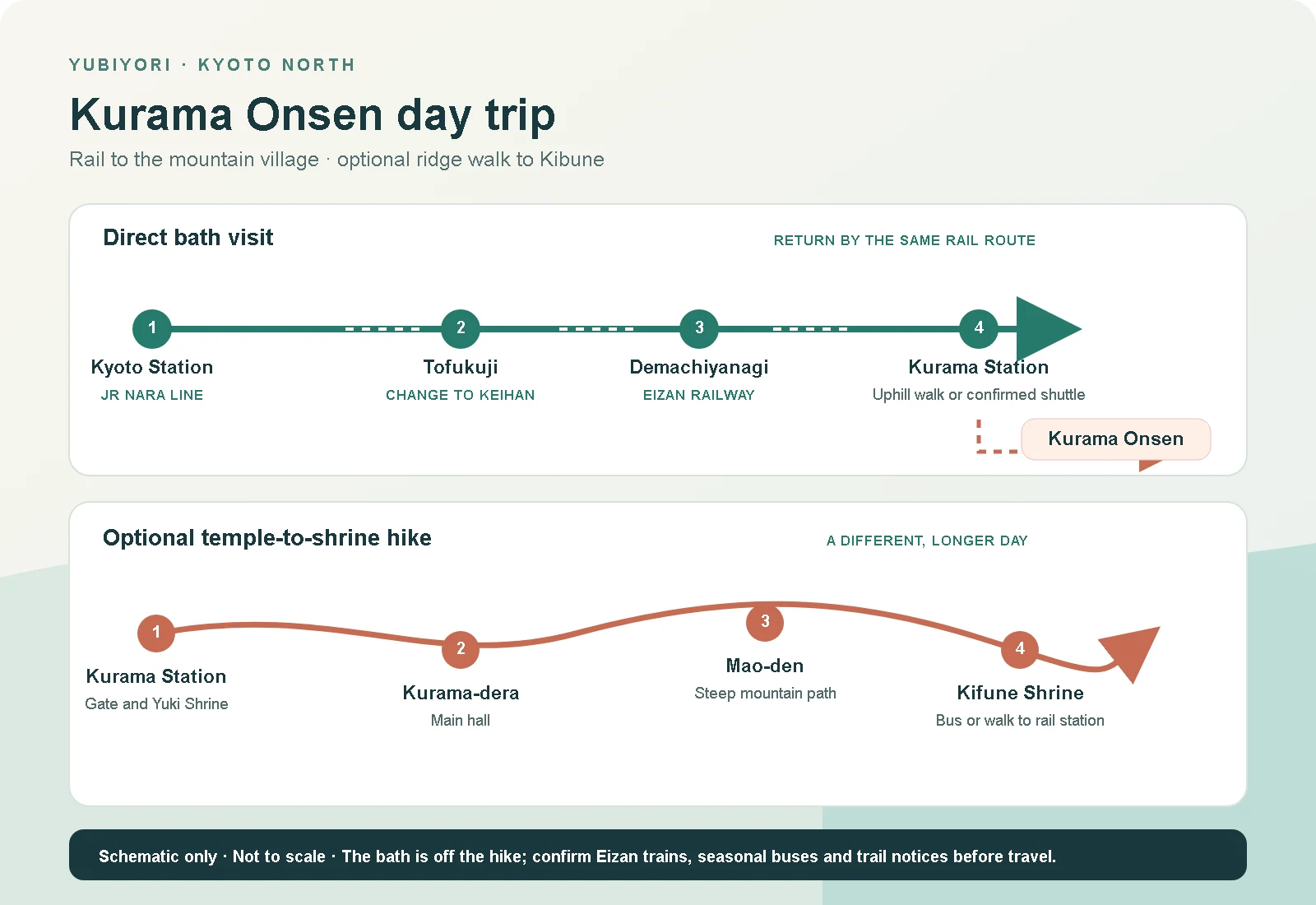
From Kyoto Station, take the JR Nara Line to Tofukuji, change to Keihan for Demachiyanagi, then transfer to the Eizan Railway’s Kurama Line. The Eizan ride from Demachiyanagi takes about 30 minutes. Kurama Station is not beside the onsen entrance: the final uphill stretch needs time. Confirm whether the property’s shuttle is running that day, or plan to walk.
On the return, use the train timetable for the actual date rather than treating the bath’s 9 p.m. closing time as your departure plan. The Kyoto Travel’s Kurama and Kibune access guide explains the rail and bus connections; the city’s day-use onsen guide compares closer choices if a mountain transfer will not fit.
Kurama Onsen says day visitors normally do not need to reserve, but maintenance closures or private use can suspend public entry. Tattoos are accepted; bathing areas are gender-separated, and swimwear is not allowed. Check the facility notice before setting off, especially if the bath is the reason for the trip.
Treat the Kurama–Kibune traverse as a separate walk
Kurama-dera’s published route estimates about 30 minutes from the main hall to Mao-den, then about 20 minutes onward to Kifune Shrine. The climb from the station to the temple adds more time, and the path is uneven. Those are walking estimates, not a fixed door-to-door schedule; weather, trail conditions and stops can change the pace.
The route ends on the Kibune side, away from the bath. From Kifune Shrine, allow about 40 minutes on foot to Kibuneguchi Station, or check whether the seasonal bus is operating. From there, take the Eizan Railway back toward Demachiyanagi. If you want to soak after the hike, getting back to Kurama means a bus-and-train leg and another uphill transfer. Bath-first avoids that return, but leaves the trail walk after bathing. Either way, allow generous time and check for closures before setting out.
If the hike is the day’s priority, see the Kyoto sento directory before adding a bath. For a less demanding alternative, compare Arashiyama’s day baths or the Kyoto city bath guide.
Choose the visit length before buying
The outdoor-bath ticket suits a short soak with mountain scenery. The full-spa admission makes more sense if you expect to use the indoor bath and sauna too. Kurama also lists a forest tea set and a longer “Totonoi” package; check the current booking page for their details and availability.
The water is classified by the property as a simple hydrogen-sulfide (sulfur) spring. Its public baths are separated by gender. There is no day-use private outdoor bath; private use after public hours is reserved for overnight guests. If you need mixed bathing or a private session, choose another facility. The onsen water-quality guide explains common spring classifications.
For a closer bathing plan, compare the Kyoto morning sento guide, late-night sento guide, first-time sento guide, empty-handed sento guide, Kyoto station sento options and Kita Ward baths. Each option has a different schedule and facility setup, so match it to the neighborhood you will already be visiting.
Official sources and date checked
- [Kurama Onsen day-use hours, current fee chart and rules](https://kurama-spa.com/spa/); [facility FAQ and current notices](https://kurama-spa.com/). - [Eizan Railway: Eizan & Onsen Ticket](https://eizandensha.co.jp/good-value/onsen/), sales period April 1, 2026–March 31, 2027. - [Kyoto City Tourism Navi: my route discount campaign](https://ja.kyoto.travel/event/single.php?event_id=14894), July 10–December 31, 2026; 700-ticket allocation. - [Kyoto Travel: access to Kurama and Kibune](https://kyoto.travel/en/getting-around/comfortable-access-to-kurama-kibune/). - [Kuramadera: official access and hiking route](https://kuramadera.or.jp/access.html). - Checked October 30, 2026. Day-use entry, campaign inventory, train and bus service, and trail access can change; confirm your travel date.Checked: October 30, 2026.
