Which Sento Should You Visit in Kyoto’s Kita Ward?
Compare nine sento in Kyoto’s Kita Ward by opening hours, weekly closures, baths and location—from Funaoka’s Sunday morning slot to Kamo-yu’s 3 a.m. closing.
In Kita Ward, start with the time you can get to a bathhouse. Funaoka Onsen opens on Sunday mornings; Monzen-yu has a weekday morning session and a long Sunday opening; Kinugasa Onsen and Daitokuji Onsen open at 2 p.m. For a soak after midnight, narrow the list by closing time and how you’ll get back to your accommodation. Kamo-yu stays open latest—until 3 a.m. on Thursdays, Fridays and Saturdays—but the trains and most buses will have stopped by then.
Kyoto’s public bath listings don’t always agree across languages or even on the same page. The hours below follow the association’s current Japanese listings, which are more specific than older translations, promotional copy or a “late-night” tag. They are closing times, not last-entry guarantees; if you expect to arrive near closing, confirm directly with the bathhouse.
Nine bathhouses, sorted by the details that matter
| Sento | Published hours | Regular closing day | Useful to know |
|---|---|---|---|
| Funaoka Onsen | 3–11:30 p.m.; Sunday 8 a.m.–11:30 p.m. | Tuesday | Open-air bath, sauna and a registered cultural-property building; the Sunday morning opening is its clearest scheduling advantage. |
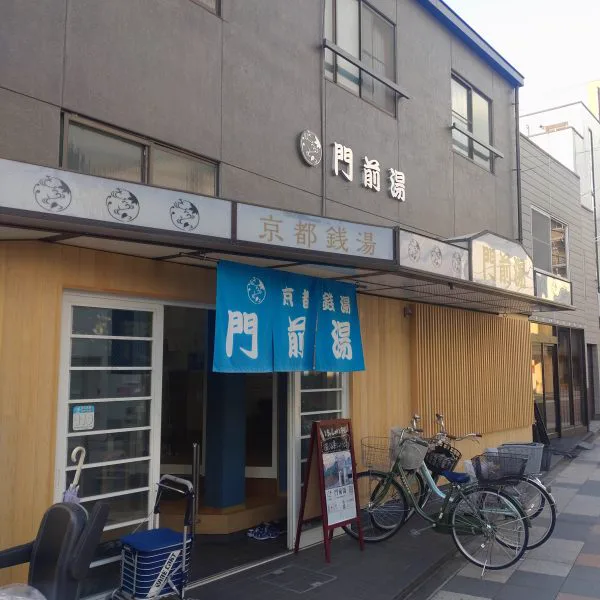
| Monzen-yu | Weekdays 9 a.m.–noon and 3 p.m.–2 a.m.; Sunday 9 a.m.–2 a.m. continuously | Thursday | Open-air bath, sauna, cold bath and medicinal bath; on weekdays there is a three-hour midday gap. |
| Kinugasa Onsen | 2 p.m.–midnight | Friday | Opens early and fits a route around Kitano-Hakubaicho, Ryoan-ji or Kinkaku-ji better than a detour into Murasakino. |
| Daitokuji Onsen | 2 p.m.–1 a.m. | Friday | Convenient for Daitoku-ji and Shichiku, with a sauna and cold bath. |
| Kinryu-yu | 3–10 p.m. | Tuesday | A straightforward sauna-and-cold-bath option, but its 10 p.m. close rules it out for a late decision after dinner. |
| Murasakino Onsen | 3 p.m.–2 a.m. | Wednesday | Open-air bath, sauna and several tubs. Use the formal 2 a.m. closing time, not older promotional wording that says 3 a.m. |
| Murasaki-yu | 3 p.m.–1 a.m. | Monday | Open-air bath, sauna, cold bath, medicinal bath, sleeping and seated baths; the listing places the bus stop at Horikawa-Kitaoji about a minute away. |
| Kamo-yu (Kamo Onsen) | 3 p.m.–2 a.m.; Thursday–Saturday until 3 a.m. | Second and fourth Tuesdays, and Wednesday | Kita Ward’s latest closing time on three nights each week. Plan the return journey before you go. |
| Ueno-yu | 3:30 p.m.–midnight | Tuesday | Sauna, cold bath and towel rental or sales. A “late-night” tag on the directory does not extend its published midnight close. |
Times written as 26:00 and 27:00 in Japanese listings mean 2 a.m. and 3 a.m. on the following calendar day. Kamo-yu’s extra hour applies only on Thursday, Friday and Saturday; on other open days it closes at 2 a.m.
For a morning bath, check the day of the week first
Funaoka Onsen is the Kita Ward option for an early Sunday soak: it opens at 8 a.m. and closes at 11:30 p.m. on Sundays. On other open days it runs from 3 p.m. to 11:30 p.m., and it closes Tuesdays. Its open-air bath and sauna sit inside a building registered as a tangible cultural property.
Monzen-yu has a different kind of morning opening. On weekdays it is open from 9 a.m. to noon, then closes for three hours before reopening at 3 p.m. and staying open until 2 a.m. On Sundays it operates continuously from 9 a.m. until 2 a.m.; Thursday is its regular closing day. That makes it useful before or after a visit to Daitoku-ji or the Shin-Ōmiya shopping street, but don’t plan a weekday arrival between noon and 3 p.m.
If you can get there by 2 p.m.
Kinugasa Onsen and Daitokuji Onsen are the earliest choices for an afternoon visit; both open at 2 p.m. Kinugasa Onsen closes at midnight and is the more natural fit for Kitano-Hakubaicho, Ryoan-ji and the Kinkaku-ji area. Daitokuji Onsen closes at 1 a.m. on open days and works better if you are already around Daitoku-ji or Shichiku. Both close on Fridays.
Daitokuji Onsen’s listing describes groundwater. That is a source description, not a legal hot-spring classification; the current public information does not establish it as a natural onsen under Japan’s Hot Spring Act. Its location is the more useful reason to choose it.
After 3 p.m., the rest of the list starts to open. Ueno-yu begins at 3:30 p.m.; the others in the table open at 3 p.m. If your plans end around Kinkaku-ji, Kitano or Daitoku-ji, deciding by arrival time and neighborhood will usually narrow the options faster than comparing all nine at once.
After midnight, the ride back matters as much as the bath
Kamo-yu is the late-night choice if you are already in Kita Ward and can make use of its 2 a.m. close—or its 3 a.m. close on Thursday, Friday or Saturday. Its facilities include shallow and deep baths, jet and electric baths, a cold bath, medicinal bath and a steam sauna. The association also calls out ice dropping into the cold bath. There is no open-air bath.
The practical constraint comes after the soak. At 1–3 a.m., the subway and most buses are no longer running. If you’re staying outside the Kitaoji, Kitayama or Shichiku area, decide whether you can walk, take a taxi or use another return option before choosing Kamo-yu for its latest closing time.
Murasakino Onsen closes at 2 a.m. on open days, despite older promotional copy that still says 3 a.m. Its formal hours are 3 p.m.–2 a.m., with Wednesday as its regular closing day. Murasaki-yu is a separate bathhouse, not another name for Murasakino Onsen: it closes at 1 a.m. and is closed Mondays. Its listed access is more specific, with the Horikawa-Kitaoji bus stop about a minute away and Kitaoji Station about an eight-minute walk.
For more options across the city, use the Kyoto late-night sento guide. If your priority is to visit a bathhouse near Kyoto Station instead, the station-area sento guide compares options by location and opening time.
Admission and the 2026 free-bathing program for children
Kyoto’s standard public-bath admission is age-based:
| Guest | Admission |
|---|---|
| Adult, age 12 and over | ¥550 |
| Middle-school student with student ID | ¥400 |
| Elementary-school child | ¥200 |
| Younger child | ¥100 |
Towel rental, towels for sale and toiletries vary by bathhouse; a directory tag does not mean an item is free.
From 1 April 2026 through 31 March 2027, children in elementary school or younger can bathe free at participating member bathhouses in Kyoto Prefecture. An adult aged 18 or older must accompany them. The companion scans the bathhouse’s QR code, completes the form and shows the confirmation screen at the front desk. Addresses are not a restriction, but the program applies only at participating baths and may change if funding requires it. Check the Kyoto Prefecture program page before setting out.
A bathhouse called “Onsen” may not use natural spring water
Several Kita Ward names include “Onsen,” including Kinugasa Onsen, Daitokuji Onsen, Funaoka Onsen and Murasakino Onsen. The name, an outdoor bath or a description of underground water is not enough to infer source temperature, pH or legally defined hot-spring water. Murasaki-yu’s reference to natural water from about 100 metres underground does not establish that it meets Japan’s legal onsen definition. Check the evidence for the specific bath you plan to use; our Kyoto natural-onsen guide explains the distinction.
Tattoo policies are not consistently shown in the association listings. Contact the bathhouse you plan to visit if this affects your choice.