Funaoka Onsen, Sauna no Umeyu or Gokoyu?
Kyoto: compare Funaoka, Umeyu and Gokoyu by hours, facilities, route and extras.
These three ¥550 sento solve different itinerary problems. Funaoka is an architectural stop in Kita Ward; Sauna no Umeyu suits early starts and late returns near Kyoto Station; Gokoyu offers a sauna and multiple pools, with a separately booked bedrock bath. Choose by location and schedule first, then decide whether the extra facilities justify the detour.
The choice at a glance
| Funaoka Onsen | Sauna no Umeyu | Gokoyu | |
|---|---|---|---|
| Useful when | You are visiting Nishijin or Daitokuji and want historic bathhouse interiors | You need a morning, late-night or station-area bath | You want a broader pool selection and sauna options |
| Adult entry | ¥550 | ¥550 | ¥550 |
| Listed schedule | 3–11:30 p.m.; Sunday 8 a.m.–11:30 p.m.; Tuesday off | 6 a.m.–2 a.m.; Thursday off | Weekdays 2:30 p.m.–12:30 a.m.; Sunday 7 a.m.–midnight; holidays 11 a.m.–midnight; Monday and third Tuesday off, with calendar adjustment |
| Notable facilities | Outdoor bath, medicinal bath, sauna and cold bath | Dry sauna, medicinal bath, cold bath and varied indoor pools | Sauna, cold bath, multiple pools and reservation-only bedrock bath |
| Route cue | Kita Ward, best paired with a northwestern Kyoto day | About 15 min from Kyoto Station or 10 min from Kiyomizu-Gojo | Near Omiya-Gojo; about 10 min from Hankyu Omiya |
Kyoto’s standard adult bath fee covers bathing, but not necessarily towels, soap or a special service. The association guide lists ¥550 as the current adult rate; extras differ by venue.
Funaoka: choose the building as much as the bath
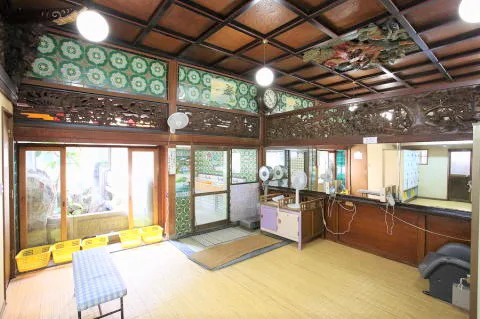
Funaoka Onsen’s draw is the old bathhouse itself: carved wood details, decorative tile and a distinctive interior preserved within an operating sento. The association lists an outdoor bath, medicinal bath, sauna and cold plunge. It is an ordinary public-bath visit, so you pay the normal bathing charge rather than a separate museum ticket.
The current association schedule is 3 p.m.–11:30 p.m. on regular days, 8 a.m.–11:30 p.m. Sundays, with Tuesday closure. It is in Kita Ward near Nishijin and Daitokuji, which makes it a better fit after plans in that area than an evening detour from Kyoto Station. The bathhouse’s name is not a natural-spring classification; see the Kyoto spring-water guide if source water is central to your decision.
Umeyu: early access and a long evening window
Sauna no Umeyu is the most flexible of these three by clock: its operator lists bathing from 6 a.m. to 2 a.m., closing Thursdays. A dry sauna, medicinal bath, cold bath, deep pool and shallow pool are included in the facility description. The location is approximately a 15-minute walk from Kyoto Station and 10 minutes from Keihan Kiyomizu-Gojo.
The operator supplies basic toiletries, while a face towel costs ¥100; a face towel is not a bath towel. Umeyu also accepts runners, but asks them to return within about 90 minutes and notes that luggage space is limited. For more on early bathing, read the Kyoto morning sento guide or the dedicated Umeyu guide. Its location is also covered in the Kyoto Station bath guide.
Gokoyu: sauna plus a paid add-on
Gokoyu is a good fit if you want several types of pools and a sauna in one visit. The sauna is included in the ¥550 bath admission. Its bedrock-bath room is separate, costs extra and requires a reservation; the operator says availability and who may use it depend on reservations. Contact the bathhouse for the current charge before building a plan around that extra.
The operator lists weekday hours of 2:30 p.m.–12:30 a.m., Sundays 7 a.m.–midnight and public holidays 11 a.m.–midnight. It closes Mondays and the third Tuesday; if the first of the month falls on Tuesday, the operator lists a different Monday/Tuesday closure pattern. From Hankyu Omiya, allow about ten minutes on foot; Omiya-Gojo bus stop is nearer. For other sauna options, see the Kyoto sauna sento guide and open-air bath guide.
Which one fits your route?
Choose Funaoka when Nishijin is already on the day’s route, Umeyu for timing around an early start or late finish, and Gokoyu when its extra bathing equipment is the point. The Kyoto sento directory and central Kyoto bath guide help locate alternatives; compare day-use natural springs if you want documented hot-spring water. For a cheaper single soak, the budget sento guide sets the public-bath price in context.
