Baika Onsen or Jabujabuland? Choosing a Sento in Konohana
Compare two Konohana sento open until midnight by access, ¥600 entry, sauna, parking and weekly closing day. Neither is a confirmed natural hot spring.
Baika Onsen and Naniwa Onsen Jabujabuland are both in Konohana Ward, both use the standard ¥600 adult sento fare, and both post a midnight closing time. The useful difference is how you plan to get there and what you want to do once inside.
For a fast decision: Baika is the easy choice from Chidoribashi Station, especially if you are returning through Nishikujo after Universal Studios Japan. Jabujabuland asks for a longer walk from either nearby rail station, but has two sauna types, more bath options and five parking spaces. Both are ordinary public bathhouses, not confirmed natural hot springs.
| Baika Onsen | Jabujabuland | |
|---|---|---|
| Hours | 14:05–00:00 | 14:00–00:00 |
| Weekly closure | Friday | Thursday |
| Nearest rail option | Chidoribashi, about 314 m away | Ajikawaguchi, about 18 minutes; Chidoribashi, about 20 minutes |
| Bus | — | Nishikasugaide stop, about 5 minutes |
| Parking | 2 spaces; height limit and low clearance at the back | 5 spaces |
| Sauna | Radon steam room (wet sauna) | Dry and wet saunas |
| Other listed baths | Cold bath, electric bath, outdoor bath | Carbonated, rock, reclining, jet and electric baths, plus outdoor bath |
Osaka’s standard public-bath admission is ¥600 for adults, ¥200 for elementary-school children and ¥100 for preschoolers. That is the basic bath entry, not a promise that sauna or towels are included. Neither association listing publishes a current sauna fee for these two facilities.
Baika is the easier late stop by train
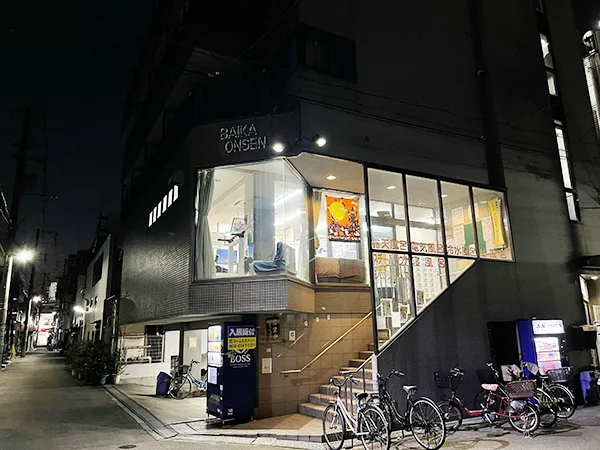
Baika is 314 metres from Chidoribashi Station, making it the straightforward choice if you are staying in Chidoribashi, Baika or Shikanoshima. It is also a better fit if your Universal Studios Japan return has already brought you through Nishikujo and onto the Hanshin Namba Line. The association lists two parking spaces, but vehicles must be under 190 cm; clearance is lower at the back of the lot.
The bathhouse opens at 14:05 and closes at midnight, with Fridays off. Its listed features include a radon steam room, cold bath, electric bath and outdoor bath. No current sauna surcharge or last-entry time is published in that listing, so check at the desk if those affect your plan.
The name “radon steam” describes the steam-room feature; it does not establish a naturally radioactive spring. The association has not published a spring source or analysis for Baika. Dated visitor reports have recorded steam-room and cold-bath temperatures, but those are conditions on a particular visit, not set year-round specifications. The steady facts are the steam sauna and cold bath, not any one temperature reading.
Parking is limited to two spaces, and there is a height restriction of about 190 cm, with even less clearance toward the back of the lot. If you are renting a tall minivan or driving a high-roof vehicle, do not assume it will fit. For most visitors, the short station walk is the more useful advantage.
Jabujabuland rewards a different route
Jabujabuland is at 3-9-27 Kasugaide-kita. Walking from Ajikawaguchi takes about 18 minutes, and from Chidoribashi about 20 minutes. The city bus stop at Nishikasugaide is about five minutes away. If you are driving, its five parking spaces give you more room to work with than Baika’s two, though a free space is never guaranteed.
Inside, the association lists both dry and wet saunas, along with a cold bath, carbonated bath, rock bath, reclining bath, jet bath, electric bath and outdoor bath. That gives a mixed group more ways to split up than Baika’s smaller steam-and-outdoor setup. Jabujabuland closes Thursdays; it is open 14:00–00:00 on other listed days.
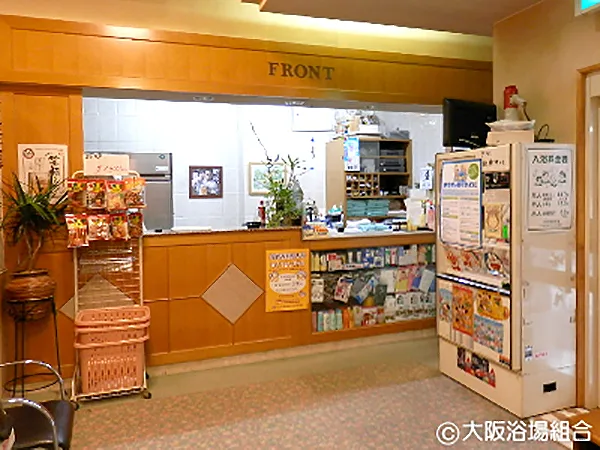
It is often described as a mini version of a larger Japanese bath complex, with a front-desk rest area and drinks alongside a broader mix of tubs. The “mini super sento” shorthand signals more variety, not a full resort with a large lounge, bedrock-bath floor or overnight space.
The carbonated bath is a feature; sources do not identify it as a naturally carbonated spring. Sauna Ikita has listed a dry-sauna surcharge around ¥150 with a rental towel, but that is third-party, visit-dependent information rather than an official fixed tariff. Confirm at the counter.
The rail walk is the main compromise. From Ajikawaguchi it is around 18 minutes; from Chidoribashi, roughly 20. The Nishikasugaide bus stop is about five minutes away, and the location is more convenient if you are already staying in Kasugaide-kita or travelling by car. Five spaces are listed, but a posted capacity is not a reservation.
Neither bathhouse is confirmed as a natural hot spring in the cited association listings. “Radon steam” describes Baika’s steam-room feature, while Jabujabuland’s carbonated bath is a feature bath; neither label is proof of a natural spring source. If that distinction matters, Terume Ryugu is a nearby alternative with published natural-spring information.
The outdoor baths at both facilities are city bathhouse outdoor tubs, not views over a mountain or the sea. Their appeal is the change of air and the chance to cool down between sauna rounds. Jabujabuland has more types of bath to rotate through; Baika’s smaller selection is enough for a wash, steam, cold plunge and outdoor pause without a long trek inside.
If you are coming back from USJ, use your actual return route rather than a map’s straight-line distance. Baika fits well after transferring at Nishikujo and continuing on the Hanshin Namba Line to Chidoribashi. Jabujabuland is the more sensible pick if your evening has already taken you to Kasugaide-kita, you are using the Nishikasugaide bus, or you have a car. Travelling an extra 20 minutes on foot just to tick off more bath types may not be worth it after a full park day.
The short version: choose Baika when the station walk and a quick late soak matter most. Jabujabuland is worth the longer approach if you are already in Kasugaide-kita, have a car or want to move between more bath types. Check the weekly closure first—Baika is shut Friday, Jabujabuland Thursday.
The closure days can settle the decision: Baika is closed on Friday, Jabujabuland on Thursday. Both list midnight closing, but if you want sauna, cold bath and outdoor time, aim to arrive well before 22:30. A late listed closing is not the same as late last admission, and no last-entry time is published for either one.
For more detail, see the individual Baika Onsen guide and Jabujabuland guide. If verified natural spring water matters more than station access, nearby Terume Ryugu is a better match. The Konohana and Minato sento guide compares more options in the area.
For a broader overview, browse the Osaka sento guide or our guide to newer-style sento. If you are deciding between an early bath and a late one, see Osaka’s morning and late-night options; for larger facilities, start with the Osaka day-use onsen guide.
Sources
- [Osaka public bathhouse association: Baika Onsen](https://osaka268.com/sento/%E6%A2%85%E9%A6%99%E6%B8%A9%E6%B3%89/) - [Osaka public bathhouse association: Naniwa Onsen Jabujabuland](https://osaka268.com/sento/%E6%B5%AA%E8%8F%AF%E6%B8%A9%E6%B3%89-%E3%82%B8%E3%83%A3%E3%83%96%E3%82%B8%E3%83%A3%E3%83%96%E3%83%A9%E3%83%B3%E3%83%89/) - [Osaka public bathhouse association: admission prices](https://osaka268.com/price/) - [Osaka public bathhouse association: Terume Ryugu](https://osaka268.com/sento/%E9%BE%8D%E5%AE%AE%E6%B8%A9%E6%B3%89/) Checked: 2026-09-27Tags: Konohana sento, Baika Onsen, Jabujabuland, Osaka public baths, Osaka sauna