Hita or Amagase? Choosing an Onsen Town in Oita
Compare Hita and Amagase in Oita by day-use baths, hot-spring setting and transport, including Hita’s private baths and Amagase’s riverside rotenburo.
Pick Hita for affordable private baths and a wider choice of bathing styles. Choose Amagase for a river-valley setting, a waterfall-view open-air bath and a compact station-side visit. The two towns are both part of Hita City, but a short train ride between them does not make their day-use options interchangeable.
Updated 27 September 2026
The short version
| If you care most about… | Start with… | Why | The catch |
|---|---|---|---|
| The lowest-priced private bath | Hita | Gensenya starts at ¥1,300 for 50 minutes; Senraku starts at ¥1,900 | Gensenya is by Yoake Station, not Hita Station. The other baths need a local transfer. |
| A choice of private-bath styles | Hita | Yumeyama-sui has 16 family baths, and Senraku has eight | Neither is a quick walk from central Hita. |
| A bath with a waterfall view | Amagase | Sanso Tensui’s Takimian looks toward Sakuradaki Falls | Day-use reception ends at 2 p.m.; the bath is reached by 47 steps. |
| An easy rail-and-walk visit | Amagase | Seitenkaku is about five minutes from Amagase Station | It has public baths, not a private bath, and closes Tuesday and Wednesday. |
Hita and Amagase are close by rail, though the ride is not always as short as the headline suggests. Hita City describes the limited-express trip between Hita and Amagase as about 11 minutes; on the current Yufuin no Mori timetable, it is roughly 12–13 minutes. Check the train you plan to take, then work backward from each bath’s last admission. With only half a day, crossing between the towns can cost more time than it saves.
Hita is the better fit for a private soak on a budget
Hita gives you a few quite different ways to bathe. Gensenya is the low-cost option, Senraku stays open late and Yumeyama-sui has the largest set of private baths. The choice is useful, but the facilities are spread out; decide where you want to bathe before setting off from the station.
Gensenya: private baths from ¥1,300
Gensenya, formerly Yoake Yakuto Onsen, has four private baths. A 50-minute session costs ¥1,300 for the enamel tub or ¥1,500 for the cypress and cut-stone tubs. On weekdays between 10 a.m. and 5 p.m., one person can use a private bath for ¥1,000. The public bath is ¥600 plus a ¥50 bathing tax for adults.
The railway stop here is Yoake Station, about five minutes on foot. That makes Gensenya a practical rail-side choice if you are happy to visit a smaller stop rather than Hita’s town centre. The facility is closed Tuesdays; public-bath admission is not allowed for guests with tattoos, and the bathhouse recommends booking a private room instead. Private baths have no toiletries, so bring your own shampoo and soap.
Senraku: room to linger into the evening
Senraku has eight private baths. The rock and cut-stone tubs cost ¥1,900 for 50 minutes; the cypress tub is ¥2,100. Weekday hours are 11 a.m.–midnight, while weekends and holidays start at 10 a.m. Last reception is 11 p.m.
Those hours are its real advantage. If your afternoon in Hita runs late, you have more room here than at the main Amagase day-use inns. Each private bath uses fresh spring water, which is replaced between parties. Senraku is outside the station area, however, so allow for a taxi, bus or car. Ask ahead about access and public-bath use if either matters to your visit.
Yumeyama-sui: a riverside choice, with 16 private baths
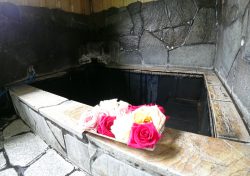
Yumeyama-sui has 16 private family baths in seven styles, as well as four public open-air baths beside the stream. Private-bath rates are easier to compare by day:
- Weekdays: ¥2,500 for 60 minutes, except the Kawasemi bath at ¥2,000.
- Weekends and holidays: ¥3,000 for 60 minutes.
Reception closes at 8:50 p.m.; bathing ends at 9:50 p.m. The public open-air bath costs ¥800 for adults, or ¥1,000 during Golden Week, Obon and the year-end/New Year period.
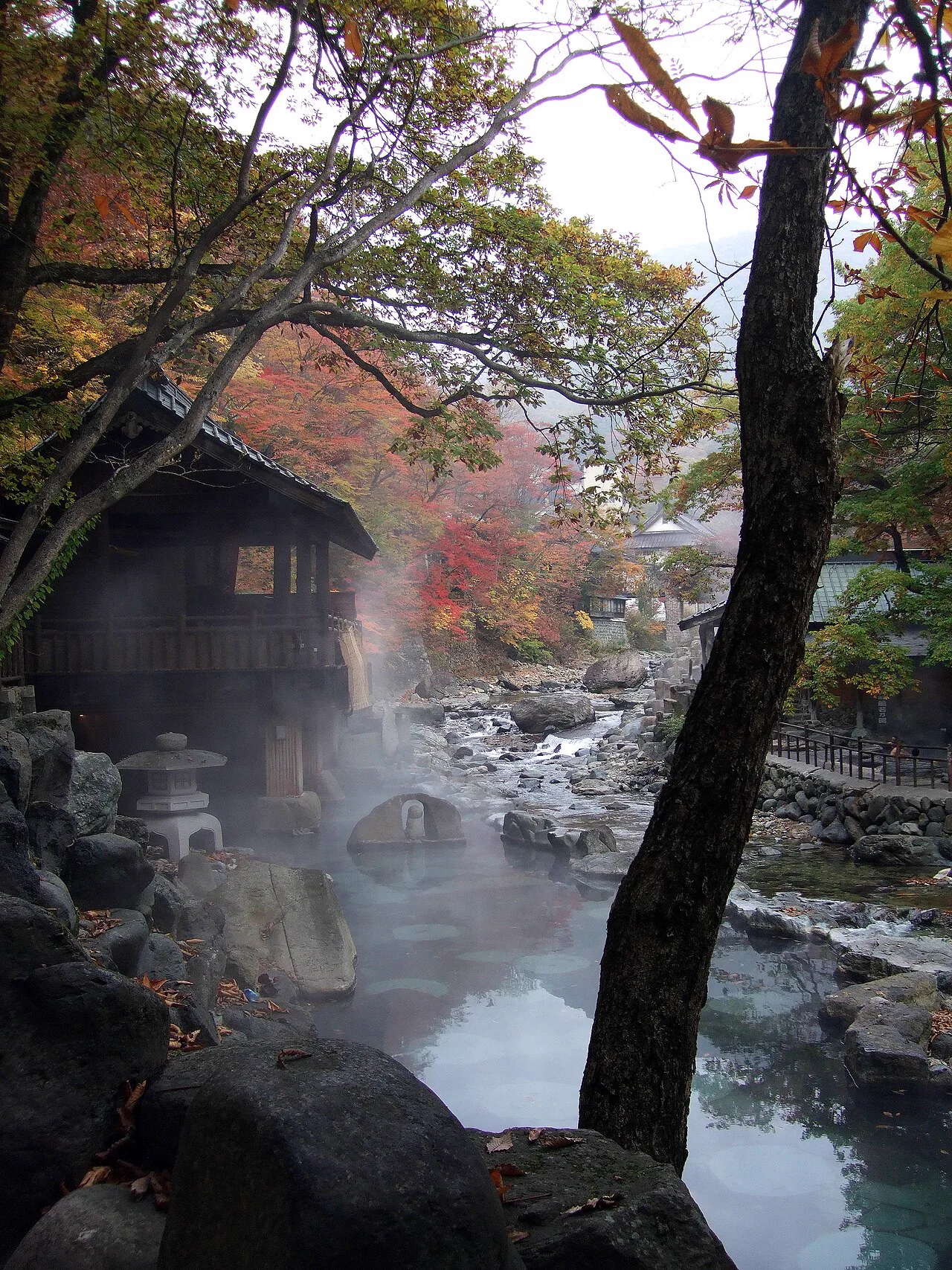
The setting is the reason to make the trip: the open-air pools are stone-built and sit by the river. But this is not a station-side stop. Yumeyama-sui is about a ten-minute drive from Hita Station or the bus terminal; a local circulation bus is another option. If all you want is an hour in the water, getting there may feel like too much effort. If the river setting or the range of private tubs is what you came for, it makes more sense.
Amagase keeps the valley and the baths close together
Around Amagase Station, the Kusugawa River, Sakuradaki Falls and several day-use baths make a natural walk-and-soak outing. You can get around the station area on foot; Sanso Tensui, the standout for scenery, is the exception and needs a plan for the last stretch.
Seitenkaku: the simplest walk from the train
Seitenkaku is about five minutes on foot from Amagase Station. Day bathing currently runs from 1 to 6 p.m., with last admission at 5:30 p.m. Adults pay ¥700 and children ¥350. It is closed Tuesdays and Wednesdays.
The hotel has public indoor and outdoor baths but no private bath. Its site describes the spring as a simple sulfur spring and says the baths use natural spring water without circulation or filtration. It does not give enough detail to generalize about heating or added water in every tub. An older source temperature of 62.7°C is not confirmed as a current figure. Ask the hotel about tattoos before going; the current visitor information does not spell out a clear policy.
Sanso Tensui: go for the view, not convenience
The public Takimian bath at Sanso Tensui looks toward Sakuradaki Falls. It is open to day visitors from 10 a.m. to 3 p.m., with reception ending at 2 p.m. Admission is ¥800 for adults and ¥500 for elementary-school children; younger children enter free. Five semi-outdoor private baths are ¥2,500 per 45-minute session. Ask at the front desk on arrival: you cannot reserve a particular private bath by type ahead of time, and the wait can vary.
The view comes with a climb of 47 steps. The inn is roughly a 30-minute walk from Amagase Station and does not promise its overnight-guest pickup for day visitors. There is no taxi rank at the station, and Amagase no longer has its own taxi company. Before travelling, ask the inn whether it can take day visitors to or from the station, or arrange a car from elsewhere and confirm both rides.
The inn calls its water a simple spring and describes it as “100% source water (with water added).” Keep that qualification: it is not the same as saying the bath is undiluted. No clear tattoo policy appears in the current day-use information, so check directly. A private bath alone does not establish that tattoos are permitted.
An earlier repair notice covered Take-sansui, an outdoor bath for overnight male guests, from 4 to 18 September 2026. It did not say the day-use Takimian bath or private baths were closed. Check the inn’s latest notice for your date rather than carrying that past maintenance period forward.
Barano-yu: the least expensive public bath
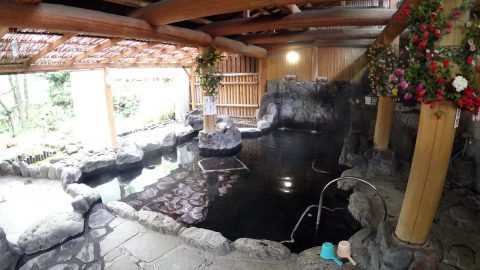
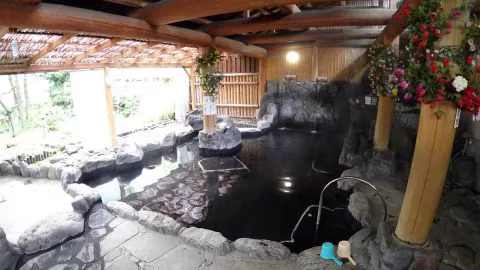
Barano-yu is a semi-outdoor public bath about 13 minutes on foot from the station. Adult admission is ¥400; opening hours are noon–9 p.m. It closes on the first and third Tuesday of each month. A private family bath costs ¥2,500 for 60 minutes. Oita Prefecture lists two private baths and describes the spring as alkaline simple hot-spring water.
The later closing time is handy if you arrive in the afternoon, and the walk does not require a transfer. If you left bags at the station, though, the tourist information office closes at 5 p.m.; collect them before bathing. The current official listings reviewed for this guide do not set out a clear tattoo policy, so ask the facility if you need to know.
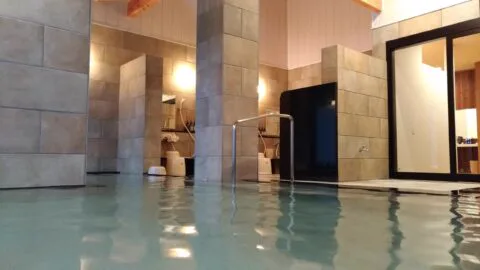
What a day-use visit costs
For a public bath, both towns stay under ¥1,000 at the facilities compared here. Amagase has the cheapest single admission at Barano-yu; Hita has more ways to keep a private session affordable.
| Bath | Adult price | What the price covers |
|---|---|---|
| Gensenya, Hita | ¥650 including tax | Public bath; private baths from ¥1,300 per 50 minutes |
| Yumeyama-sui, Hita | ¥800 | Public riverside open-air bath; private baths from ¥2,000 per 60 minutes |
| Seitenkaku, Amagase | ¥700 | Public indoor and outdoor baths |
| Sanso Tensui, Amagase | ¥800 | Takimian open-air bath facing Sakuradaki Falls; private baths cost extra |
| Barano-yu, Amagase | ¥400 | Public semi-outdoor bath; private bath ¥2,500 per 60 minutes |
That is the useful distinction: a couple looking for a private room will usually spend less at Gensenya or Senraku, while someone who wants to sit outdoors above Sakuradaki is paying for a setting Hita does not replicate.
Getting around after September 2026
The train only solves the inter-town leg. In Hita, Gensenya is by Yoake Station, while Senraku and Yumeyama-sui need a further transfer. In Amagase, Seitenkaku and Barano-yu are walkable from the station; Sanso Tensui is not.
There is a new option for travel within Amagase. Hita City began a reservation-only shared demand taxi trial on 24 September 2026. It runs Monday to Saturday, except public holidays, from 8:30 a.m. to 4:30 p.m. The service is limited to registered passengers and designated pickup/drop-off points. Registration can take about ten days, and rides must be booked in advance.
Fares are ¥500 for journeys within Amagase, or ¥800–¥1,200 for trips outside the area, depending on distance from Hita Station. The town’s existing Goma bus route is scheduled to end on 30 September 2026.
This is useful public transport, not an on-demand hotel shuttle. A ryokan’s front door may not be a designated stop, and shared rides can take longer than a direct car trip. Check the city’s stop list and book before you travel. If you are visiting in the transition period, confirm which service is running on your date.
A tattoo policy is a facility rule, not a town-wide promise
Gensenya explicitly refuses entry to its public bath for guests with tattoos and recommends its private baths. Kameyamatei in Hita also bars tattoos, tattoo-like stickers and body paint in its public bath. For the Amagase facilities covered here—Seitenkaku, Sanso Tensui and Barano-yu—the current formal information reviewed does not give a clear answer. Contact the bath before setting out; do not assume that paying for a private room waives every other rule.
Give one town the day
For a half-day, stay in one place. Choose Gensenya if a low-cost private bath is the priority, or Senraku if you want a later session. In Amagase, Seitenkaku is the easiest walk from the station; Barano-yu opens later and has the lowest public-bath price. Sanso Tensui needs an earlier arrival and a confirmed transfer.
With a full day, Hita can pair a public bath with a private session if you have transport between facilities. In Amagase, Sakuradaki Falls and a station-area bath fit together more naturally. You could visit both towns, but there is little point in squeezing them together just because the train ride is short; last admission times and local transfers matter more.
Stay overnight if you want the bath to shape the whole visit. Hita gives you a broader range of facilities and locations. Amagase is the one to choose if you want the evening and morning in a riverside valley. For either town, check whether a room’s bath uses natural spring water and whether a private bath is included in the plan before booking.
Read next
Sources and current details
- Amagase tourism association: Barano-yu
- Local research notes for Hita and Amagase day-use baths, dated 8 September 2026:
docs/hita-day-onsen-guide-content-qa-2026-09-08.jsonanddocs/amagase-day-onsen-guide-content-qa-2026-09-08.json.