A 7-Day Kyushu Onsen Road Trip: Fukuoka to Beppu
Plan a seven-day Kyushu onsen drive from Fukuoka through Harazuru, Kurokawa, Kuju, Yufuin and Beppu, with two Kurokawa nights and current road checks.
For a week focused on hot springs, keep the route moving in one direction instead of trying to cover every famous town on the island. This loop starts near Fukuoka, follows the Hita and Kurokawa side of the mountains, crosses the Yamanami Highway by day, then finishes in Yufuin and Beppu. It leaves southern Kyushu for another trip.
The first night is deliberately close to Fukuoka. After an international arrival, car pickup, luggage, navigation and unfamiliar roads take longer than the map suggests; there is little to gain by adding a night drive into the mountains.
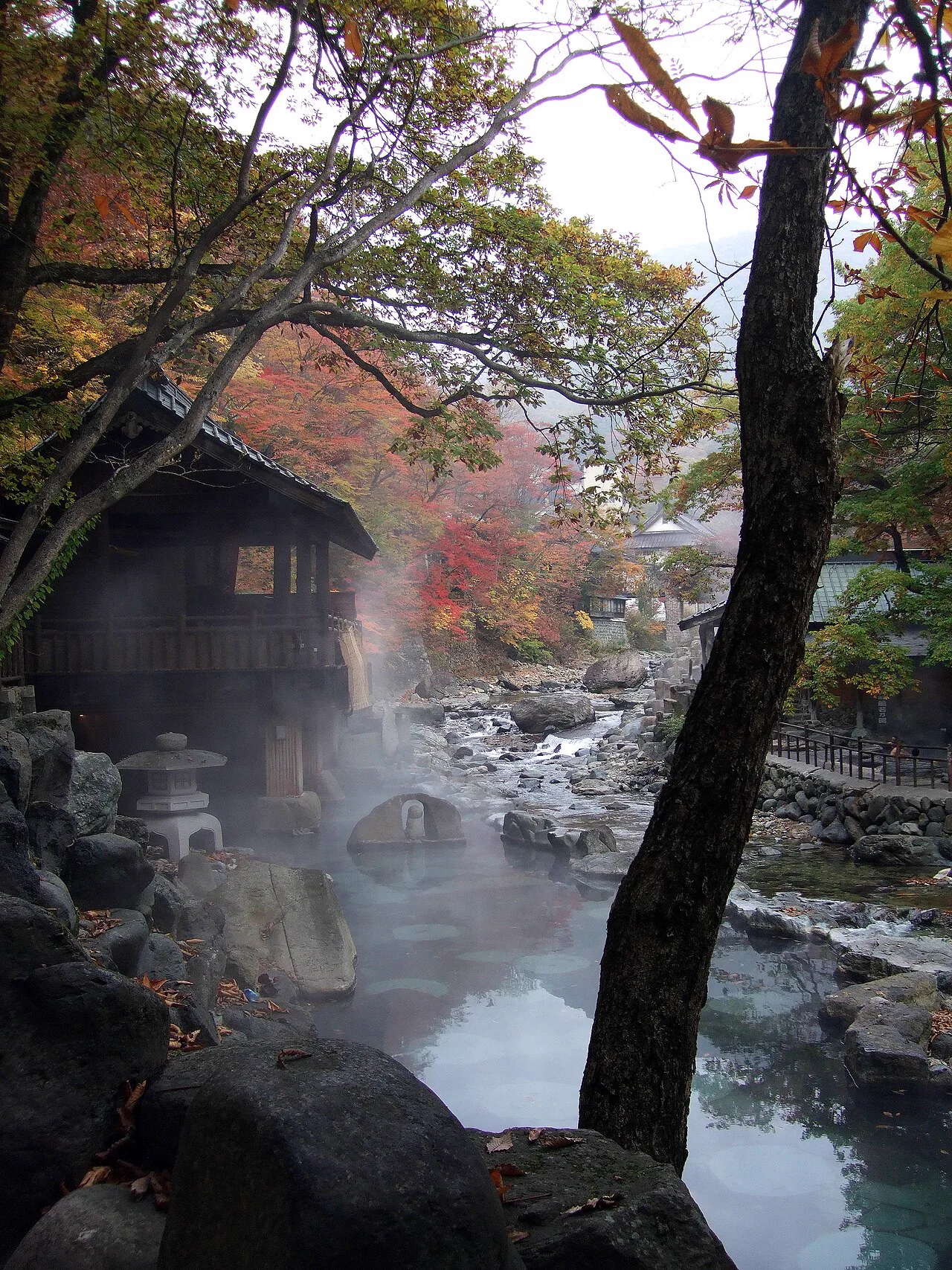
Photo: Wikimedia Commons.
| Day | Drive and overnight | Keep the day focused on |
|---|---|---|
| 1 | Fukuoka Airport → Harazuru | Pick up the car, settle in and take a first bath nearby |
| 2 | Harazuru → Hita → Amagase | Hita’s old town, then the river-valley onsen area |
| 3 | Amagase → Tsuetate → Kurokawa | One stop on the way into the mountains; check in before evening |
| 4 | Kurokawa, second night | Bath-hopping on foot, with an optional short drive nearby |
| 5 | Kurokawa → Kuju / Sujiyu → Yufuin | Cross the highlands in daylight; choose scenery or one extra bath |
| 6 | Yufuin → Myoban or Kannawa → Beppu | A slow morning in Yufuin, then one Beppu district |
| 7 | Beppu → Oita Airport or back to Fukuoka | Return the car with enough time for the flight |
Why Kurokawa gets two nights
One night can work if you arrive early enough to use a bath that afternoon and another the next morning. Two nights leave room for the inn’s own baths, Kurokawa’s outdoor-bath circuit and time to rest without treating every visit as a race. It also gives the driver a day without a long transfer.
On Day 3, take the Hita–Tsuetate–Kurokawa direction and avoid adding Aso’s crater as a detour. Tsuetate can be a lunch or bath stop; if the morning starts late, skip it and arrive at Kurokawa in time to check in and eat. The village lanes are narrow, so park at the inn or designated lot and explore on foot. The Kurokawa private-bath guide is useful if shared baths are not right for your group.
Day 5 is the scenic drive—keep it in daylight
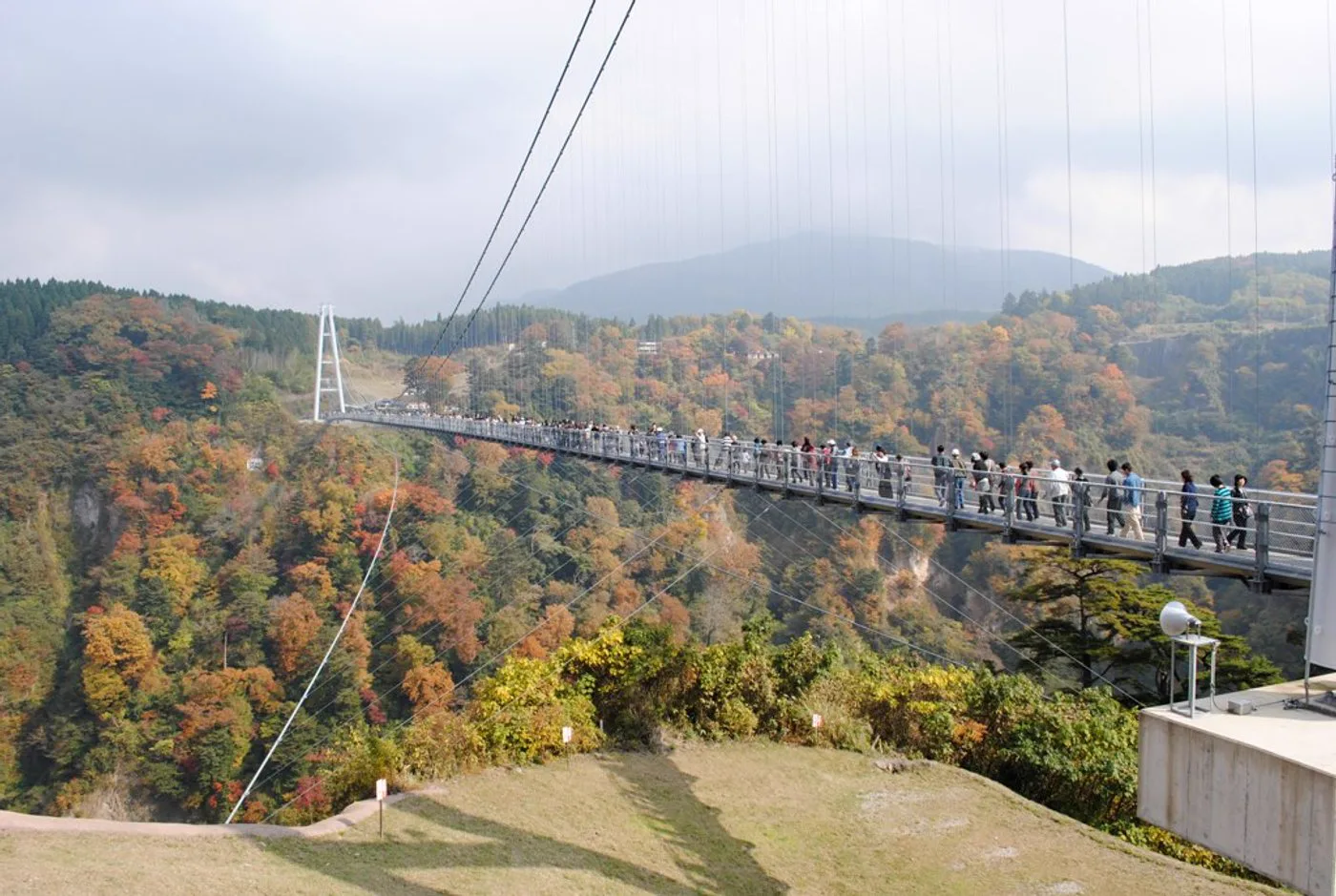
From Kurokawa, head toward Senomoto and follow the Yamanami Highway through the Kuju highlands toward Yufuin. The road is the main reason to have a car on this stretch; the viewpoints and weather are better enjoyed without trying to beat a dinner reservation after dark.
Choose one version of the day. For a scenery-led drive, stop around Chojabaru and continue to Yufuin. For a bath-led day, make Sujiyu the main stop and keep the highland walk short. The Amagase day-bath guide and Beppu or Yufuin comparison cover the destinations in more detail; there is no need to fit both plus several viewpoints into this transfer.
Fog, heavy rain, snow or ice can change the sensible route. Check the road operator’s live notices and local weather on the day, and drop optional viewpoints first. In winter, confirm that the rental car has suitable winter tyres or chains for the planned roads; if it does not, use a lower-elevation route or remove a mountain stop.
A quieter Day 6 before returning the car
Yufuin and Beppu are close on a map, but the day works better as a one-way move than repeated backtracking. Leave time for Yufuin in the morning, then continue to Beppu and choose one district—Myoban for its hillside setting, Kannawa for steam and the Jigoku area, or the station side for municipal baths. The Beppu station-area walking route suits a final evening when you have already parked the car.
Decide where to return the car before you book
Returning in Oita avoids driving back north, but a one-way fee may apply and must be confirmed with the rental company for the specific offices and dates. Returning to Fukuoka can cost less, yet it uses much of the final day. Compare the quoted one-way charge with fuel, tolls and the time needed to drive back; do not assume either option is automatically cheaper.
Keep the last morning simple. Allow time for refuelling, the rental-office shuttle and airport check-in. If your flight leaves from Fukuoka, do not add a final detour through Kuju or Hita.
For a seven-day budget, compare accommodation, rental, fuel, tolls, parking and any one-way fee. The drop-off charge depends on the company and offices; one Kyushu operator’s example is ¥1,100 per 10 km between branches, not a universal rate. Ask for an actual quote before deciding whether the shorter drive to Oita Airport is worth the extra cost.
A sample day can start with a 9 a.m. pickup and reach the first inn around 3 p.m., leaving time for dinner by 6 p.m. Shift that rhythm for your flight and each ryokan’s latest dinner arrival.
The September 2026 route also needs a live road check. Kurokawa’s access notices distinguish the Hita and Oita approaches from the more affected Kumamoto side after the earthquake; do not assume every road across the island is open or that the quickest map route is usable. If you want to add Aso, swap out a night in Amagase rather than squeezing in another base, and check the crater-area restrictions before setting out. The seven-day outline is for the northern and central onsen areas; a detour to Kirishima or Ibusuki is better planned as a separate southern-Kyushu route.
Before setting off
- Confirm parking, dinner arrival cutoffs and check-in times at each inn. A scenic stop can be dropped; a missed dinner cutoff is harder to fix.
- Check live road restrictions and weather before each mountain leg. Local conditions may change after you book.
- Allow for slower driving in onsen streets and rural lanes. Follow posted speed limits and signs rather than a navigation app’s estimated arrival time.
- Keep one main onsen stop per day. Driving makes smaller areas reachable; it does not make every detour worthwhile.
- In winter, confirm the rental car’s snow tyres or chains and keep a lower-elevation alternative. Do not treat a mountain viewpoint as fixed if there is ice, heavy rain or fog.
If you would rather let buses and trains handle the mountain crossings, use the 5–7-day no-car route. To choose which areas deserve a night, start with the Kyushu onsen destination guide.