I Love Yu on Naoshima: Bathing Hours, Admission and What to Expect
I Love Yu is an art-filled sento near Miyanoura Port, not a natural hot spring. On weekends and holidays bathing starts at 4 p.m. after viewing; bring a towel.
I Love Yu is a public bath you can use, designed by artist Shinro Ohtake as a work of art. It makes sense as a short stop near Miyanoura Port, especially if you want to see Naoshima’s art through an everyday local space rather than another gallery. It is not a natural hot spring, and there is no sauna or large lounge to turn the visit into a half-day spa outing.
The timing matters more than the name suggests. On Saturdays, Sundays and public holidays, the bath holds a viewing session from 1 to 3:50 p.m.; bathing is unavailable during that period and resumes at 4 p.m. If you want to soak, plan around the later start rather than arriving when the doors first open.
Viewing the bath and using it are separate visits
I Love Yu is generally open from 1 to 9 p.m., with last admission at 8:30 p.m. It closes on Mondays. When Monday is a public holiday, it opens that day and closes on the following day instead. Maintenance closures can override the regular calendar. A scheduled closure is already posted for January 12–25, 2027.
The weekend viewing session is useful if you want to see or photograph the interior without bathing. During normal bathing, visitors may not take photos in the bath areas. The viewing session is not a way to combine a gallery visit with a soak: the baths are closed to users until 4 p.m. For weekday hours and exceptions, check the facility calendar before building the stop around a ferry connection.
Admission is modest; bring a towel
Admission is ¥660 for adults and ¥310 for visitors aged 15 and under. Children under three enter free. These prices cover the bath visit, not towel rental: the facility does not rent towels. Shampoo and soap are provided, and towels can be bought at the front desk, but the current towel price is not published. Bringing a small quick-dry towel avoids that uncertainty.
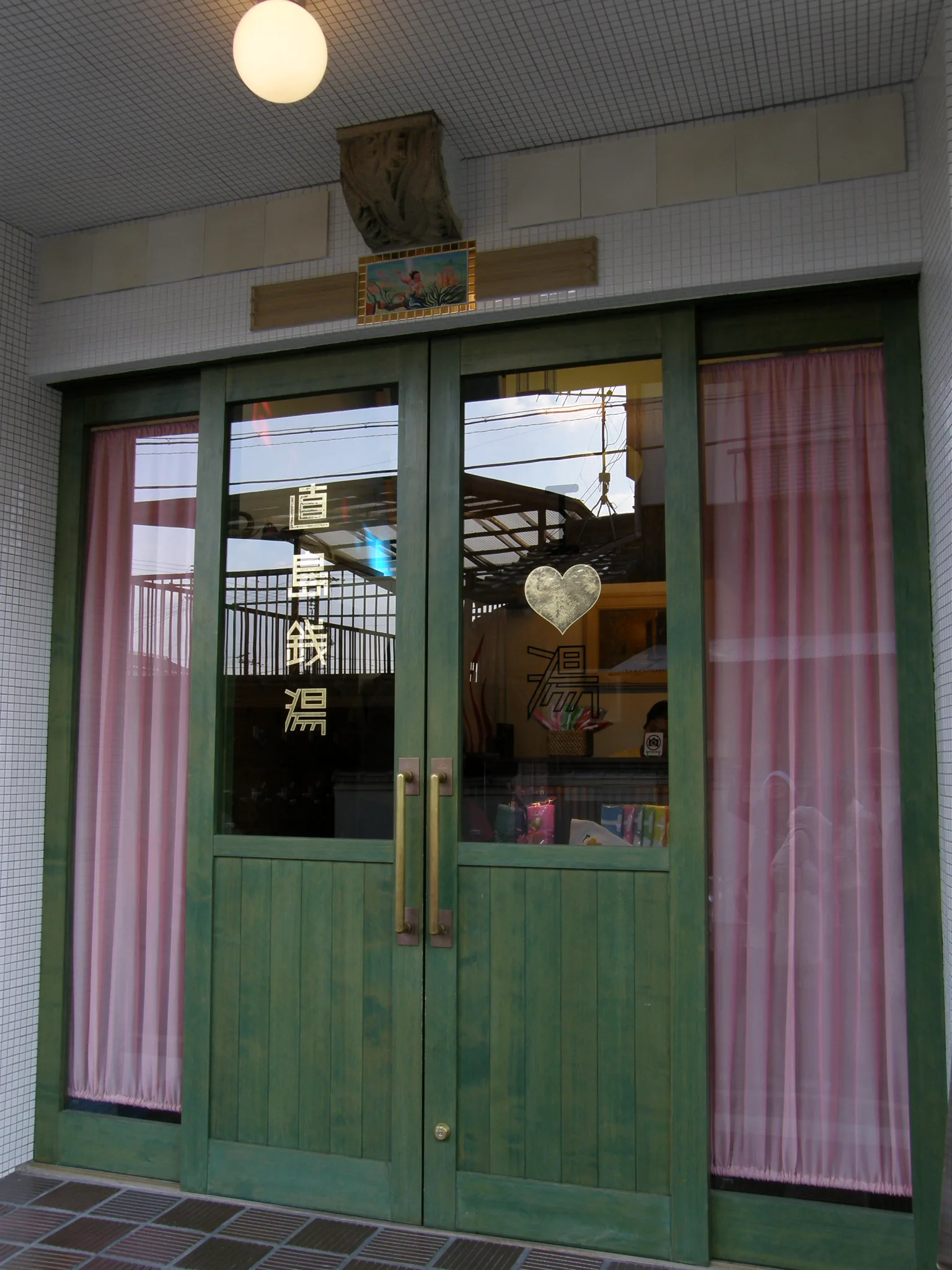
The bathing areas are part of Ohtake’s artwork, from the changing rooms and tiles to the tubs and decorative details. There is no published spring-water analysis or source information, so the “yu” in the name should not be read as evidence of a natural hot spring. Think of I Love Yu as an art-led sento—a functioning neighborhood bathhouse—not a place to compare mineral content or spring temperatures.
Miyanoura Port is close, but keep a ferry buffer
The bath is about a two-minute walk from Miyanoura Port. That makes it easy to add before checking in or after spending the day elsewhere on the island. The port’s proximity does not make a last-minute visit risk-free, though: bathing, drying off, changing and walking back all take longer than the map’s two minutes. Check your sailing first and leave time to get ready; ferry departures can bring extra foot traffic around the port.
Large bags are awkward to bring into a residential bathhouse. Coin lockers are available at the port area, so store luggage before walking over. Drivers should use the town’s paid parking rather than stopping on nearby residential streets.
If your group wants a sauna circuit or a long shared lounge stay, I Love Yu will feel limited. The distinction between a sento and a natural onsen is explained in Sento, onsen and super sento: what is the difference?.