Okayama City Day-Use Onsen: Daikazoku-no-Yu, Honoka-no-Yu and Momotaro Onsen
Compare Okayama’s family pool-and-bath, late-closing artificial onsen and source-detailed natural spring at Daikazoku-no-Yu, Honoka-no-Yu and Momotaro.
“Onsen” can mean different things across Okayama City’s day-use baths. Daikazoku-no-Yu has several pools and baths, but only selected tubs are identified as natural hot spring water. Honoka-no-Yu stays open until midnight and describes its water as artificial. Momotaro Onsen is the clearest choice if you want a natural spring with published source-flow details. Pick by the kind of visit you want rather than comparing admission prices alone.
| If your priority is… | Start with… | Current adult bath admission |
|---|---|---|
| Swimming with children, then bathing | Daikazoku-no-Yu | ¥820 weekdays; ¥870 weekends and holidays |
| A late soak near the city | Honoka-no-Yu | ¥850 weekdays; ¥900 weekends and holidays |
| A natural spring and detailed water-use information | Momotaro Onsen | ¥1,100 |
Daikazoku-no-Yu: the family option, with one ticket for pool and bath
Daikazoku-no-Yu makes most sense when swimming is part of the plan. Its pool ticket includes bathing, so buying a pool-and-bath package is simpler than adding a separate bath ticket afterwards. The facility has children’s pool space and a larger pool area; swimsuits are required for the pool, while the bathing area follows normal onsen etiquette.
The water labels are worth reading. The operator marks several tubs as natural hot spring baths, including the spring bath, seated bath and walking bath. Other pools are described as soft water or have separate features. It would be inaccurate to call every tub in the building natural spring water. If you only want to bathe, the less expensive bath-only ticket is available.
It opens at 7 a.m. and closes at 11 p.m., with reception ending at 10 p.m. From Okayama Station, the prefectural tourism listing describes a bus ride of about 30 minutes to Tekko Center-mae, then a five-minute walk. Kita-Nagase Station is another option, but it is roughly a 20-minute walk. For more detail on pool admission and rules, see the Daikazoku-no-Yu family pool guide.
Honoka-no-Yu: the latest closing time, not a natural spring
Honoka-no-Yu stays open later than the other city baths. Body wash, shampoo and conditioner are provided; bring or buy towels and other bathing items.
| Day-use detail | Information |
|---|---|
| Hours | Daily, 10 a.m.–midnight |
| Last reception | 11:30 p.m. |
| Adult admission | ¥850 weekdays; ¥900 weekends and public holidays |
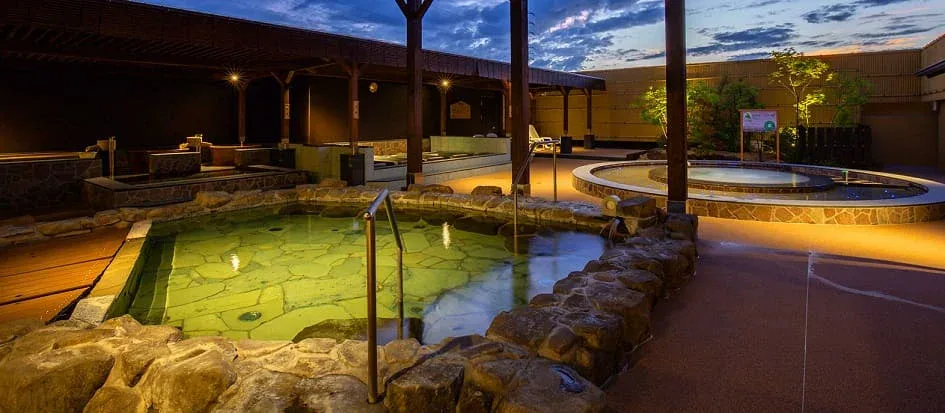
The operator describes the water as an artificial hot spring. Facilities include outdoor baths, a nano-carbonated bath and a low-temperature hydrogen sauna. Choose another venue if natural spring water is essential.
From Okayama Station or Tenmaya, take a bus toward the Red Cross Hospital and get off at Konan Elementary School; the operator lists about a three-minute walk from the stop. The men’s and women’s baths switch weekly, so check the current schedule if one particular bathing area matters to you.
Momotaro Onsen: the strongest choice for source-water detail
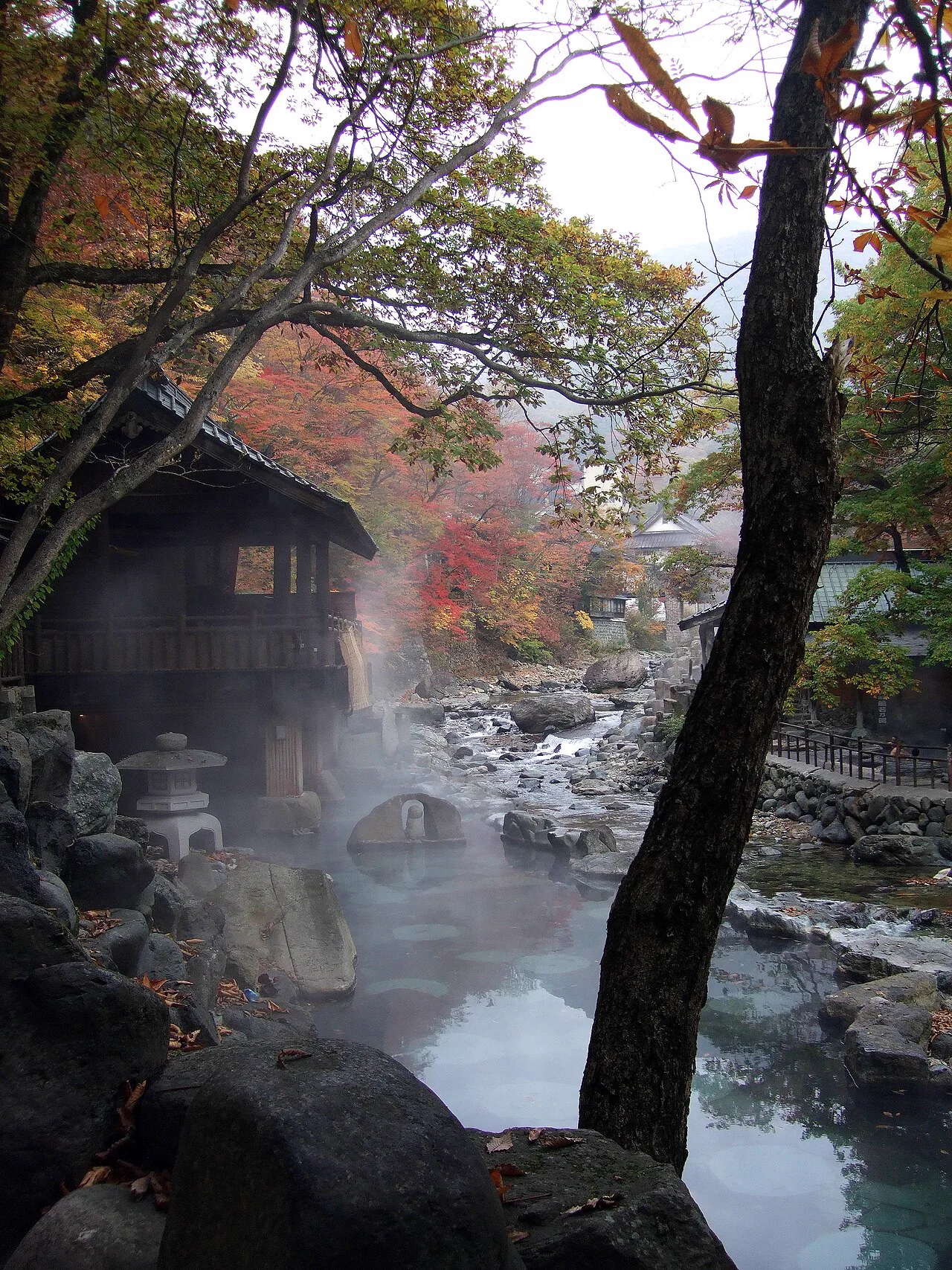
Momotaro Onsen is farther from central Okayama, but its water information is more specific. The operator describes an alkaline simple spring flowing at 380 litres per minute and lists six bathing facilities, including a hinoki open-air bath and a rock bath. Adult day-use admission is ¥1,100; the reception window is 10 a.m. to 10 p.m., and the building closes at 11 p.m.
There is an important distinction between its open-air bath and the other tubs. From June through October, the operator says the open-air bath uses 100% source water in a flow-through system. From November through May, it is heated through a heat exchanger without adding water. The hinoki and rock baths use a combination of fresh inflow and partial circulation. “Source-fed” is not a blanket description for every tub here, so check which bath a detail refers to.
The operator’s admission page separates a bath-only ticket from a higher-priced bathing-and-performance ticket. If you only want the onsen, buy the bath-only option. The property is in Musa, outside the city centre; plan transport and return time before settling in for a long visit.
The three facilities should not be treated as interchangeable “natural onsen.” Daikazoku-no-Yu labels selected pools as natural spring water but does not publish a source analysis that would let you fill in missing temperature or flow figures. Honoka-no-Yu explicitly describes its water as artificial. Momotaro is the one with the clearest spring data, but even there the source-water details vary by tub and season. None of the three should be described as entirely flow-through from a single source.
Which one fits a short Okayama stay?
For children who want to swim, Daikazoku-no-Yu bundles the pool and bath in one visit. Honoka-no-Yu works better as a late-evening stop from the city centre, provided you are comfortable with artificial spring water. Momotaro Onsen asks for more travel time, but it is the one to choose when natural spring water and clearly described bath-by-bath circulation practices are the point.
If you want to compare these city facilities with a quieter rural bath, try Takebe Yahata Onsen, Yubara Onsen’s day-use options or Sagi Onsenkan in Yunogo. For a closer look at how to read spring type and water-treatment descriptions, see the onsen spring-quality guide.
Before buying a ticket, check the house rules too. Daikazoku-no-Yu refuses tattooed guests and tattoo-style stickers; its mixed-bathing limit requires a child to be both no older than first grade and no taller than 120 cm. Honoka-no-Yu’s baths change sides weekly, so check the assigned bathing area if a particular facility matters. Momotaro’s spring bath is the best documented, but it is farther out and should be paired with a confirmed ride back rather than treated as a station-side option.