Shin-Chugu Onsen Center: A Rock-Bath Stop in Hakusan’s Mountain Foothills
Plan a visit to Shin-Chugu Onsen Center in Hakusan: current admission, short opening window, rock-bath setting and why the bus needs careful planning.
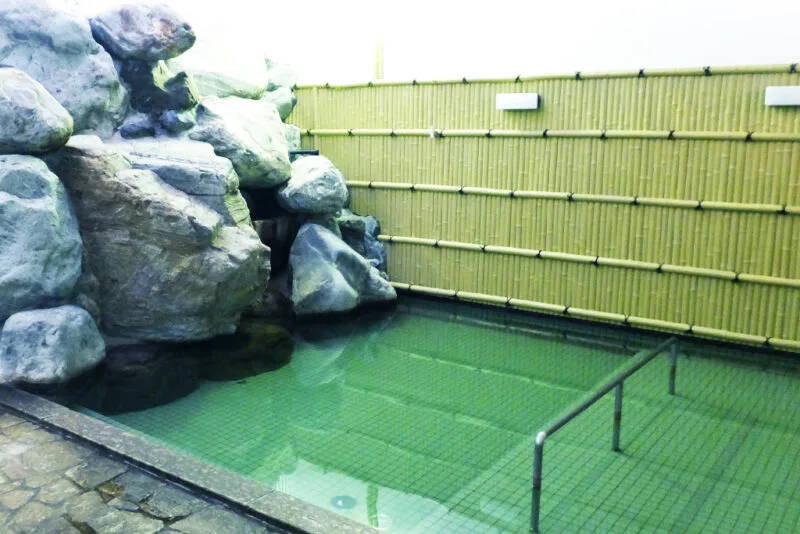
Shin-Chugu Onsen Center is a modestly priced public bath in Hakusan’s Chugu area, useful when your day already takes you into the southern foothills. Adult admission is ¥400. The bathing room’s large stones give it a rock-bath feel, and the spring is listed as a sodium-bicarbonate/sulfate spring. It is not a substitute name for the nearby inn Yuyado Kuroyuri, which has no operating plan for fiscal 2026.
That distinction matters. Old reports about Kuroyuri describe a separate inn and its spring use; they do not establish that Shin-Chugu Onsen Center offers the same source flow, drinking spring or bathing arrangement. The center’s current public information does not give a full treatment breakdown for each bath.
Admission and the short opening window
| Visitor | Admission |
|---|---|
| Adult | ¥400 |
| Elementary-school child | ¥100 |
| Child aged 3 and over | ¥50 |
The center opens at noon, which helps if you are travelling through the area during the day. On weekdays it closes at 7 p.m., with last entry at 6:30 p.m. On Saturdays, Sundays and public holidays it stays open until 8 p.m., with last entry at 7:30 p.m. Tuesday is the regular closure day; when Tuesday is a public holiday, it closes the following day. New Year closures may also apply.
Shampoo, conditioner and body wash are listed among the available bath amenities. Bring your own towel: the current pages do not confirm a standard free towel or a dependable rental price. The resident discount on the third Saturday of each month is limited to Hakusan residents with proof of address; visitors should budget the regular ¥400.
What the bath is—and what the available information does not say
The bathing room is arranged around large rocks, with the water running between them. It is an indoor public bath, not an outdoor pool with a mountain view. The current facility descriptions do not list a sauna, cold plunge or private bath, so choose another Hakusan-area facility if one of those is essential.
The spring is classified as sodium-bicarbonate/sulfate. Public pages do not provide a current, facility-specific source temperature, bath temperature, pH or yield. They also do not specify whether water is added, heated, circulated, disinfected or sent directly to each tub. For that reason, claims made about Kuroyuri or other nearby inns should not be transferred to this center.
A car makes this a much easier stop
From Hakusan IC, the official tourism listing gives a drive of about 70 minutes along National Route 157. Parking is available. Shin-Chugu works best after a day that already includes the Hakusan foothills, Sena, Tedori Gorge or the road south through the mountain area. If your trip stays in central Kanazawa, a round trip just for this ¥400 bath takes too much of the day.
Without a car, treat the visit as possible only with a timetable in hand. Hakusan’s Meguru community-bus Ochi route serves the Hakusan-Chugu area, but it is local transport, not a tourist shuttle. Services run Monday through Saturday with exceptions; Sundays and public holidays are generally excluded.
Some foothill trips are demand-responsive and must be booked by phone by 5 p.m. the previous day. For the Ochi route, the city lists the Ochi Residents’ Service Center at +81 76-256-7011 for reservations. Confirm the operating day, timetable, reservation requirement and return before deciding how long to bathe. A stop on the map does not guarantee a convenient same-day round trip.
Which Hakusan bath suits the rest of your day?
Shin-Chugu is a good match for the Chugu end of the foothills and for travellers who want a straightforward rock-bath setting. Meotoiwa Onsen Rakuyou is better positioned for the Kawachi side; Daimon Onsen Center is known for its broad river-facing windows; Kobo no Yu at Bird Humming Torigoe lists a sauna and cold bath. Those are different route choices, not interchangeable facilities. Compare the Rakuyou guide, Daimon Onsen Center guide and Kobo no Yu guide with the Shiramine public bath guide before building a foothills loop.
For a simple visit, arrive after noon with a towel and leave enough time to reach your next stop before the last entry window. If the bus return is uncertain, this is not the place to improvise at closing time.
Sources
Checked September 28, 2026. Opening days and community-bus service can change; confirm them before travel. - Hakusan City: [municipal hot-spring facilities](https://www.city.hakusan.lg.jp/kenkofukushi/kenkoother/1002052.html), [Meguru timetable and service days](https://www.city.hakusan.lg.jp/machi/kotsu/1007749/index.html), [March 16, 2026 timetable](https://www.city.hakusan.lg.jp/machi/kotsu/1007749/1018345.html), [demand-service rules](https://www.city.hakusan.lg.jp/machi/kotsu/1017325/index.html), and [municipal AED list, updated June 24, 2026](https://www.city.hakusan.lg.jp/kenkofukushi/kyukyu/1005424/1005498.html). - Operator: [Shin-Chugu Onsen Center](https://hakusan-spa2.com/?page_id=21). - Ishikawa Tourism: [Shin-Chugu Onsen Center](https://www.hot-ishikawa.jp/spot/detail_5581.html); Hakusan Tourism: [facility listing](https://www.urara-hakusanbito.com/spot/detail_1185.html) and [Yuyado Kuroyuri status](https://www.urara-hakusanbito.com/gourmet/detail_1216.html).Checked: 2026-09-28