Five Public Onsen in Hakusan, Ishikawa: Which One Fits Your Route?
Find a Hakusan City public bath by location, hours, entry, sauna access and scenery—useful for a Hokuriku drive or a foothills day out.
Hakusan City has five municipal hot-spring baths, but they are spread between the Sea of Japan coast and the foothills around the Tedori River. Matto Kaihin Onsen is the clear choice for an early soak beside the Hokuriku Expressway; Kobo-no-yu is the budget pick if you want a sauna; Daimon has the river-facing bath. Rakuyou and Shin-Chugu make more sense when your drive already takes you through their part of the mountains.
That geography matters more than the ¥130 (about HK$7 / NT$27) difference between Matto and the four ¥400 baths. Driving from the coast to one foothill facility and then doubling back can turn a quick bath into a long detour.
The five baths at a glance
| Bath | Adult admission | Regular hours | Best reason to choose it |
|---|---|---|---|
| Matto Kaihin Onsen – Otsukarisama | ¥530 (about HK$27 / NT$108) | Tue–Sun, 5am–10:30pm; Mon, 10am–10:30pm | Early opening, outdoor bath and access from Tokumitsu PA |
| Kobo-no-yu at Bird Humming Torigoe | ¥400 (about HK$20 / NT$82) | Noon–9pm | Sauna and cold plunge in the foothills |
| Meotoiwa Onsen Rakuyou | ¥400 (about HK$20 / NT$82) | 3–9pm daily, under the announced schedule change | A straightforward stop near the Meoto-iwa rocks and Route 157 |
| Daimon Onsen Center | ¥400 (about HK$20 / NT$82) | Weekdays, 3–9pm; weekends and holidays, noon–9pm | Large windows overlooking the Tedori River and wooded hills |
| Shin-Chugu Onsen Center | ¥400 (about HK$20 / NT$82) | Weekdays, noon–7pm; weekends and holidays, noon–8pm | A rock-lined bath deep in the Hakusan foothills |
| Child admission | Matto Kaihin Onsen | Other four baths |
|---|---|---|
| Primary-school pupils | ¥150 (about HK$8 / NT$31) | ¥100 (about HK$5 / NT$20) |
| Children aged 3 and up | ¥100 (about HK$5 / NT$20) | ¥50 (about HK$3 / NT$10) |
Hakusan’s fee revision, effective October 1, 2026, leaves the five admission prices unchanged. A monthly ¥200 resident discount is available to Hakusan residents who can show proof of address; visitors should budget the regular rate.
Start with the coast or the foothills
Matto Kaihin Onsen sits beside Tokumitsu Parking Area (PA) on the Hokuriku Expressway. The operator describes a pedestrian route from the PA, making this the most practical bath if you are already driving the highway. The bath has an indoor pool, an outdoor bath and a sauna; the indoor bathing area looks over the Sea of Japan. Opening at 5am from Tuesday through Sunday gives it a role none of the mountain-side baths can fill. Monday is the exception, with a 10am opening.
There is an important near-term exception: the city announced a maintenance closure from September 28 through October 2, 2026. Construction noise may also be heard immediately before and after those dates. If your trip falls around that window, check the operator’s latest notice before making the stop part of a long drive.
The other four baths lie inland along the Hakusan foothills. They are better compared against your route through Torigoe, the Tedori Gorge, Yoshinodani or Chugu than against Matto. The community bus network serves parts of the area, but it is local transport rather than a frequent tourist shuttle. Check both the outward and return timetable; some services need advance booking. Without a car, these foothill baths are difficult to combine with a flexible sightseeing day.
Choose by the bath you actually want
For an early start or an expressway break: Matto
For a dawn bath, Matto is the only realistic choice among these five. It is also the one with the most varied facility mix: an outdoor bath, sauna, shallow section and reclining bath are listed by the operator. If you are traveling on the expressway, the PA access can save a substantial detour compared with leaving the highway to find a town bath.
The ¥530 (about HK$27 / NT$108) adult ticket is slightly higher than the foothill baths, but the extra ¥130 (about HK$7 / NT$27) buys a different location and more listed bathing features. It is less compelling as a standalone public-transport trip from Kanazawa, where the community-bus schedule can dictate the whole outing.
For a sauna without paying resort prices: Kobo-no-yu
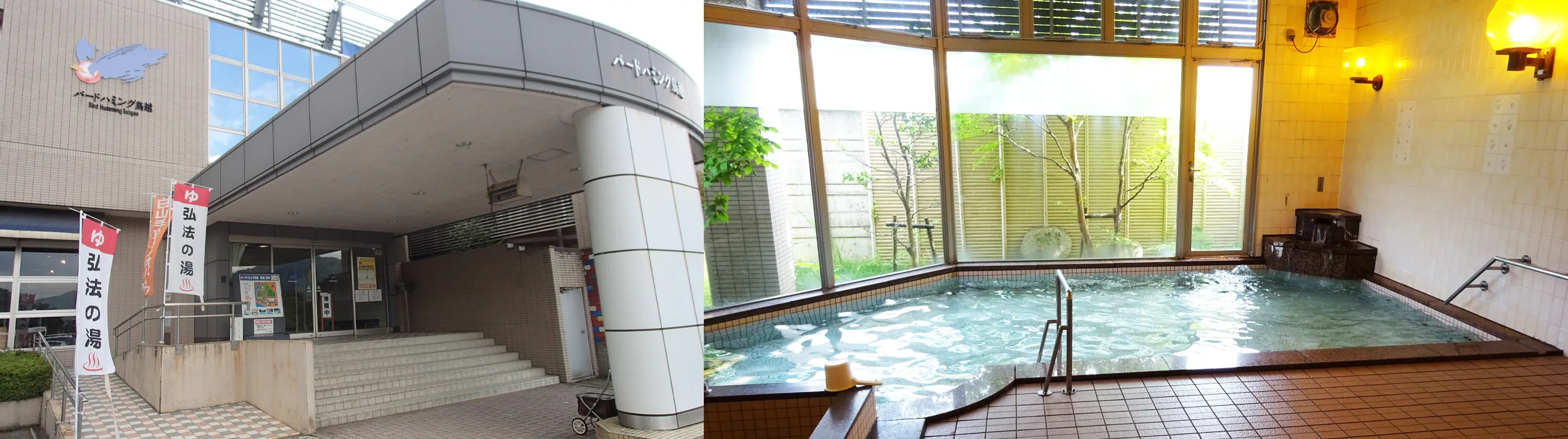
Kobo-no-yu, inside Bird Humming Torigoe, is the strongest fit for a sauna visit in the foothills. The facility lists both a sauna and a cold plunge, as well as shampoo, conditioner and body wash. Admission is ¥400 (about HK$20 / NT$82). It also has a restaurant, so there is somewhere to eat on site rather than having to find a meal after bathing.
This is the natural option when your day already includes Torigoe or the Tedori Gorge. It opens at noon and closes at 9pm, with the last reception at 8:30pm; Wednesdays are the regular closing day, shifted to Thursday when Wednesday is a public holiday. The sauna and plunge are the reason to choose it, not a reason to cross the city from the coast.
For a simple stop along Route 157: Rakuyou
Rakuyou is near the Meoto-iwa (“Couple Rocks”) on the Tedori River, and its spring is sourced from the area around those rocks. That is a geographic connection, not a promise of a bath with a direct view of the formations. Think of it as a modest local bath to add when your route already passes through the Kawachi area.
Rakuyou opens 3–9pm daily under the schedule change announced by Hakusan City; last reception is 8:30pm. Some city, tourism and operator summaries still show the old weekend-noon opening, so a Saturday arrival before 3pm is risky unless the facility confirms otherwise. Monday is the regular closure day, or Tuesday when Monday is a public holiday.
For an indoor river view: Daimon
Daimon’s large windows face the Tedori River and surrounding hills. The view is from indoors, which can be welcome on a rainy or cold day. It is a straightforward public bath rather than a spa complex; the current facility information does not list a sauna or outdoor bath.
Weekdays begin at 3pm, while weekends and public holidays start at noon. It closes at 9pm, with last admission at 8:30pm, and Tuesday is its regular closing day (Wednesday after a Tuesday public holiday). Daimon fits a drive through Sagara, Torigoe or the river area better than a coast-to-mountain detour made just for the bath.
For a rock-lined bath in the mountains: Shin-Chugu
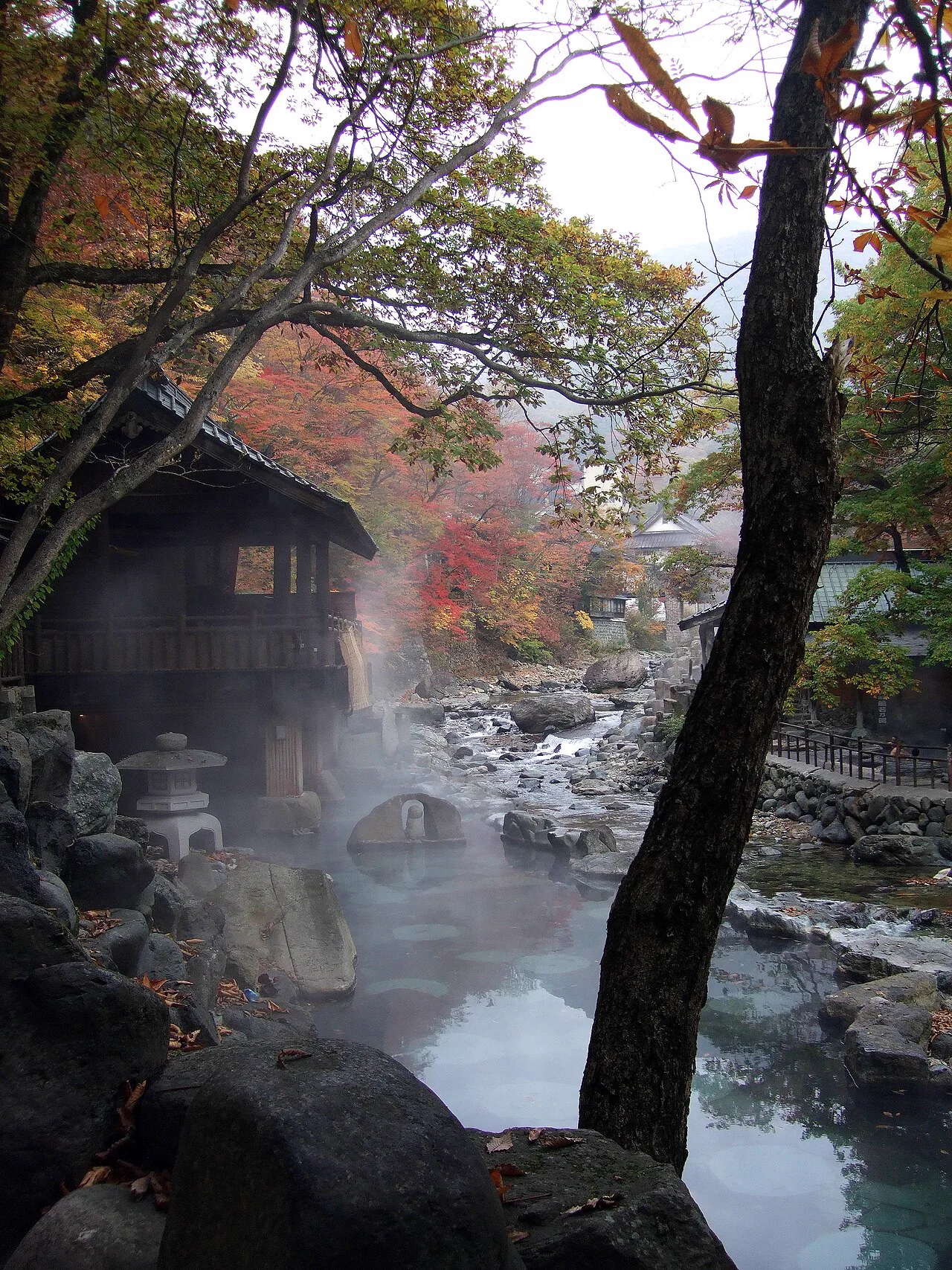
Shin-Chugu is the most deeply inland of the five. Its wide bathing area has a rock-bath atmosphere, and the earlier weekday closing time—7pm, with last admission at 6:30pm—makes it worth planning before the drive rather than treating it as an afterthought. On weekends and public holidays it stays open until 8pm, with last admission at 7:30pm.
The bath is closed Tuesdays, or Wednesdays when Tuesday is a public holiday. If you are already in the Chugu area, it makes more sense to stop here than to drive back north toward Torigoe for a sauna you may not need.
Water type and bathing facilities are not interchangeable
All five are municipal natural hot springs, but their published spring classifications differ: Matto is sodium-chloride; Kobo-no-yu and Rakuyou are sodium-calcium sulfate; Daimon is sodium-calcium sulfate-chloride; and Shin-Chugu is sodium-bicarbonate-sulfate. The city does not publish the same complete set of source temperature, bath temperature, pH and flow data for each facility, so those figures cannot be compared consistently.
The same caution applies to water treatment. “Natural hot spring” alone does not establish that every bath is 100% free-flowing source water. The current pages do not provide comparable, bath-by-bath details on dilution, heating, circulation and disinfection, so there is no sound basis for ranking the five on that claim.
A few practical details before you go
The foothill baths generally close one weekday each: Rakuyou on Monday, Daimon and Shin-Chugu on Tuesday, and Kobo-no-yu on Wednesday; public holidays shift the closure to the following day. Matto closes on the third Thursday of the month, moving to Friday if that Thursday is a public holiday. New Year closures also apply at the foothill facilities. A nearby alternative may be open, but it may be in the opposite direction or not open until later in the day.
For a car itinerary, match the bath to the area you will already be in: Matto for the expressway and coast; Kobo-no-yu for Torigoe and the gorge; Daimon for the river-side drive; Rakuyou for the Kawachi stretch; Shin-Chugu for the inner foothills. If relying on public transport, confirm the return first. A bus stop nearby does not help if the bath opens after your arrival or the last useful bus leaves before you are ready to go.
For individual facility details, see the guides to Matto Kaihin Onsen, Kobo-no-yu and Daimon. Hakusan’s tourism site has a facility listing for Shin-Chugu Onsen Center; Rakuyou’s own current hours remain worth confirming before a weekend visit because older listings still circulate. If you are continuing south toward Shiramine, the Shiramine Onsen Soyu guide covers a separate bath farther up the mountain road.
Sources
- [Hakusan City: five municipal hot springs, admission, hours, closures and service notices](https://www.city.hakusan.lg.jp/kenkofukushi/kenkoother/1002052.html) - [Hakusan City: October 1, 2026 fee revision notice](https://www.city.hakusan.lg.jp/shisei/gyosei/1018403.html) - [Hakusan City: October 2026 fee table (PDF)](https://www.city.hakusan.lg.jp/_res/projects/default_project/_page_/001/018/403/r81001ryoukinnkaiteiitirann0831.pdf) - [Hakusan City Tourism: Meotoiwa Onsen Rakuyou](https://www.urara-hakusanbito.com/spot/detail_1179.html) - [Hakusan City Tourism: Daimon Onsen Center](https://www.urara-hakusanbito.com/spot/detail_1108.html) - [Hakusan City Tourism: Shin-Chugu Onsen Center](https://www.urara-hakusanbito.com/spot/detail_1185.html) - [Hakusan City: Meguuru community bus](https://www.city.hakusan.lg.jp/machi/kotsu/1007749/index.html) - Facility-specific details are linked in each individual guide above.Checked: 27 September 2026.