Daimon Onsen Center: Hours, Prices and a Bath with a River View
Daimon Onsen Center costs ¥400 and overlooks the Tedori River. Weekday bathing starts at 3pm; weekends and holidays open at noon.
Daimon Onsen Center is a useful stop if your route already takes you through Sagara, Torigoe, the Tedori Gorge or the Hakusan foothills. Adult admission is ¥400, and the main bath has a wall of glass facing the river and surrounding greenery. It is a simple indoor bath rather than a large spa complex; the current facility pages list bath amenities and a rest area, but do not list an outdoor bath or sauna.
Hours and admission
| Current information | |
|---|---|
| Adults (junior high school and older) | ¥400 |
| Primary-school children | ¥100 |
| Children aged three and older | ¥50 |
| Weekdays | 3pm–9pm |
| Saturdays, Sundays and public holidays | Noon–9pm |
| Last admission | 8:30pm |
| Regular closing day | Tuesday; if it is a public holiday, the bath closes the following day |
The bath also closes over the New Year period. Hakusan City’s current public-bath listing and the tourism association give the same standard hours and prices. The operator posts separate notices for occasional closures, so check the latest notice before making a long drive.
An older Hakusan City page still says the bath closes on the third Tuesday. Current city, tourism-association and operator information agree that it closes every Tuesday; if Tuesday is a public holiday, closure moves to Wednesday. Use the current operator calendar, not that outdated city listing. The third-Saturday ¥200 admission is only for Hakusan residents with proof of residency.
The ¥200 discount on the third Saturday of each month is for Hakusan residents who can show proof of residency. Visitors should budget the regular ¥400 rate. Shampoo, conditioner and body wash are provided; towel availability is not clearly stated, so bring one or ask before setting out.
What the bath is like
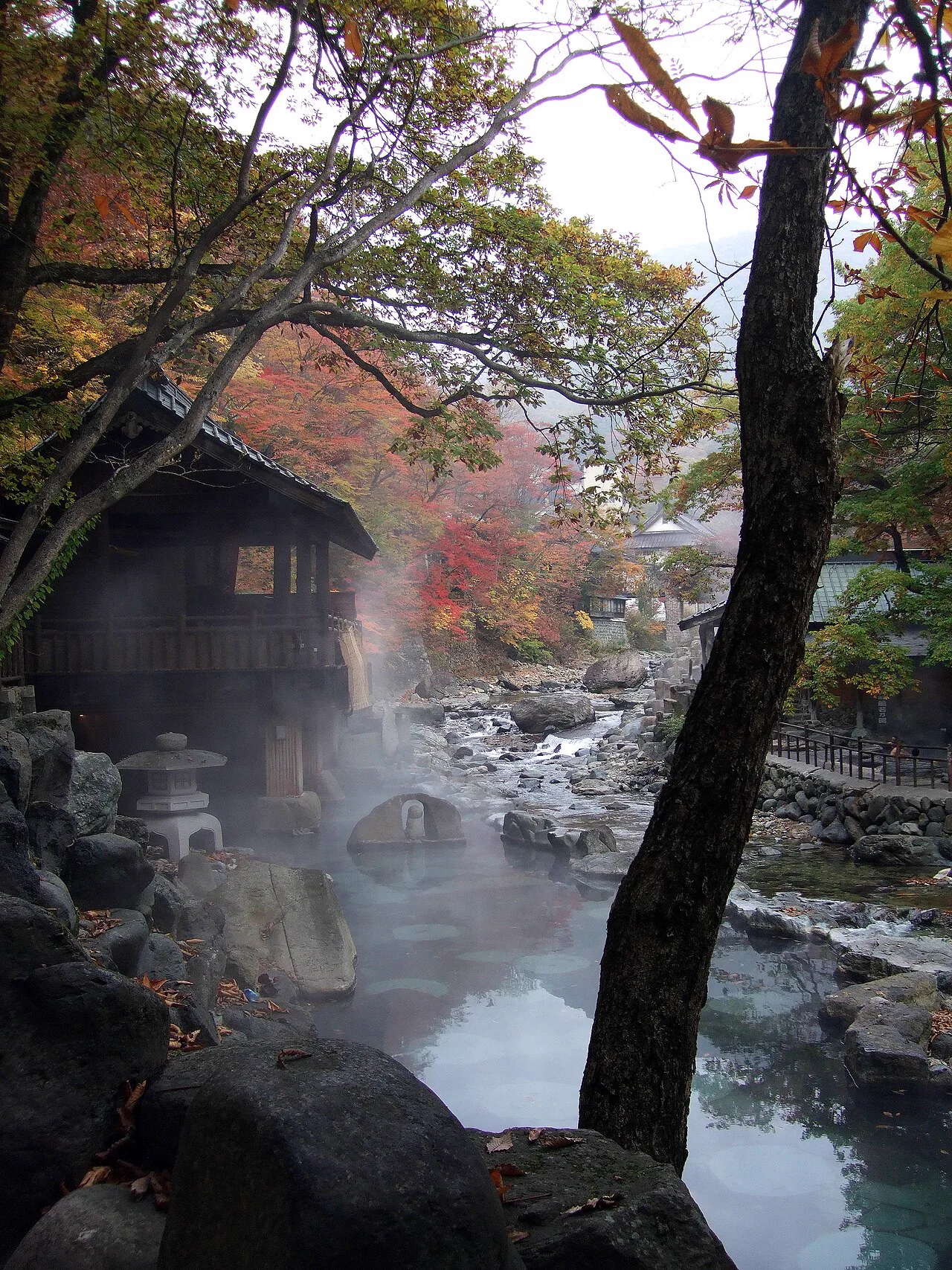
The indoor bath is spacious and bright. Large windows look towards the Tedori River and the wooded hills, making the view the main draw. The spring is classified as a sodium-calcium sulfate-chloride hot spring and described as alkaline and low in dissolved minerals. The current public information does not give a source temperature, pH or flow rate, and it does not specify how each bath is supplied or treated. Those details should not be inferred from older records or from other baths in Hakusan.
This is a good fit when you want to rinse off and warm up after being outdoors. If an open-air pool or sauna is essential, choose a facility that explicitly lists one; Daimon’s current pages do not advertise either.
The spring is confirmed as a natural hot spring, but the current pages do not publish a source temperature, pH, yield or tub-by-tub treatment. It is not supported to call every tub 100% source-flowing. Daimon’s glass-fronted river view sets it apart from nearby Kōbō-no-Yu, which has a sauna and cold plunge; Shiramine Sōyu is the option with an outdoor bath. Daimon and Kōbō-no-Yu both charge ¥400 for adults, while Shiramine’s listed adult admission is ¥750.
If you have a tattoo, call Daimon Onsen Center before travelling. Nearby bathhouses set their own entry rules, so their policies may not apply here.
The weekday opening time changes the route
Daimon is on National Route 157, and the tourism association estimates about an hour by car from Hakusan Interchange. Parking is available. Weekday hours begin at 3pm, which rules it out as a morning stop. A more natural plan is to spend the first part of the day around the gorge or Seseragi Roadside Station, eat lunch, then head to the bath before driving north towards Tsurugi or Kanazawa.
On weekends and public holidays, the noon opening gives you more flexibility. You can visit Torigoe or the river area first, soak in the afternoon, and continue south towards Shiramine if the road and your schedule allow. There is little reason to rush between several public baths in one day; choose based on where you are going and whether you want a river view, a sauna or an outdoor bath.
Without a car, the trip takes more planning. Local Meguru community buses and Hokutetsu route buses serve parts of the foothills, but they are much less frequent than services around Kanazawa. Some Meguru services require a reservation by the previous afternoon. Check the timetable, reservation rules and return journey before leaving; a bus that gets you to the area may not line up with the bath’s opening or closing time.
The Meguru “clinic and onsen” route runs Monday to Friday; some demand-response trips must be reserved by 5 p.m. the previous day. Most community-bus services do not run on Sundays, public holidays or January 1–3. If you are driving, the tourism association estimates about an hour from Hakusan Interchange via Route 157, with parking at the facility. As of September 2026, the operator was still posting monthly schedules and notices; check the day’s update before a long trip.
Sources
- [Hakusan City: public bath facilities](https://www.city.hakusan.lg.jp/kenkofukushi/kenkoother/1002052.html) - [Hakusan Tourism Association: Daimon Onsen Center](https://www.urara-hakusanbito.com/spot/detail_1108.html) - [Daimon Onsen Center: facility information and notices](https://hakusan-spa2.com/?page_id=20) - [Hakusan City: Meguru community bus](https://www.city.hakusan.lg.jp/machi/kotsu/1007749/index.html) - [Hakusan City: reservation-based Meguru services](https://www.city.hakusan.lg.jp/machi/kotsu/1017325/index.html)Checked: 27 September 2026.