Akebono-yu in Asakusa: A Historic Sento with Early Hours
Visit Akebono-yu for its 1948 timber facade, spring wisteria and early Asakusa bathing hours; check weekday breaks, fees and the walk from the station.
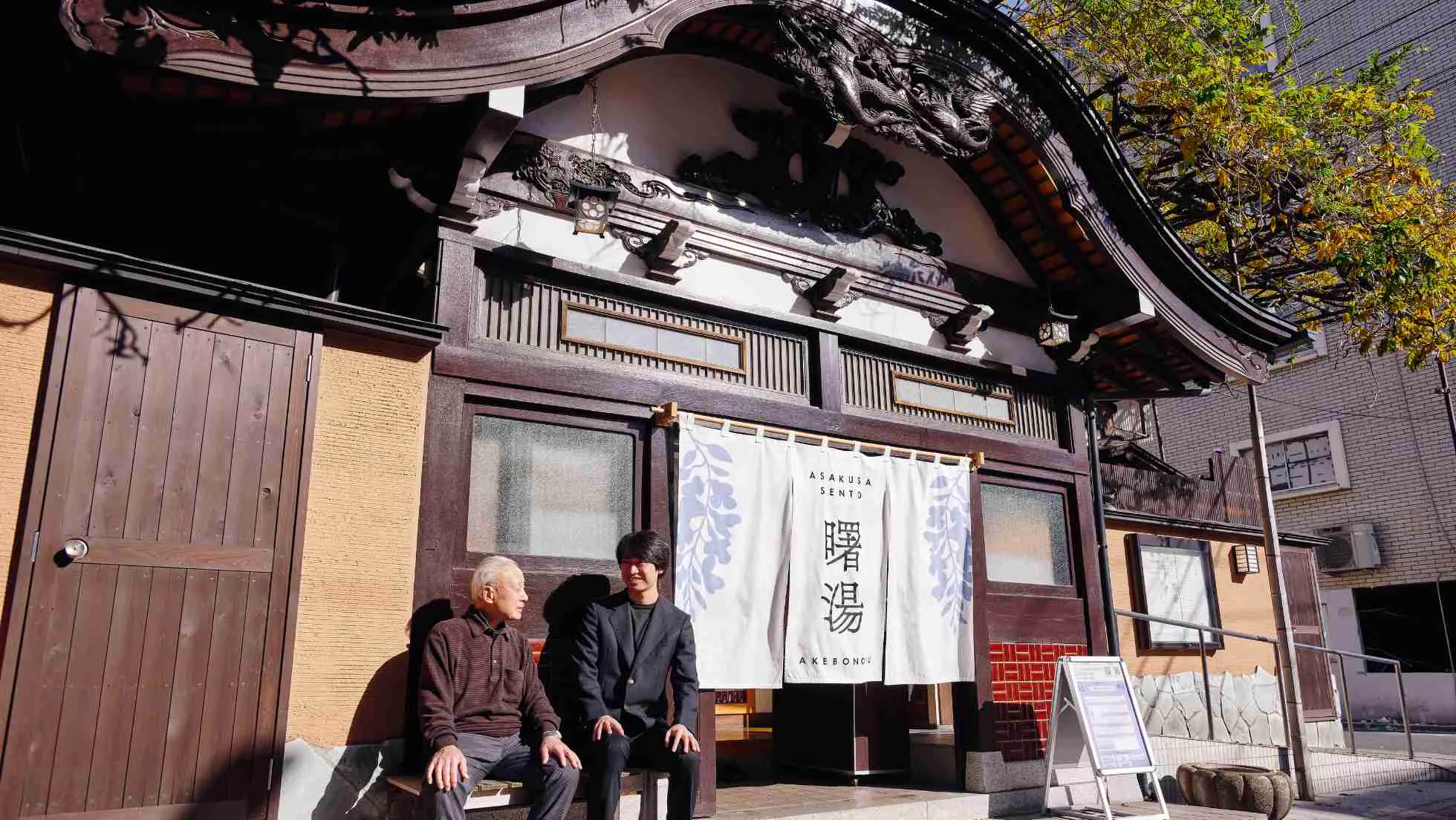
Akebono-yu is a working neighbourhood bathhouse in Asakusa, and the building is part of the visit. Its two-storey timber frontage dates to 1948, with a carved karahafu entrance, layered gables and a wisteria vine that flowers in spring. Tokyo selected it as a Historic Building in 2025. The bathhouse reopened under a new operator in August that year, so older listings may describe a different schedule or management.
Look at the building, then use the bath
The street-facing roofline combines a curved karahafu gable with a second chidori-hafu gable, and the interior retains a coffered ceiling. The wisteria usually blooms from late April into early May, though weather shifts the timing. The best reason to visit outside that short season is still the architecture, not a rare water type.
Inside, expect a conventional sento bathing area with jet, bubble, seated and silk baths. The milky appearance of the silk bath comes from fine bubbles; Akebono-yu is not a documented natural hot spring. It also has no sauna or cold plunge. For a nearby bathhouse with published natural spring water, see Yudonburi Sakaeyu. Our Tokyo sento first-visit guide explains the shared-bath basics.
Early opening, with a weekday gap
| Visit detail | Current listing |
|---|---|
| Monday–Friday | 6–9 a.m. and 11 a.m.–1 a.m. |
| Saturday, Sunday and holidays | 6 a.m.–1 a.m. |
| Regular closing day | Second Tuesday of the month |
| From Ginza or Toei Asakusa Line stations | About 15 minutes on foot |
| Adult admission | ¥600 |
| Elementary-school child | ¥200 |
| Preschool child | ¥100 |
On weekdays, the morning session ends at 9 a.m. and the bath does not reopen until 11. The Tokyo Sento Association listing gives these hours and the monthly closing day; confirm the listing or call ahead if your visit falls on a holiday or near a schedule change.
The adult rate follows Tokyo’s revised public-bath tariff, effective August 1, 2026. Shampoo and body wash are available; a towel set is ¥200. Tattoo policy: call the bathhouse before visiting.
The walk from Asakusa's Ginza Line stop takes longer than the station name may suggest. The address is 4-17-1 Asakusa, Taito City; allow roughly 15 minutes from the Ginza Line station. That makes this a deliberate neighbourhood visit rather than a bath inside the Sensoji precinct.
Akebono-yu fits visitors who want to see a preserved Tokyo sento that still serves local bathers, or who need an early-morning bath. Come during the wisteria season for the facade in bloom; at other times, plan around the morning split and the station walk.
If you want a larger urban spa, compare Asakusa ROX Matsuri-yu, Spa LaQua and Thermae-Yu. For other neighbourhood baths, see Yudonburi Sakaeyu, Kotobukiyu in Ueno, the Tokyo sento first-visit guide, the Kamata onsen guide and the Kamata black-water comparison.
