Tamagawa Onsen Ikoinoyu: Prices, Sauna Rotation and Access
Ikoinoyu near northern Hagi charges ¥550; its sauna changes sides every other week. The 20.7°C sample came from a treated supply pipe, not a bath pool.
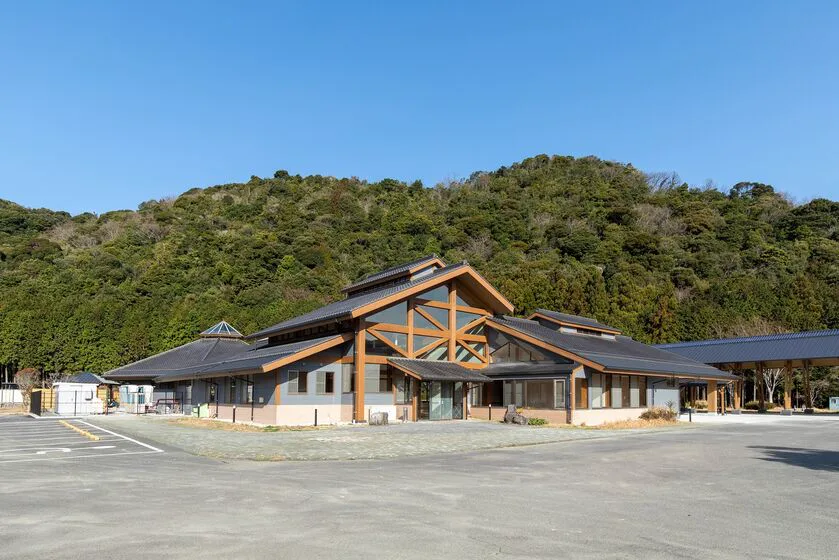
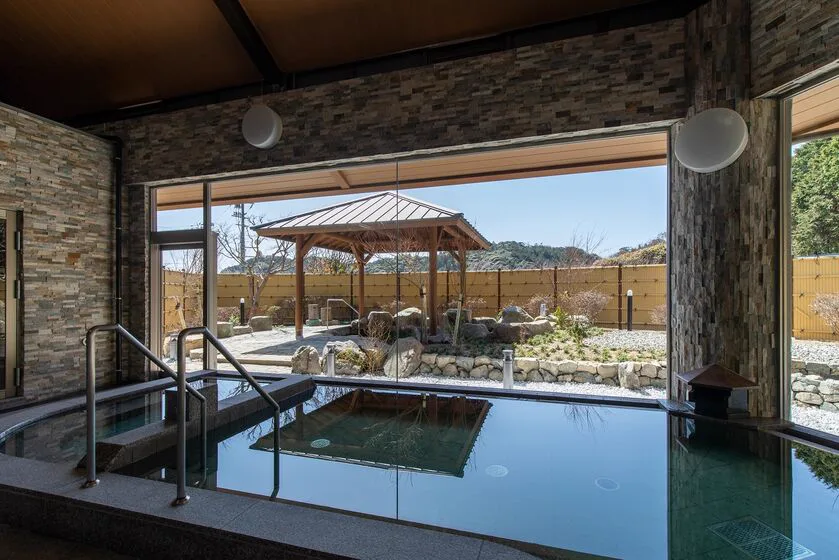
Ikoinoyu is a useful stop on a drive through northern Hagi, especially if your route continues toward Susa or Masuda. The local bathhouse has an indoor pool, garden-style open-air baths for both sexes, a sauna on one side, a rest area and nearby camping facilities. Adult admission is ¥550; the main planning wrinkle is that the two bathing sides switch every other week, so the sauna is not always assigned to the same group.
The spring data is unusually specific for a small local facility, but its scope needs care. The often-quoted 20.7°C was measured in a supply pipe after iron and manganese removal—not at an untreated wellhead and not in a bathing pool.
Admission, hours and what is known about towels
| Day-use detail | Current listing |
|---|---|
| Adults, junior high school and older | ¥550 |
| Elementary-school children | ¥250 |
| Younger children | ¥100 |
| Hours | 10:00 a.m.–9:00 p.m. |
| Last reception | 8:30 p.m. |
| Regular closure | Monday; Tuesday if Monday is a public holiday |
| Parking | About 40 spaces |
The current listings do not provide a complete, itemized price list for towels and bath products. Campers and RV travellers may already have what they need; if you are arriving empty-handed, ask at reception rather than assuming towels or toiletries are included.
The Hagi Travel Pass listed adult admission at ¥350 instead of ¥550 through September 30, 2026. That offer has expired; check the pass page for a renewed discount before budgeting for one.
The sauna moves with the bathing-side rotation
Ikoinoyu reopened after a major renovation in April 2022. Both sides have indoor and garden-style outdoor baths; the original men’s side also received the sauna, while the women’s changing room gained a powder area. After a trial rotation and user survey, the operator began switching the bathing sides every other week in July 2024.
That means the sauna is available to whichever group is assigned the original sauna side that week. The published rotation notice does not give a permanent men’s-week/women’s-week calendar. Call ahead if sauna access is the reason for your trip or if everyone in your party expects to use it. The outdoor baths are described for both sides, so the rotation chiefly changes sauna access and which changing room is paired with it.
There is also an outdoor tent-sauna experience called Totonoi Terrace, but the regular ¥550 bathing information does not establish its current hours, price or reservation process. Treat it as a separate activity and confirm that it is operating before making the trip for that alone.
What the 20.7°C spring analysis actually measures
The 2022 analysis identifies the source as Tamagawa Onsen No. 2. Sampling took place on March 10, 2022, in the supply pipe at Ikoinoyu after iron and manganese removal. The reported water temperature was 20.7°C; pH was 6.8 at the site and 6.9 in the laboratory. The spring is classified as a sodium-calcium chloride cold mineral spring, high in dissolved mineral content and neutral in reaction. The report describes the sample as clear, strongly salty, mildly bitter and without a noticeable odour.
The analysis also lists 13 tonnes per day as the facility’s use volume. That is not a spring-yield measurement, so it should not be converted into litres per minute and presented as one.
Iron and manganese removal are part of the documented treatment. Water addition, heating, recirculation and disinfection are not itemized separately for each bath. A cold source makes heating plausible, but it does not prove which treatment method a particular pool uses. The 20.7°C figure is a sample from the treated supply line, not the fixed bathing temperature.
A roadside base for a longer outdoor stop
Ikoinoyu sits beside Yutori Park Tamagawa roadside station and next to Tamagawa Campground and its RV park. Segoe Beach is about a five-minute walk from the campground area. The bath also handles reception for the campground and RV park, so it can serve as a shower-and-bath stop during a coastal road trip rather than a standalone destination.
The Hagi tourism listing gives about 40 parking spaces. It also lists electric-assist bicycle rentals from 10:00 a.m. to 5:00 p.m.: ¥500 for up to an hour, ¥1,000 for up to three hours and ¥1,500 for more than three hours. Bicycle availability is limited; confirm before counting on one.
JR Esaki is the nearest station, but published directions differ on the final leg. Yutori Park estimates 15 minutes on foot or five minutes by bus; tourism listings describe it as a short drive. Neither gives a precise stop-to-door route or timetable. If travelling without a car, confirm the bus stop and return service for your date or arrange a taxi.
From central Hagi, the road trip north along Route 191 takes roughly 45 minutes to an hour; Masuda is around a 20-minute drive away. That makes Ikoinoyu a more natural fit for a Hagi–Susa–Masuda or Shimane-bound route than for a quick detour from Hagi Castle town. If you are staying nearer central Hagi, compare the Hagi Abugawa–Tamagawa choice or the three-facility Hagi onsen guide. Other options include Yumen Onsen, Kiwado Onsen, Yokikan by the bay and the Hagi–Tamagawa comparison.
Ikoinoyu’s tattoo policy is unconfirmed; contact the facility before visiting if it affects your plans. Camping and RV sites are nearby, but they have separate booking and overnight-use rules. Bath admission does not include a campsite.
For a different style of day bath in the same prefecture, compare Kawatana’s Seiryusen or Ichinomata Grand Hotel. The temperature guide explains why the 20.7°C sample should not be read as bath temperature; the spring-quality guide covers the chloride classification.
Ikoinoyu works best when the outdoor setting is part of the route: camp, take a bath, and continue along the coast. If the sauna is essential, check which side is assigned to your group that week. If the journey depends on public transport, solve the return leg before leaving the station.
Sources and verification
- [Hagi Tourism Association: Tamagawa Onsen Ikoinoyu](https://www.hagishi.com/search/detail.php?d=500017) - [Yamaguchi Prefecture Tourism: Ikoinoyu](https://yamaguchi-tourism.jp/spot/detail_13901.html) - [Yamaguchi Hot Spring Association: facility and spring classification](https://onsenkyokai.jp/spa/tamagawa) - [2022 spring analysis certificate](https://onsenkyokai.jp/wp-content/uploads/2025/01/8756ef17941e70274faa4dbf012c665b.pdf) - [Yutori Park Tamagawa: Ikoinoyu](https://www.yutoripark-tamagawa.com/?page_id=31) - [Operator notice on the alternating bath-side schedule, July 2, 2024](https://www.yutoripark-tamagawa.com/?p=2220) - [Hagi Travel Pass: current participating facilities and discounts](https://www.hagishi.com/hagi-travel-pass) - [Hagi Tourism Association: parking and bicycle rentals](https://www.hagishi.com/access/parking)Checked: September 28, 2026.