Tsuki-no-Yufune in Kobe: Prices, Baths, Access and What the ¥500 Ticket Covers
At Kobe’s Tsuki-no-Yufune, ¥500 covers indoor baths only. Full access to the 33°C source-fed outdoor bath, seawater pool and sauna costs ¥1,000–¥1,030.
Tsuki-no-Yufune is a day-use hot spring in Aoyamadai, Tarumi Ward, on Kobe’s western side. It makes the most sense if you are already in Tarumi or Myodani, have a car, or want to spend a few hours moving between outdoor baths and the sauna. The key detail before setting out is the ticket: ¥500 buys the indoor baths only. The outdoor pools and sauna require the full admission ticket.
Choose the ticket that includes the baths you came for
The current official price list separates indoor-only admission from access to the full bathing area.
| Admission | Adult | Child |
|---|---|---|
| Indoor bath only | ¥500 | ¥200 for elementary-school pupils; ¥100 for ages 4–6 |
| Indoor baths, outdoor baths and sauna, weekdays | ¥1,000 | ¥450 |
| Indoor baths, outdoor baths and sauna, weekends and public holidays | ¥1,030 | ¥450 |
Full admission applies to visitors from junior high school age; the child rate is for ages four through elementary school. Children under four are not listed in the fee table. The indoor-only ticket excludes the outdoor baths and sauna, so it is not a cheaper way to try the 33°C spring bath.
Body soap, shampoo and conditioner are provided. Bring a towel or buy/rent one on site. Prices above are the facility’s published tax-inclusive rates; occasional coupons and time-limited offers may differ, so check the official price page before visiting.
Three outdoor pools, two kinds of water
The outdoor area combines water from one named hot-spring source with a separate seawater bath. Keeping those categories straight makes the facility easier to understand.
Nemachi-no-yu uses Jamesyama Onsen No. 1 Source. The official site describes it as a 33°C source-fed, free-flowing bath. It is a low-temperature soak rather than a hot pool, and it shares the outdoor area with hotter water.
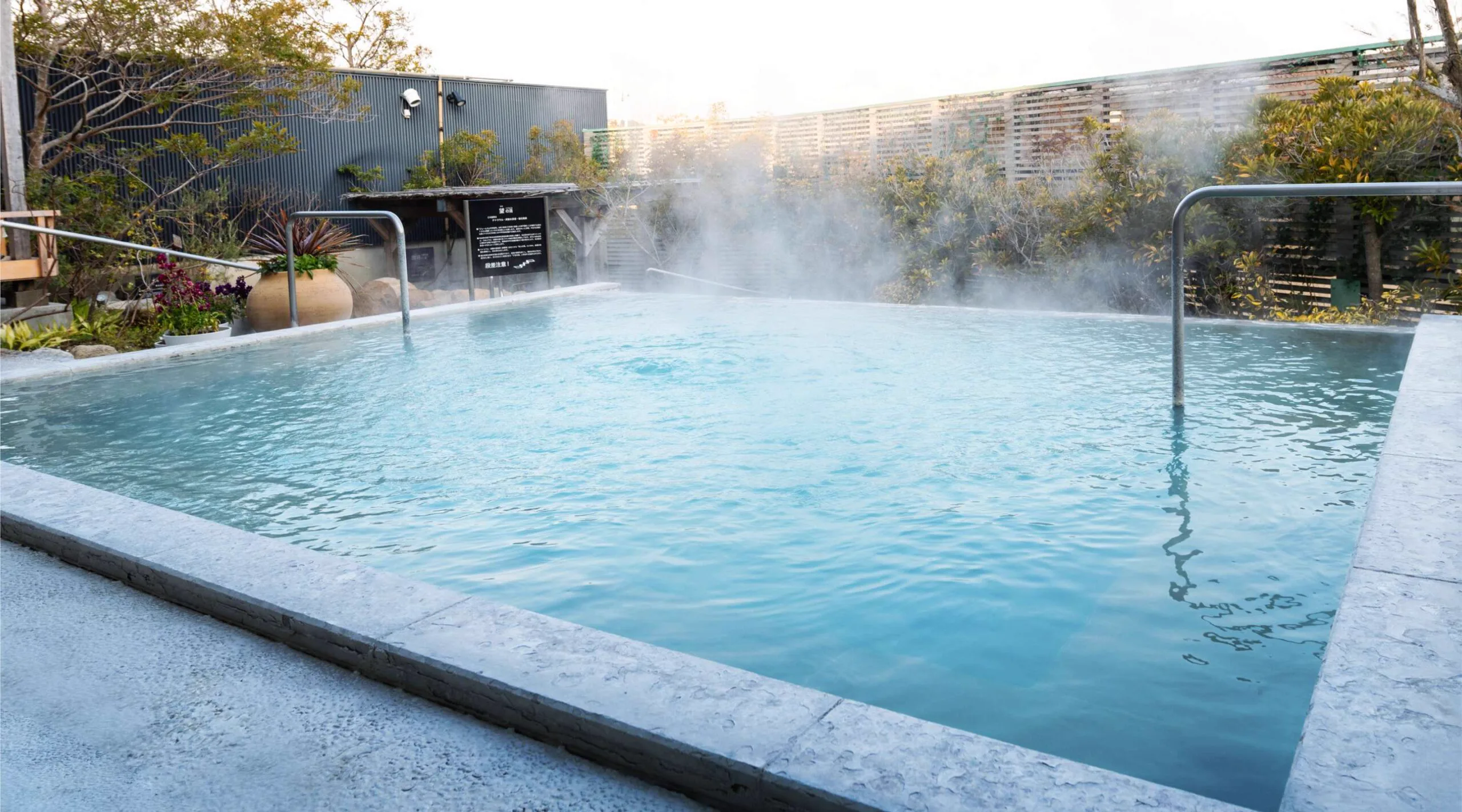
Mochi-no-yu uses the same named source and is listed at about 41.5°C. The water can look milky because calcium in the spring water precipitates as calcium carbonate. The facility says the degree of cloudiness changes with the amount of carbon dioxide in the source, so the bath may not look equally white every day. Its listed spring classification is sodium-bicarbonate and chloride cold mineral spring; the colour alone is not evidence of a sulfur spring.
Saku-no-yu is filled with natural seawater drawn from the Shioya coast. It is a seawater pool, not a second onsen source. If you want to compare the spring water itself, focus on Nemachi-no-yu and Mochi-no-yu; Saku-no-yu is the unusual extra.
The facility’s own suggested circuit moves from the hotter spring bath to the 33°C pool, with a rest outside between soaks. Treat that as a bathing suggestion, not a health prescription; adjust the time to your comfort and take a break if you feel unwell. For a broader explanation of source and bathing temperatures, see how to read onsen temperatures.
The sauna setup differs by bath area: the men's side has a large stadium-style high-temperature sauna, while the women's side lists a salt sauna and a Rocky sauna. These are part of the full-admission ticket, not the ¥500 indoor-only option.
Hours, towels and entry rules
Bathing hours are 9 a.m. to midnight, with last entry at 11 p.m. The facility says it is open year-round but may close temporarily for operational reasons. Its restaurant runs 11:30 a.m.–10:30 p.m.; last orders are at 9:30 p.m. That makes a late soak possible, though last entry is not a promise of a full three-hour visit.
The official rules refuse entry to guests with tattoos. The site does not list an exception for cover stickers. Visitors aged seven and over may not bathe with someone of a different sex, in line with Hyogo Prefecture’s public-bath rules. Towel rental is ¥350 for a bath towel and face towel. Check the facility’s current notices for maintenance closures before travelling.
Getting there from Tarumi or Myodani
There is no direct rail-side walk from central Kobe. From JR or Sanyo Tarumi Station, take a Sanyo Bus bound for Tsutsujigaoka and get off at Miyamadai; the facility is about a five-minute walk north. From Kobe Municipal Subway Myodani Station, take a Sanyo Bus toward Aoyamadai and walk about five minutes west from Matsukazedai. Bus departure times matter here, so allow for the connection rather than planning this like a station-front bath.
Drivers have a simpler arrival: the facility lists 150 free parking spaces. Its address is 7-4-46 Aoyamadai, Tarumi-ku, Kobe, beside the road just west of Aeon James Yama. If you are staying around Sannomiya and only have an hour or two, a bath closer to your route may be a better use of the time. The Kobe day-use onsen comparison helps narrow down options by location and price.
Is Tsuki-no-Yufune a good fit?
It is a strong option for a car outing in western Kobe, especially if you want outdoor bathing with a real temperature contrast, a sauna, and a seawater pool in one visit. By public transport it takes more planning, and the ¥500 ticket is useful only if indoor bathing is enough. If you are weighing it against another larger Kobe spa, compare the direct awa awa KOBE and Tsuki-no-Yufune guide or the Ren vs Tsuki-no-Yufune comparison.
Frequently asked questions
Does the ¥500 ticket include the outdoor hot spring?
No. It is for the indoor baths only. Outdoor baths and the sauna require the full ticket: ¥1,000 on weekdays or ¥1,030 on weekends and public holidays for adults.
Which bath is 33°C?
Nemachi-no-yu is the source-fed, free-flowing bath that the official site lists at 33°C. Mochi-no-yu, supplied by the same named source, is about 41.5°C.
Is the seawater bath another natural hot spring?
No. Saku-no-yu uses natural seawater from the Shioya coast. The facility’s other named outdoor spring baths use Jamesyama Onsen No. 1 Source.
Can I enter with a tattoo?
The current official rules say guests with tattoos are refused entry. No cover-up exception is listed.
Do I need to bring a towel?
Towels are not included in the listed bathing amenities. Bring your own or buy/rent one at the facility; body soap, shampoo and conditioner are provided.
Sources and date checked
Checked: September 28, 2026. - [Tsuki-no-Yufune: admission prices and bathing rules](https://www.tsuki-no-yufune.com/fee/) - [Tsuki-no-Yufune: outdoor baths, spring classification and seawater pool](https://www.tsuki-no-yufune.com/openbath/) - [Tsuki-no-Yufune: sauna facilities](https://www.tsuki-no-yufune.com/sauna/) - [Tsuki-no-Yufune: opening hours and tattoo policy](https://www.tsuki-no-yufune.com/business/) - [Tsuki-no-Yufune: bus directions and free parking](https://www.tsuki-no-yufune.com/access/) - [Tsuki-no-Yufune: restaurant hours](https://www.tsuki-no-yufune.com/restaurant/) - [Tsuki-no-Yufune: towel rental and bathing amenities FAQ](https://www.tsuki-no-yufune.com/faq/)Tags: Kobe onsen, Tsuki-no-Yufune, Tarumi, day-use onsen, outdoor baths, natural hot spring, seawater bath, sauna, Kobe travel, onsen prices, hot spring access, Japanese bathing, tattoo rules, family bathing, Hyogo onsen