Takinoue Onsen Day Trip: Two Baths Deep in Shizukuishi Gorge
Compare Takinoue Onsen’s two ¥700 day baths, check the advance-contact rule at Ryukyoso, and plan around the mountain road’s winter closure.
Takinoue Onsen is an out-and-back mountain visit, not a stop to add between bus rides. The road follows Kakkonda Gorge to the hot-spring area above Torigoe Falls, past beech forest and geothermal steam. Neither inn has a regular local bus. From Shizukuishi Station, the tourism route calls for a taxi; Ryukyoso also requires advance contact. Plan a car or confirmed taxi, then check road status before leaving.
Which bath fits the visit?
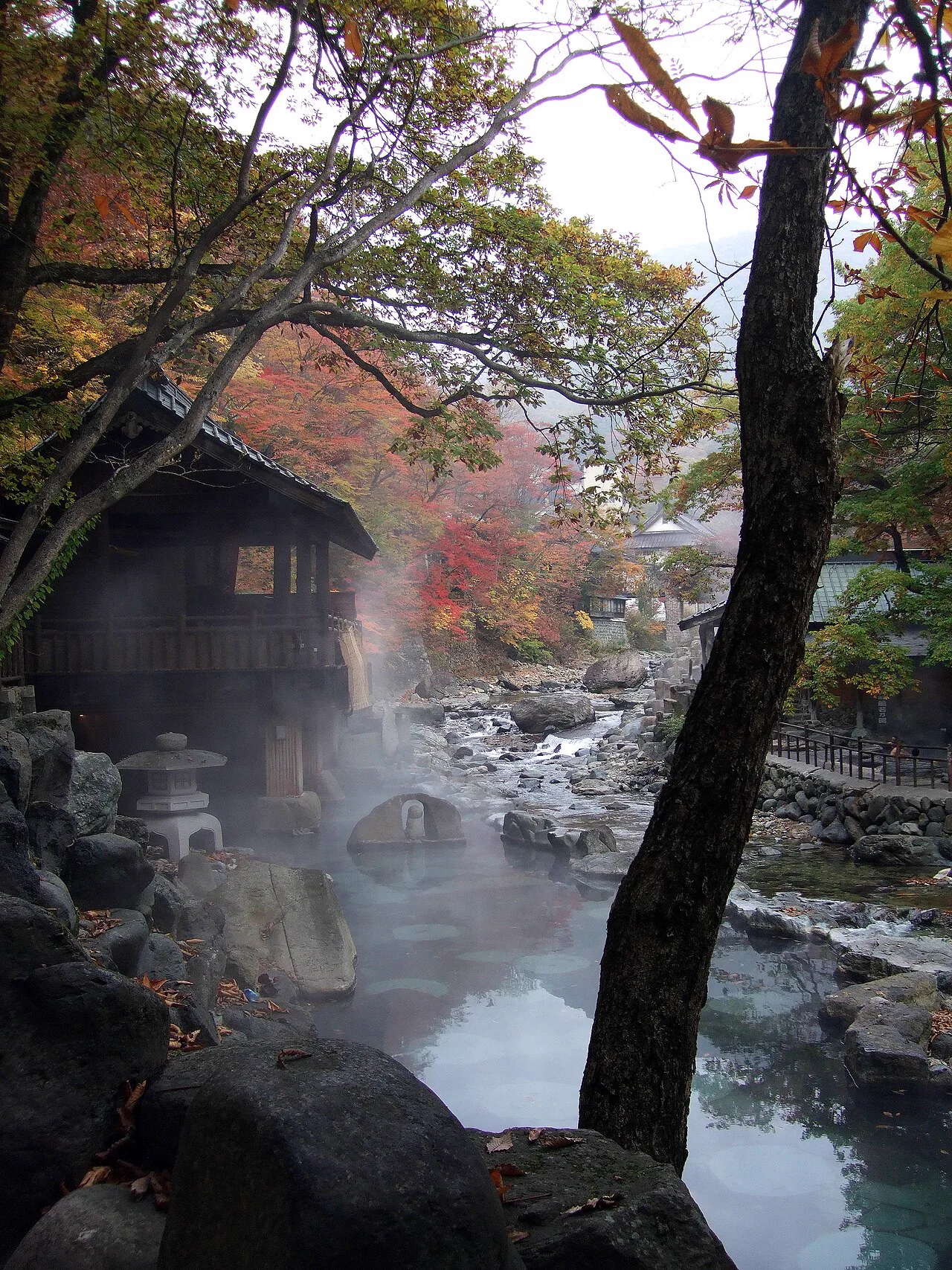
Ryukanso (Taki-Kanso) is the easier first stop to understand. It has source-fed bathing with a forest view, plus simple overnight accommodation and a self-catering kitchen. Lodging requires advance reservation.
Ryukyoso (Taki-Kyoso) is the more distinctive bathhouse. Its small timber building preserves a 1950s layout, with repaired structural timbers and a restored hinoki tub. Advance contact is required before setting off. The property has a tatami rest room, washbasins and separate toilets, but no shop; confirm whether food or towels are available.
Ryukyoso’s source is listed at about 100°C before it reaches the bath. The operator says it cools on the way, but can still be very hot; visitors may run cold water into the tub to adjust it. The bath is not a fixed-temperature experience, and a hot spring source temperature does not tell you the bathing temperature on arrival. Ease in carefully, especially if heat affects you quickly.
| Detail | Ryukanso | Ryukyoso |
|---|---|---|
| Adult day admission | ¥700 | ¥700 |
| Published day-use hours | 10:00–17:00 | 10:00–17:00 |
| Child admission | ¥300 from age four through elementary school | Not listed on its current day-use page |
| Bathing note | Forest-facing bath; source water described as 100% natural flow-through | Restored hinoki bath; source listed at about 100°C before it cools on the way; cold water can be added |
| Rest room | Not listed | 14 tatami; washbasins and separate toilets |
| Before arrival | Call if road or operating conditions are uncertain | Advance contact required: 019-656-6103 |
They are close enough to compare on one drive, but no shared ticket is advertised. A two-bath outing means separate admissions and enough time for both facilities. If one bath is the main reason for the trip, choose it first and treat the other as optional, subject to its latest opening information.
From Shizukuishi Station, allow about 35 minutes by taxi. Torigoe Falls is roughly 30 metres high and about a three-minute walk from the bath area, subject to current road and site access.
Getting there: taxi or car, not a local bus
Iwate’s official tourism site gives the rail-and-taxi route as Morioka Station to Shizukuishi Station in about 20 minutes by local train, then roughly 35 minutes by taxi to Takinoue Onsen. Shizukuishi Tourism Association’s mountain-access material is explicit that there is no regular route bus to the trailhead. The town’s reservation-based Annekko Bus is not a substitute to assume: its normal network serves specific stops and must be booked, and no current official route information shows it continuing to the Takinoue inns.
That makes the no-car verdict not recommended as a spontaneous day trip. It can work if you reserve a taxi both ways and agree on the pickup time and return fare before boarding. A taxi meter is not a useful budget guess for this remote route; ask a local operator for a quote. If you cannot confirm a return ride, change the destination to a place with actual transit, such as Oshuku Onsen, Amihari Onsen or Morioka Tsunagi Onsen.
Drivers should think of the journey as a mountain-road outing. The route runs beyond Gembudo and deeper into the gorge; the final section is not a city approach with frequent services or roadside shops. Confirm access with the bath before departure, leave time for slow driving and allow enough fuel and daylight for the return to Shizukuishi or Morioka. The official operator lists a phone contact for Ryukanso at 019-656-1866.
The road closes for winter
Ryukanso says the prefectural road leading to the inn is closed in winter, usually from mid-November to mid-May, and that the closure can shift or be supplemented by temporary restrictions. That is a broad seasonal guide, not an annual opening date. A September or October visit can still be affected by road work or conditions; check with the inn shortly before departure. During the winter closure, neither bathing nor Torigoe Falls should be treated as reachable by following a summer map route.
Torigoe Falls is about 30 metres high, with a deep blue plunge pool and geothermal steam visible around the gorge. The local tourism association notes that the waterfall and beech forest are especially striking in fresh green and autumn colour. It sits roughly a three-minute walk from the bath area according to Jalan’s visitor guide, but the broader walk and road access still depend on current conditions. Keep the falls as a short stop on the same drive rather than assuming it is a separate all-season excursion.
The area’s other unusual landmark is not a visitor attraction in the usual sense: Ryukyoso’s geothermal plant uses the hot spring’s heat for binary power generation. Five generators produce a combined 625 kW, and the facility says surplus electricity is supplied to the surrounding area. There is no need to approach operating equipment; contact the site first if you are interested in a formal visit or environmental-learning session.
Keep the route simple
For a self-drive day, pair one bath with the waterfall and leave a buffer for the narrow mountain road. Avoid planning three baths in a row here; there is no town-centre strip to walk between, and the main cost is getting this far into the gorge. The nearby Matsukawa Onsen guide and Toshichi Onsen day-bath guide cover other mountain hot springs with different road and seasonal constraints. Kunimi Onsen and Hanamaki Minami Onsenkyo are alternatives if you would rather compare multiple facilities in a better-established bathing area.
For a less remote Shizukuishi soak, Oshuku’s day-use baths have more facilities and a reservation-based town bus option; Hanamaki’s Daito and Dai Onsen baths and the Hanamaki day-trip itinerary offer another base for pairing a bath with town services. If the trip is specifically about a deep mountain bath, the Matsukawa area day-trip guide can help compare the wider Hachimantai side before choosing a route.
Official sources and date checked
- [Ryukanso: official site](https://ryukanso.com/) — current adult and child rates, day-use hours, source-water description, accommodation and typical winter closure; the site asks visitors to confirm temporary road restrictions. - [Ryukyoso: day-use bathing](https://info.ryukyoso.com/%E6%97%A5%E5%B8%B0%E3%82%8A%E6%B8%A9%E6%B3%89/) and [advance-contact and facility information](https://info.ryukyoso.com/%E7%B0%A1%E6%98%93%E5%AE%BF%E6%89%80/) — hours, price, source temperature, bathing rules and required contact. - [Ryukyoso: geothermal generation](https://info.ryukyoso.com/generator/) — generator count, capacity and surplus supply. - [Iwate Tourism: Takinoue Onsen](https://iwatetabi.jp/spots/68156/) — rail-and-taxi route and regional overview. - [Shizukuishi Tourism Association: Torigoe Falls and Takinoue](https://www.shizukuishi-kanko.gr.jp/nature/article.php?p=49) and [mountain access information](https://shizukuishi-kanko.gr.jp/images/basu_use_time.pdf) — falls, seasonal scenery and the lack of a regular route bus. - [Jalan: Takinoue Onsen visitor guide](https://www.jalan.net/kankou/spt_03301cd2110076393/) — checked for visitor context; its old operating dates and facility facts were not used in place of current operator information. - [Shizukuishi Town: Annekko Bus booking rules](https://www.town.shizukuishi.iwate.jp/teijyu/docs/2026082600028/) — current reservation and fare information.Checked: September 28, 2026. Bath admission, road access and seasonal operation can change; contact the facilities before travelling.