Yujuku Onsen Day Trip: Three Inns, Three Different Bath Windows
Find out which Yujuku Onsen inns accept day bathers, what each visit costs, when the baths open and how to plan around the bus.
Yujuku Onsen is easy to misread if you arrive expecting to pay a small fee at one of its old neighbourhood bathhouses. The local tourism association currently says those communal baths are reserved for members of the maintenance group; they are not ordinary visitor day baths. For a public visit, look instead at three inns: Taiyoukan, Kanetaya and Otakiya. Each has a different admission window, and none is an all-day drop-in option.
The three current day-bath options
| Inn | Published day-use window | Adult price | Useful distinction |
|---|---|---|---|
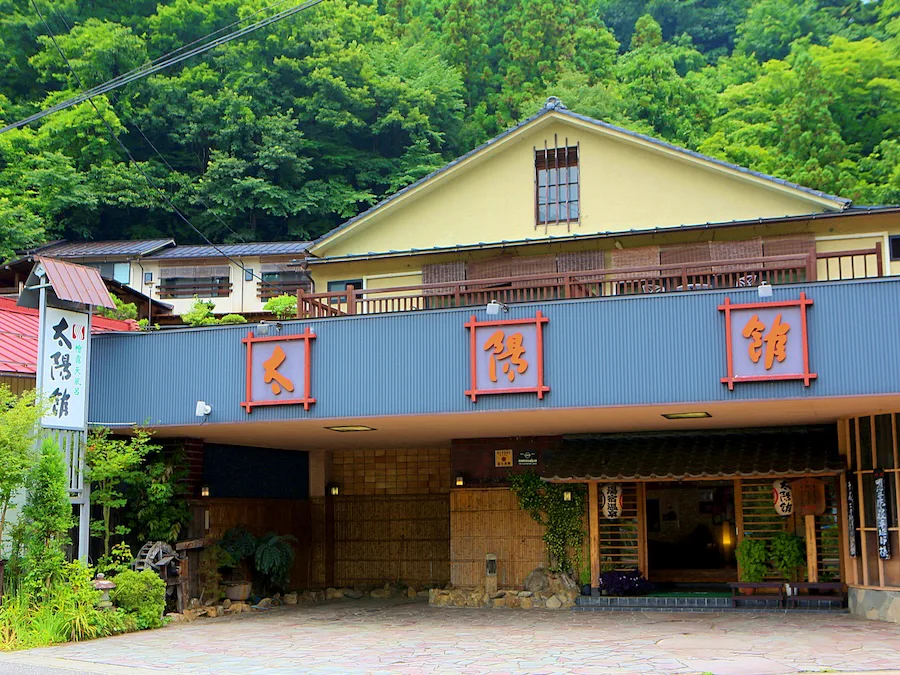
| Taiyoukan | 11 a.m.–3 p.m.; last entry 2 p.m. | ¥700 | Closest to the bus stop; children aged four and up are listed at ¥500 |
| Kanetaya | Tourism association lists 3–6 p.m. | ¥660 | Adult-only per the association; spring-treatment details are unusually clear |
| Otakiya | 1–3 p.m. | ¥700 or ¥1,000 by bath | Two spring sources; day-bath availability can give way to private bookings |
Hours and availability can change, so confirm directly before travelling. Taiyoukan’s own page gives 11 a.m.–3 p.m. and a 2 p.m. last entry. Kanetaya’s own page shows a later closing, but Minakami’s tourism association lists the more conservative 3–6 p.m. window and warns of irregular closures; use that shorter window when planning. Otakiya’s ordinary day-use period is only two hours.
Pick by the kind of bath you want
Taiyoukan is the simplest first stop if you are coming by bus or want the clearest family rate. Its usual bath is on the second floor. The inn says the stop named Yujuku Onsen-kami is around a ten-second walk away. Towels can be bought or borrowed for a fee. After 3 p.m., the offer changes to private baths by the session; overnight guests have priority, reservations are not taken in advance, and visitors should ask on the day.
Kanetaya suits visitors interested in how a spring is used. The inn says the Kubo-yu source is used without adding water, heating, filtration, recirculation or disinfectant; flow is adjusted to manage temperature. Its source reading is 59.1°C, while the listed bathing temperature is about 41°C.
The tourism association says children of elementary-school age and younger cannot bathe. Check the day’s hours and closure status rather than relying on the inn’s longer published window.
Otakiya offers two named baths at different prices: Ohtaki no Yu at ¥1,000 and Yakushi no Yu at ¥700. The inn describes water from both the Kubo-yu source and its own Otaki source. Which bath is available to women and men changes on odd and even dates, so check the current-day arrangement. Private bookings take priority, and the operator says supply conditions can affect availability. Call ahead if a particular bath is the reason for the trip.
If you want the deeper facility-level details, see the separate guides to Taiyoukan, Kanetaya and Otakiya.
A no-car visit needs a timetable check
The local bus from Jomo-Kogen Station towards Sarugakyo serves Yujuku Onsen; Taiyoukan identifies the Yujuku Onsen-kami stop beside the inn. The Minakami tourism association publishes a seasonal timetable for the Jomo-Kogen–Sarugakyo route, with the current schedule valid from April 1 through December 15, 2026. This is not a frequent city bus.
Check the timetable for your exact travel date and direction, then choose a bath window that leaves a comfortable return connection. Do not assume an afternoon bath can be followed by a convenient evening bus.
The stops and inns are close enough to make a short village visit possible, but the three bathing windows do not overlap neatly. Taiyoukan is a morning-to-early-afternoon option; Otakiya fits between lunch and mid-afternoon; Kanetaya starts later. Trying to visit two in one day can turn the day around opening hours rather than the bath you actually want. A single well-timed stop is usually the more practical plan.
What happened to the 100-yen communal-bath advice?
Yujuku’s historic communal baths have not simply become visitor facilities with a new ticket price. The local tourism association says use is limited to members of the maintenance group, and Otakiya’s information also describes the restriction. Older travel pages may still mention a ¥100 contribution or a four-bath circuit; do not treat that as current access for casual visitors. The association says three communal baths remain in use, while Kubo-yu is closed because of deterioration.
Sources
- Yujuku Onsen, Minakami Tourism Association: communal-bath access and area overview.
- Minakami bus timetable: current seasonal route schedule and validity dates.
- Taiyoukan official bathing page: day-use hours, rates and private baths.
- Kanetaya official bathing page: source information and day-bath terms.
- Otakiya official day-use page: bath choices, prices and availability notes.
Checked: September 28, 2026