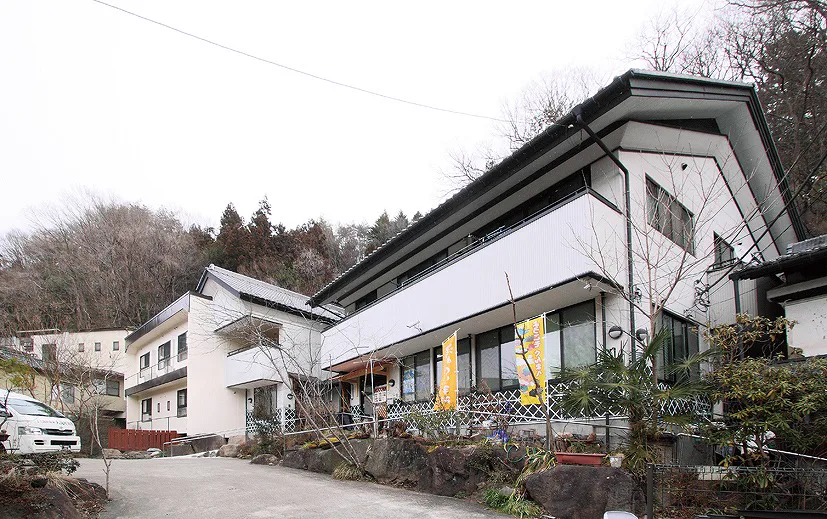
Otakiya Day Bath: Two Springs and a Booking-Dependent Window
Check Otakiya Ryokan’s 1–3 p.m. Yujuku bath window, date-based bath assignment, private-session rates and source-water setup before travel.
At Otakiya, the first question is not which bath to choose; it is whether day visitors can enter on your date. The inn lists a short 1–3 p.m. window, but private reservations take priority and the standard visit can be unavailable. If you want to compare its two springs, call before making the bus journey.
Confirm entry before comparing the baths
| Standard bath | Admission | Date-based assignment |
|---|---|---|
| Otaki-no-yu | ¥1,000 (about HK$50 / NT$206) | Men on odd dates; women on even dates. |
| Yakushi-no-yu | ¥700 (about HK$35 / NT$144) | Women on odd dates; men on even dates. |
These are separate bath entries. Yakushi-no-yu may be unavailable when its stored spring-water level is low.
Standard day bathing is shown from 1 to 3 p.m. Otakiya does not give a separate last-admission time. Its page says private bookings are prioritized, so the public two-hour window is not a promise that walk-ins will be accepted. Call to check day-use availability, which bath is open to your party and the date’s assignment.
Private day sessions are arranged by phone in advance. The two listed start times are 1 and 2 p.m.; each session lasts 45 minutes.
| Private bath | Session fee |
|---|---|
| Yakushi-no-yu | ¥2,000 (about HK$99 / NT$412) |
| Otaki-no-yu | ¥3,500 (about HK$174 / NT$721) |
These sessions overlap the ordinary day-bath window. Confirm the selected bath and reservation directly instead of expecting a private upgrade on arrival.
Two sources, with separate handling
Otakiya uses Kubo-yu, a sodium-calcium sulfate spring, and its own Otaki source, a calcium-bicarbonate spring. The inn says a heat exchanger warms the Otaki water without mixing the two sources. Its operator page gives approximate source-side figures of 57°C for Kubo-yu at the inn and about 41°C when Otaki water emerges; these are not guaranteed tub temperatures.
The operator describes the baths as continuously supplied with source water. Water leaves through a bottom drain, so the surface may not overflow in the way visitors expect. The inn says that its Otaki source can occasionally cloud after heavy stream flow and clear as conditions settle. Treat that as a reported possibility, not a forecast for a particular day. The facility also states that the water is not approved for drinking.
A tight visit by bus takes more than a bath plan
Otakiya is about a minute on foot from Yujuku Onsen-kami. The Kanetsu Kotsu timetable checked October 29, 2026 is valid April 1–December 15 only. Selected arrivals and returns are:
| Jomo-Kogen arrival at Yujuku | Return from Yujuku | Practical implication |
|---|---|---|
| 11:13 a.m. | 12:20 p.m. | Return departs before day bathing begins. |
| 11:13 a.m. | 2:15 p.m. | Allows a visit from the 1 p.m. opening, subject to confirmed access. |
| 1:28 p.m. | 2:15 p.m. | Leaves under an hour in the village; public entry availability is not guaranteed. |
| 1:28 p.m. | 3:50 p.m. | Longer wait for the return; public bathing ends at 3 p.m. |
Check the exact connection before setting out; the return buses are not frequent.
The published one-way fare is ¥790 (about HK$39 / NT$163). Some later services require a substantial wait, and not every bus serves the station you need. A taxi may not be waiting at Yujuku, so reserve one ahead if needed.
For a less availability-dependent alternative in the same village, compare Taiyoukan’s standard bath hours or Kanetaya’s afternoon visit. The Yujuku day-trip overview compares all three inns and explains why the local communal baths are not open to casual visitors. For a broader itinerary, use the Minakami day-onsen guide, Minakami onsen area guide, Kanto no-car onsen guide, Shima Onsen day-trip guide or Oigami Onsen day-trip guide.
